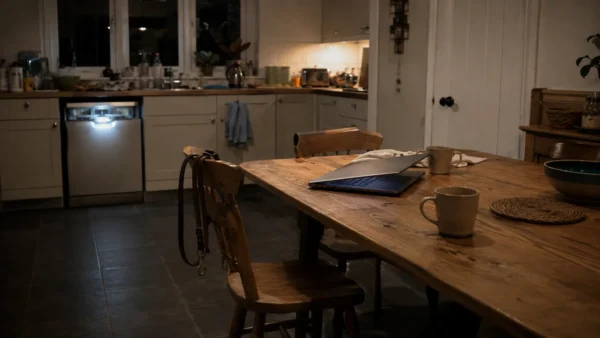
Not because somebody forgot it, but because nobody feels any urgency to return for it. Lunch has ended. The table has been cleared, mostly. A glass has wandered into another room. A serving spoon still rests where it was laid down. The work of the day has paused halfway through, as though the house itself has decided that finishing can wait.
Nobody announces that Sunday afternoon has begun.
It simply arrives.
You notice it first in the pace of the house. Doors close more softly. Conversations become slower, not quieter exactly, just less determined to reach a conclusion. Somewhere a window has been opened. Somewhere else a radio is playing to no one in particular. Outside, a lawnmower starts, stops, then starts again. The sounds drift through the house without asking for attention.
There are hours in every week that belong to purpose.
Monday morning knows exactly what it expects of us. Wednesday afternoon has appointments to keep. Even Saturday often carries a list of jobs that seemed enjoyable when they were imagined on Friday evening.
Sunday afternoon asks almost nothing.
Perhaps that is why it is so easily overlooked while we are living it.
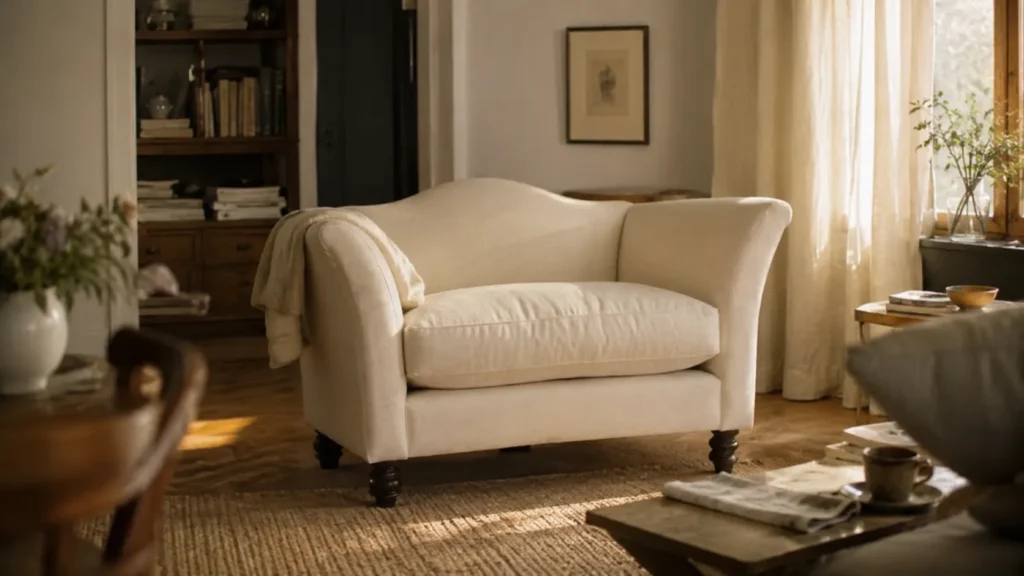
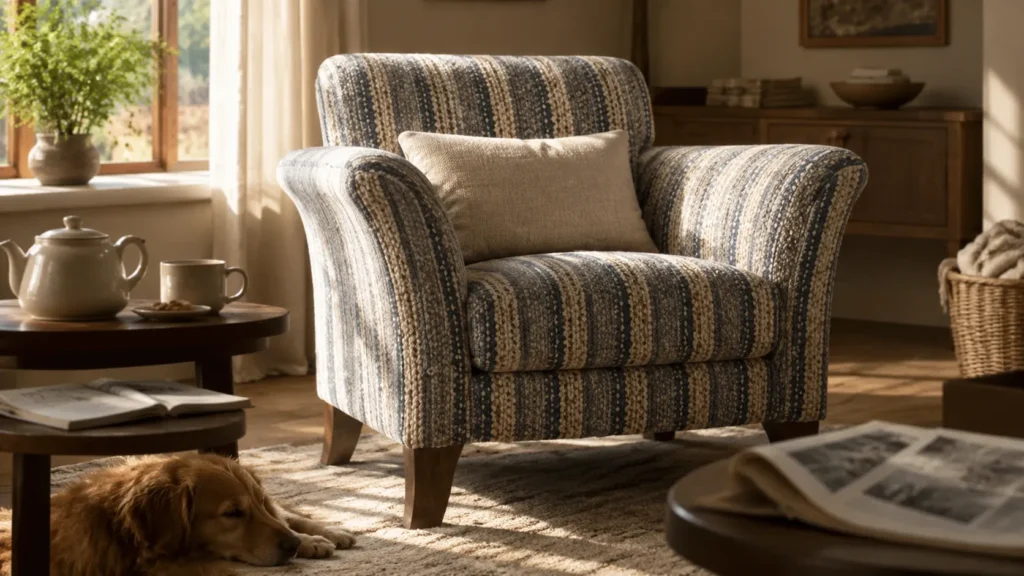
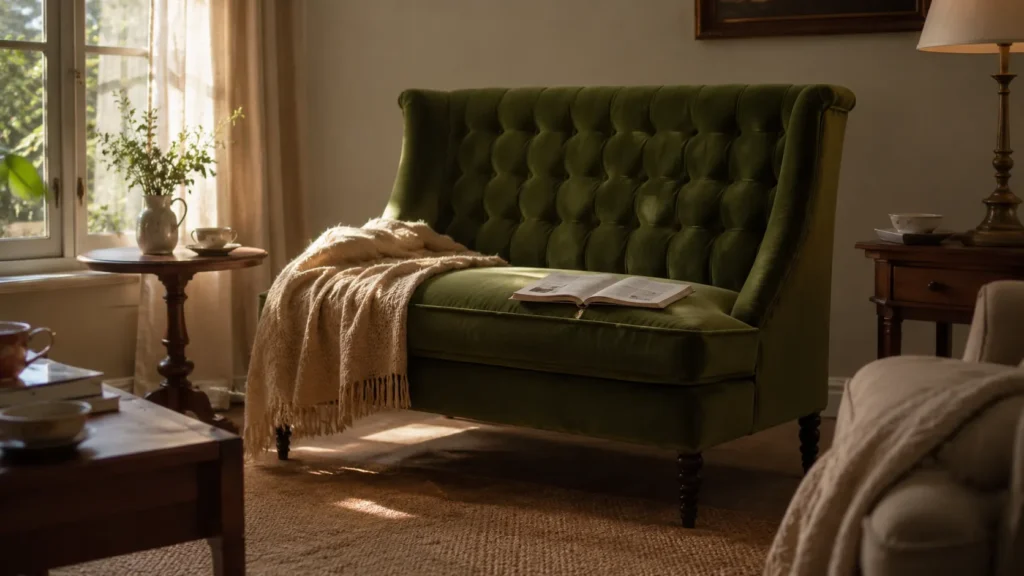
Someone settles into the same chair they always choose without consciously choosing it. A book is opened, although only a few pages are read before attention drifts elsewhere. The newspaper remains folded across someone’s lap long after they have stopped reading it. A cup of tea grows cold beside the arm of the chair because finishing it no longer feels important.
No one seems particularly busy.
No one seems particularly idle either.
Everyone is simply there.
It is a strangely difficult thing to describe because so little appears to happen.
A conversation begins, fades away, then quietly returns half an hour later because someone remembers what they meant to say. Somebody stretches, looks out of the window and sits back down again. Someone else disappears upstairs for a while before returning without explanation. The dog moves to wherever the sunlight has reached the floor.
Nothing remarkable is taking place.
And yet these afternoons have a habit of remaining with us.
Not as memories in the usual sense. Few of us could describe a particular Sunday afternoon from ten years ago. We would struggle to remember what was on television, what was eaten for lunch or whether it rained. The details disappear almost immediately.
The feeling does not.
Years later, we find it waiting in unexpected places.
A shaft of late afternoon light falling across a wooden floor. The faint sound of somebody putting plates away in another room. The smell of tea that has brewed a little too long. The familiar creak of a favourite chair as someone settles into it. For a moment, we are no longer remembering an event. We are remembering what it felt like to inhabit an ordinary afternoon that asked nothing more of us than our presence.
Perhaps that is because memory has never cared as much about events as we imagine.
Birthdays are remembered because photographs preserve them. Holidays survive because they interrupt ordinary life. Celebrations announce themselves as important while they are happening.
But the deepest memories often arrive without introducing themselves at all.
They are formed quietly, in hours that never expected to be remembered.
We sometimes imagine that a meaningful life is built from milestones.
The first day, the last day, the great achievement, the unexpected conversation, the remarkable journey.
But homes rarely become meaningful in dramatic moments.
They become meaningful through repetition.
The same chair chosen without thinking.
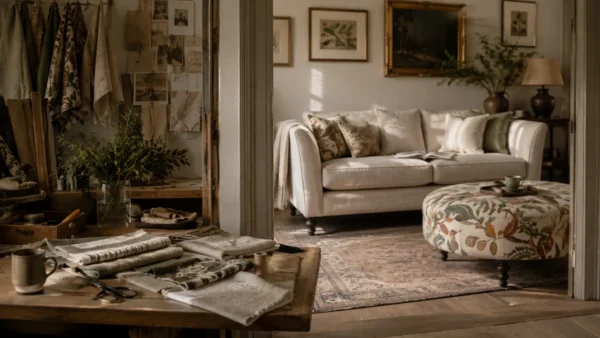
The same corner of the sofa catching the evening light.
The familiar sound of someone moving about in the kitchen while everyone else remains exactly where they are.
The conversation that doesn’t need an ending because it will continue next Sunday, or next month, or whenever everyone finds themselves together again.
None of these moments feels significant while it is happening.
Together, they become the emotional architecture of a home.
Perhaps that is why the best homes rarely ask to be admired.
They ask something much gentler.
They allow us to stop performing.
There are very few places in modern life where we are not expected to become a slightly improved version of ourselves. At work we are productive. With strangers we are polite. Online we are interesting. Even our leisure can become another form of achievement, measured by places visited, experiences collected or goals completed.
Home offers something different.
A good home allows us to become wonderfully unremarkable.
We can abandon a conversation halfway through because someone else has answered the door. We can fall asleep before the end of the programme. We can read the same page three times because our thoughts have wandered somewhere else entirely. We can sit in silence with people we love without feeling responsible for filling it.
That kind of freedom is so ordinary that we often fail to notice it.
Until we lose it.
Many people discover what home meant only after leaving one behind.
A student returning after their first term away. Parents visiting a house that no longer belongs to them. Someone unlocking the front door after a long stay in hospital. Someone else walking through rooms that have remained unchanged while everything else in life has altered.
They are often surprised by what moves them.
It is rarely the expensive table or the carefully chosen paint colour.
It is the chair that has remained in the same place for years.
The familiar creak in the third stair.
The sound the kettle makes before it boils.
The knowledge that nobody will think it strange if they sit quietly for an hour without explaining themselves.
These are small things.
Small enough to be ignored while they are happening.
Large enough to become the shape of belonging.
Perhaps we misunderstand what homes are for.
We often think they exist to protect us from the weather, to give us somewhere to eat, sleep and store the things we own.
Of course they do all of those things.
But the homes we return to, year after year and memory after memory, perform another task entirely.
They preserve ordinary life.
They collect thousands of afternoons that seemed too uneventful to matter.
They hold conversations that were never finished because they never needed to be.
They remember where people naturally sit, how the light moves across a room in late afternoon, which floorboards creak and which cupboard everyone still opens too carefully.
Little by little, without ceremony or announcement, a house begins to remember the people living inside it.
Perhaps that is why leaving certain homes feels so difficult.
We are not only walking away from walls and rooms.
We are leaving behind a place that has quietly become fluent in our ordinary lives.
By early evening, Sunday begins to change again.
Someone notices the time for the first time in hours.
The cold cup is finally carried into the kitchen. A lamp is switched on because daylight has slipped away unnoticed. Conversation turns towards school, work, journeys, packed lunches and alarm clocks. The gentle spell breaks almost without anyone seeing it happen.
The room slowly gives everyone back to the week.
Nothing extraordinary has taken place.
No story that will be retold at family gatherings.
No photograph worthy of framing.
No great occasion.
And yet, years from now, when another quiet afternoon settles gently over another room, it may return with surprising clarity.
Not because anyone tried to make it memorable.
But because, for a little while, nobody was trying to make time useful.
And perhaps that is one of the greatest gifts a home can ever offer.