If you arrive at the workshop before anyone else, there is a curious moment when it feels as though the room is still deciding what sort of day it is going to become.
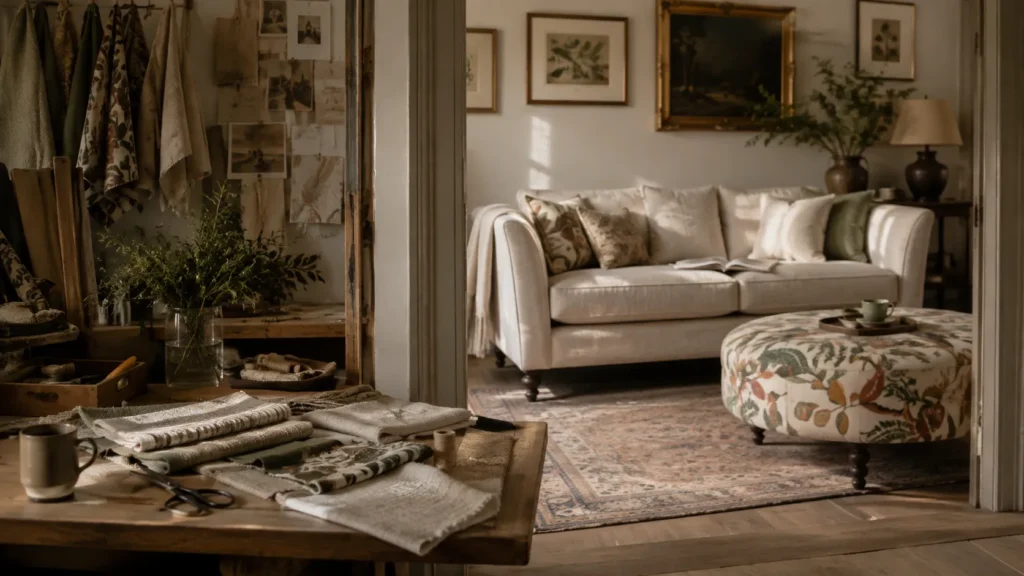
The radios are silent. A roll of fabric leans against the cutting table where it was left the evening before. One chair stands half-finished, pulled slightly away from the bench, as though somebody intended to return after one last cup of tea and never quite did. A hammer rests on the worktop, not carefully placed but simply left where it was last needed.
Nothing has been arranged for a visitor. Nothing has been made to look interesting. The workshop is simply waiting for the people who know how to read it.
A little later, someone walks in, hangs up a coat without thinking about it and switches on the lights. Another follows, kettle already in hand. The radios come to life, conversations resume halfway through yesterday’s sentences and the room begins to move again. If you had never been inside a workshop before, you might assume the work starts now.
It doesn’t.
Most of it began years ago.
People often imagine experience as something dramatic.
They picture extraordinary skill, difficult techniques or the ability to make what other people cannot. Yet watching experienced craftspeople for any length of time suggests something rather quieter. Their work rarely looks spectacular. In fact, it often looks slower than everyone else’s. They stop more often. They look again. They hesitate where others continue.
It is tempting to think nothing is happening.
Usually, something important is.
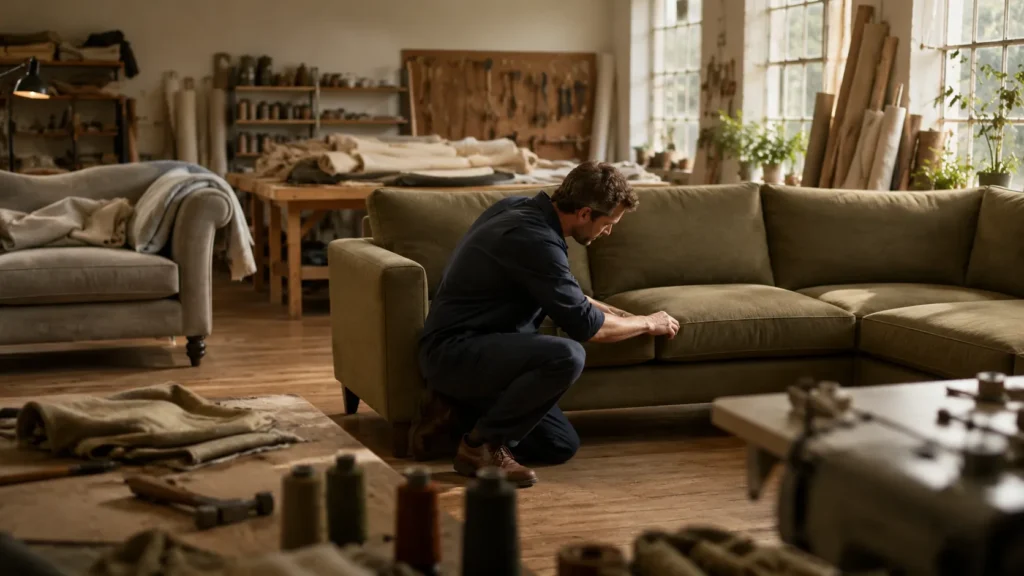
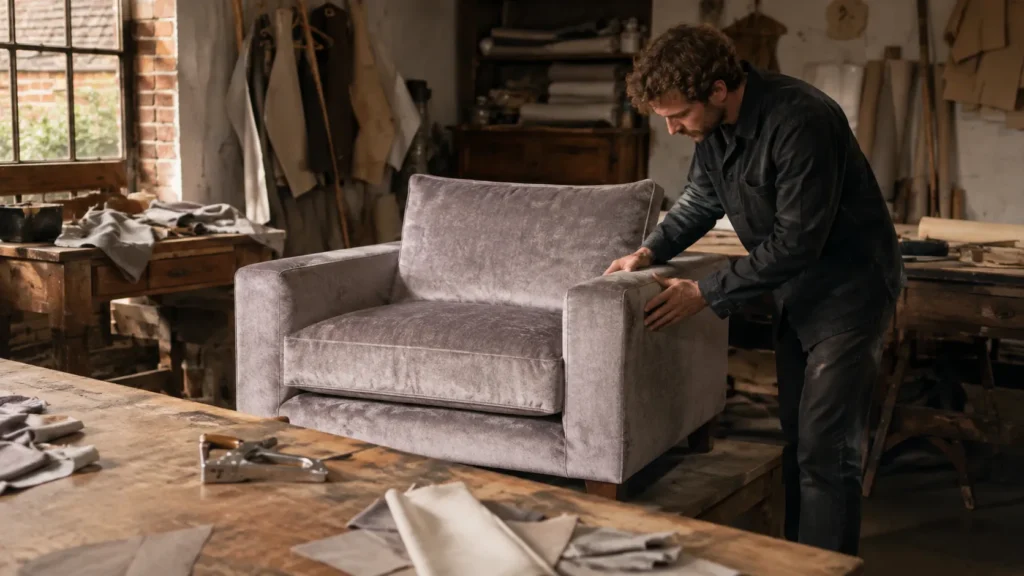
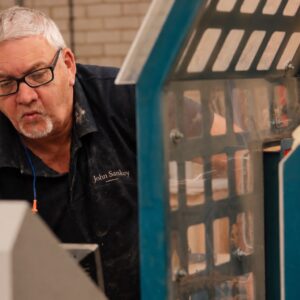
I once watched an upholsterer step away from a chair that appeared completely finished.
He had already gathered his tools and begun walking towards another bench when he stopped. Without any sign of frustration, he turned around, walked back, rested one thumb against the fabric on the inside of an arm and stood there for a few seconds. Then he quietly removed part of the work he had just completed and began again.
When he finished for the second time, I couldn’t immediately see the difference.
That, I eventually realised, was the difference.
The most valuable decision a skilled person makes is often the one that leaves no visible evidence it was ever made.
We tend to imagine craftsmanship as adding something. Another stitch. Another layer. Another careful detail. Yet many of the finest decisions in a workshop involve taking something away, loosening it, remaking it or refusing to accept work that already looks finished.
Experience is not simply knowing how to build.
It is knowing when to begin again.
That kind of judgement is almost impossible to measure.
It rarely appears in specifications or drawings because it exists in moments rather than instructions. Scott Bell once described the countless details that gradually become instinct after years at the bench: springs, clips, foam densities and all the small adjustments that are difficult to explain but immediately recognisable to somebody who has spent enough time doing the work.
Listening to him, it became obvious that experience is less about remembering answers than recognising questions other people have not yet thought to ask.
Perhaps that is why experienced makers often appear unhurried. They are not working more slowly because they are uncertain. They are working more slowly because certainty has taught them where mistakes prefer to hide. They have learned that the most expensive problem is often the one that looked perfectly acceptable the first time round.
Customers never see those moments.
Nor should they.
By the time a chair reaches someone’s home, every hesitation has disappeared beneath the fabric. Every reconsidered decision has become invisible. Families sit down without wondering whether an upholsterer quietly unpicked one corner before deciding it was finally right.
They should never need to wonder.
Good craftsmanship does not ask to be admired.
It simply asks to be trusted.
Scott said something during our conversation that has remained with me ever since.
Speaking about making individual pieces rather than producing furniture in large numbers, he smiled almost apologetically and said:
“Somebody’s going to love it, aren’t they?”
It was such an ordinary sentence that it would have been easy to miss. Yet he did not say someone would buy it. He did not say someone would own it. Without making any great claim for his work, he had quietly revealed the standard by which he judged it.
Love demands different decisions.
If you believe that somebody will one day love the thing in front of you, the hidden corner matters. The unseen frame matters. The stitch nobody will ever inspect still matters.
Not because anyone will praise it, but because somebody else’s ordinary life will slowly grow around it.
Good makers are not simply making furniture. They are preparing something that will eventually become so familiar its craftsmanship is forgotten altogether.
There is an old hammer in Scott’s toolbox that has been with him for more than twenty-six years.
It is not displayed on a shelf or treated as a keepsake. It is still used. It still earns its place every day.
We often assume that experience belongs entirely inside people, but perhaps some of it quietly settles into the objects they reach for every morning. Over enough years, even a well-worn handle begins to know exactly where a hand expects to find it.
The workshop itself begins to feel rather like that.
Nothing inside it exists to impress anyone. The benches carry scratches because work has happened there. The tools belong where they were last needed. Every routine has been repeated often enough that nobody thinks to describe it anymore.
Someone smooths a piece of fabric before making the first cut. Another stands back for one last look before reaching for the staple gun. None of these habits appear in a specification.
All of them quietly shape the finished piece.
Perhaps that is what we misunderstand about craftsmanship.
We look for it in the visible flourish, the perfect seam or the beautifully finished chair. Yet the real work often happened a few hours earlier, in a decision that disappeared before anyone else arrived.
The finest makers are recognised not by the things they complete, but by the things they quietly decide are not yet complete.
By the end of the afternoon the workshop begins to empty again.
The radios fall silent. Benches are cleared. Finished pieces leave the building one by one, beginning journeys their makers will never see completed.
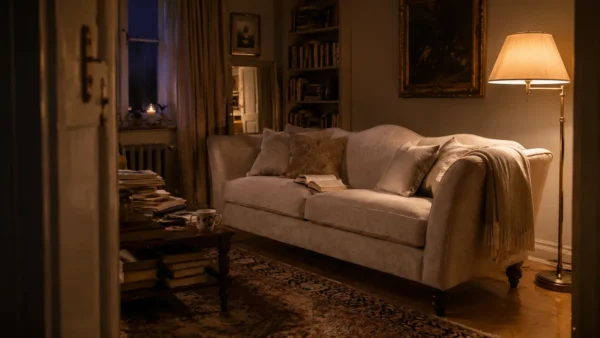
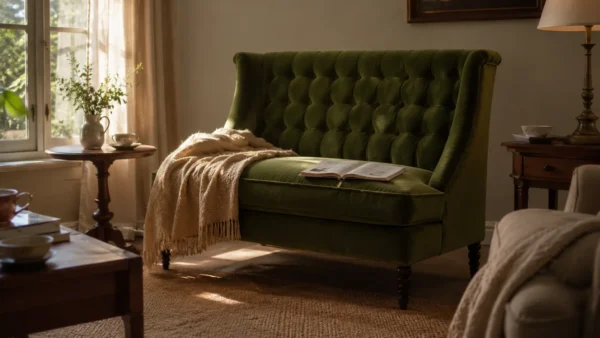
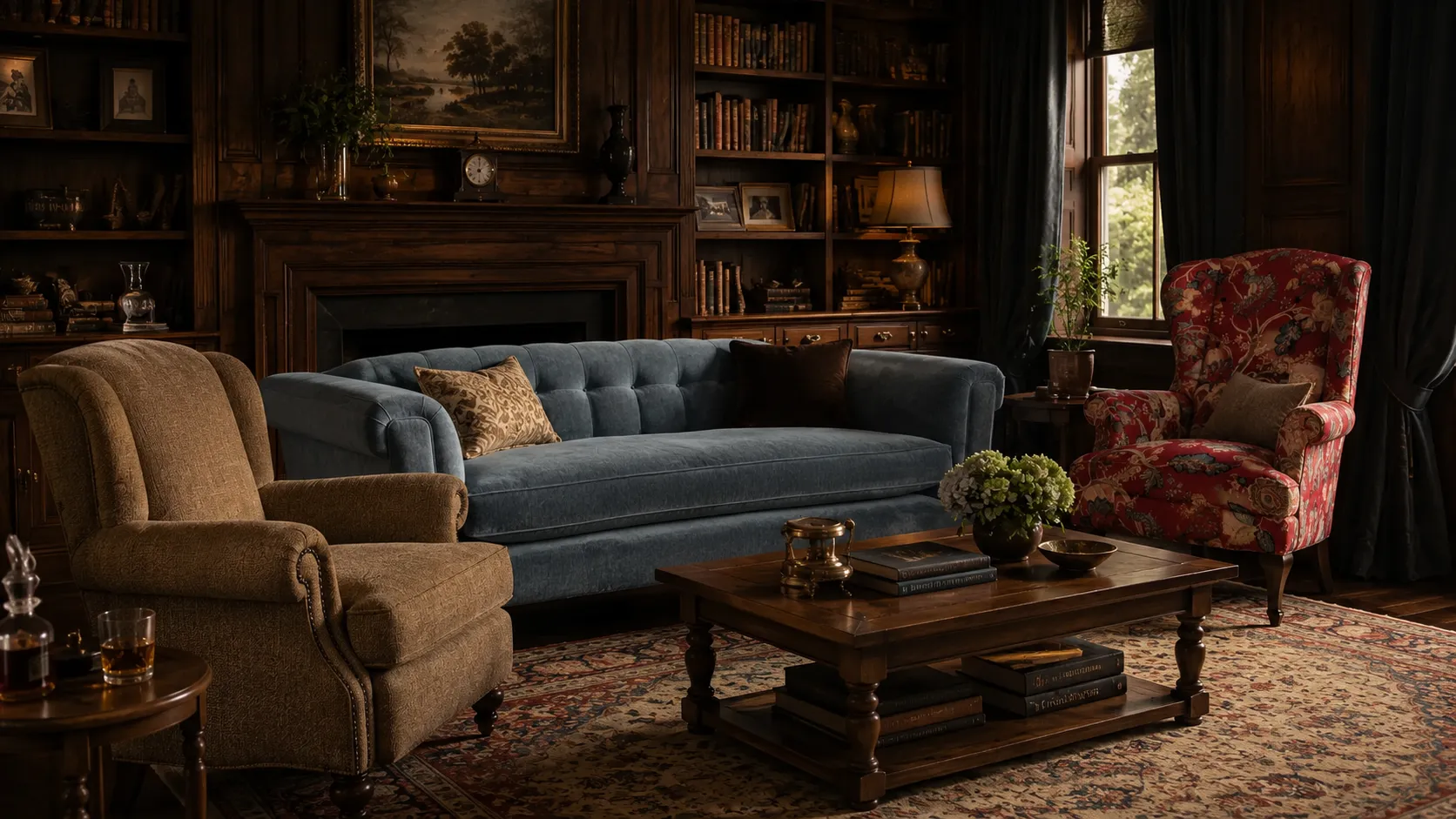
Somewhere, weeks later, a family will carry one of those chairs into a room that gradually becomes home. Children will climb onto it. Someone will fall asleep there on a Sunday afternoon. Years from now, it may become the chair everyone hopes is still free when they walk into the room.
Nobody in that house will ever know about the moment when an upholsterer stopped, turned back, rested a thumb against the fabric and quietly decided it could still be better.
Perhaps they were never meant to.
That unseen decision has already become part of the home.