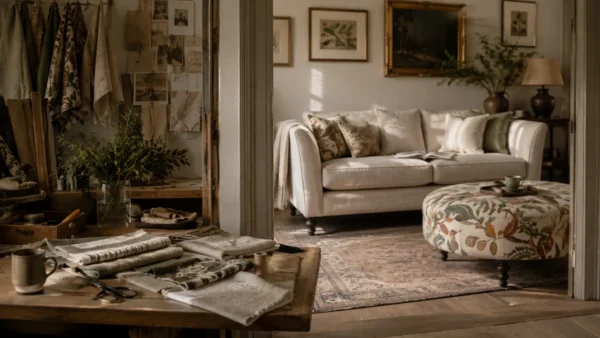
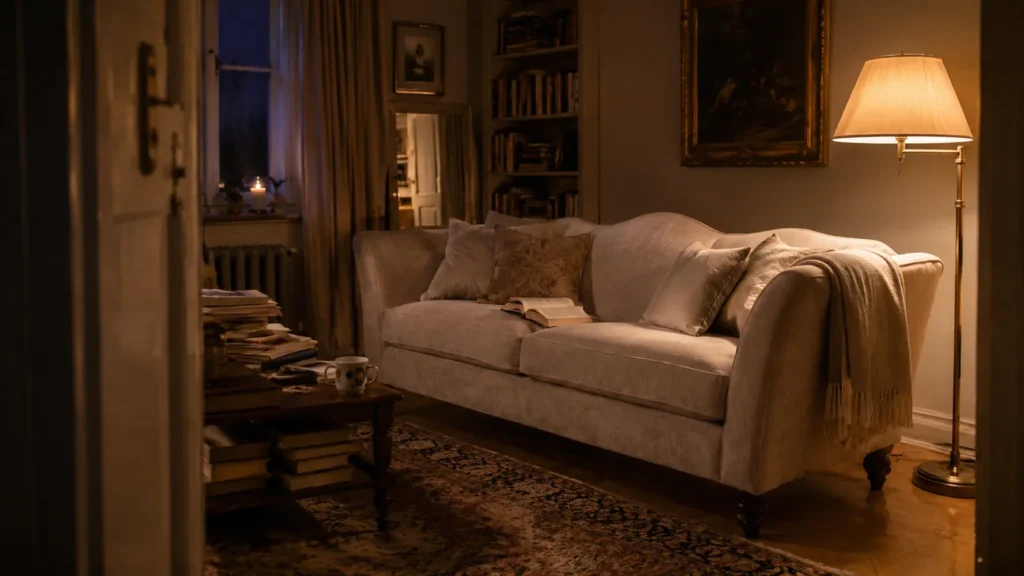
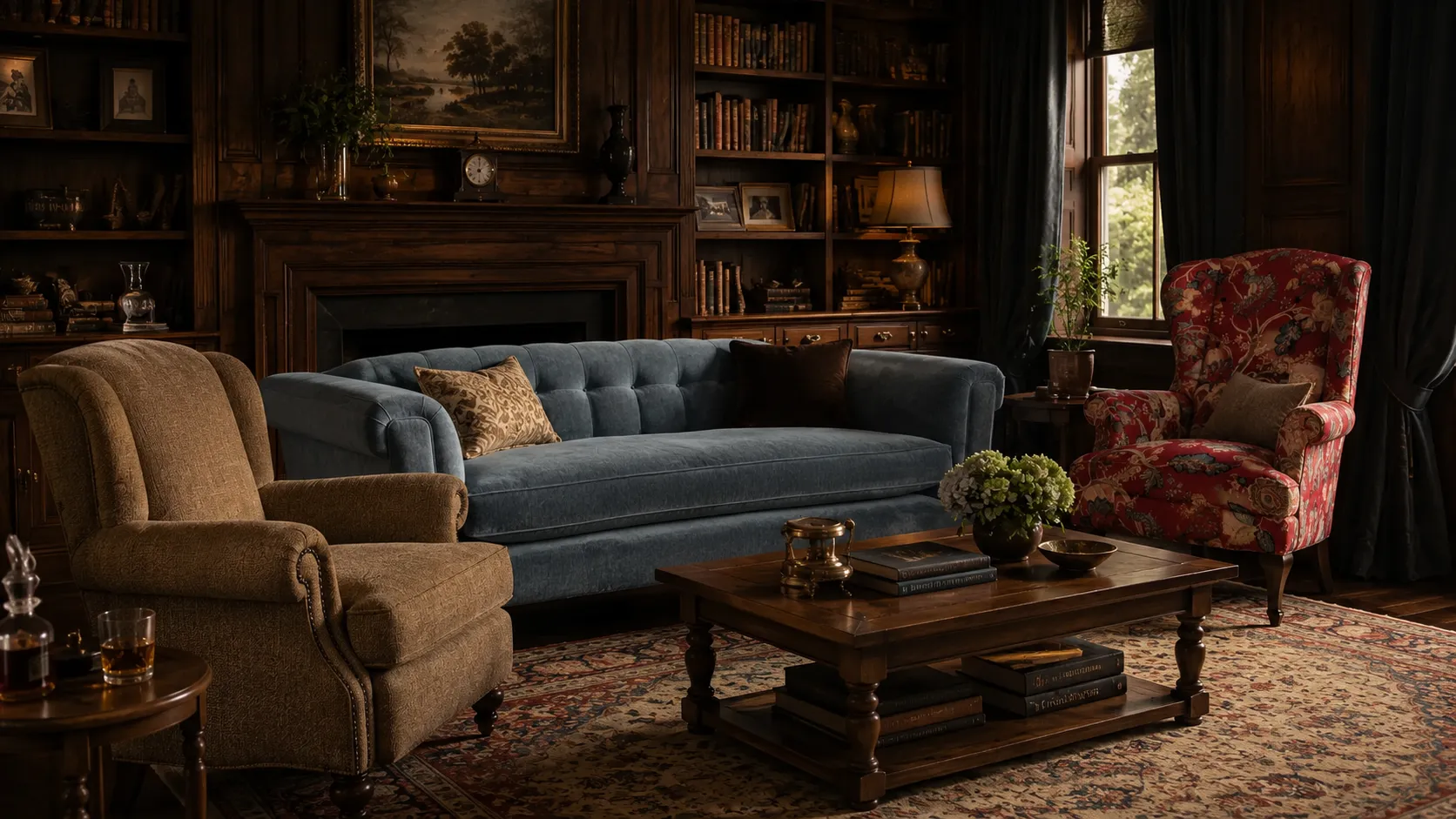
There is a particular kind of silence that belongs only to a familiar room.
It is not the silence of a place nobody uses.
An unused room feels still because nothing has happened there. A familiar room feels still because everything has.
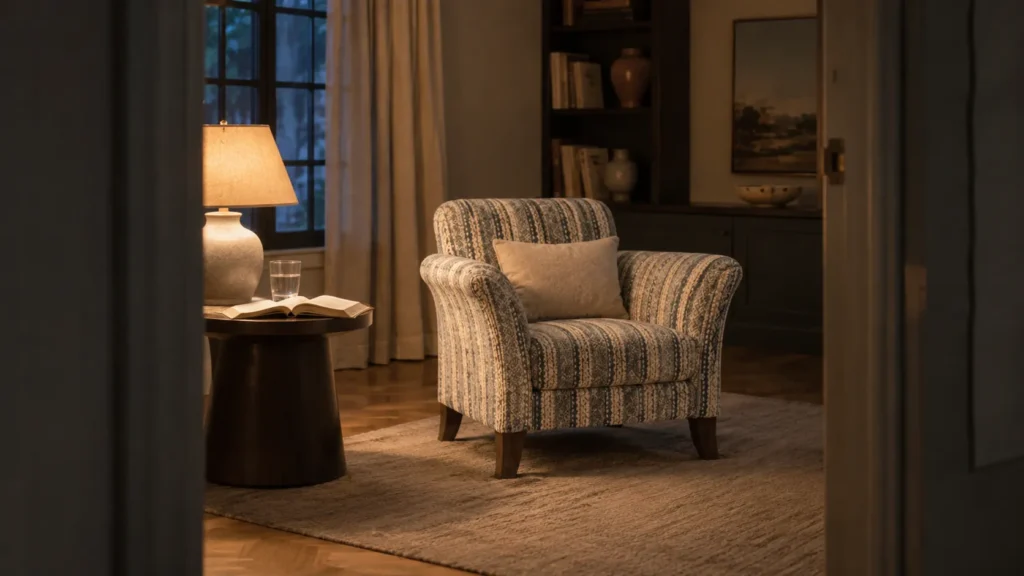
The distinction is difficult to explain, but most people recognise it immediately. You open the door and find no one inside, yet the room does not feel empty. A chair has been left slightly away from the table. A book remains open where somebody stopped reading. One lamp has been switched on before the daylight has entirely disappeared.
Nothing moves.
Still, the room seems occupied by the possibility that someone will return at any moment.
Perhaps rooms learn how to wait.
Not consciously, of course.
They wait through the objects people leave behind and the habits repeated inside them. A cushion remembers the shape of the person who always chooses one end of the sofa. A cup remains beside the chair because its owner has only gone upstairs. A cardigan rests over the arm, neither put away nor abandoned.
Each object quietly suggests continuation.
The person has left the room.
The life of the room has not ended.
We rarely notice this while everyone is still at home.
When a house is full, rooms appear to be defined by activity. The kitchen is where food is prepared. The dining room is where people gather. The sitting room is where the evening gradually settles.
But activity is only the most visible part of what a room holds.
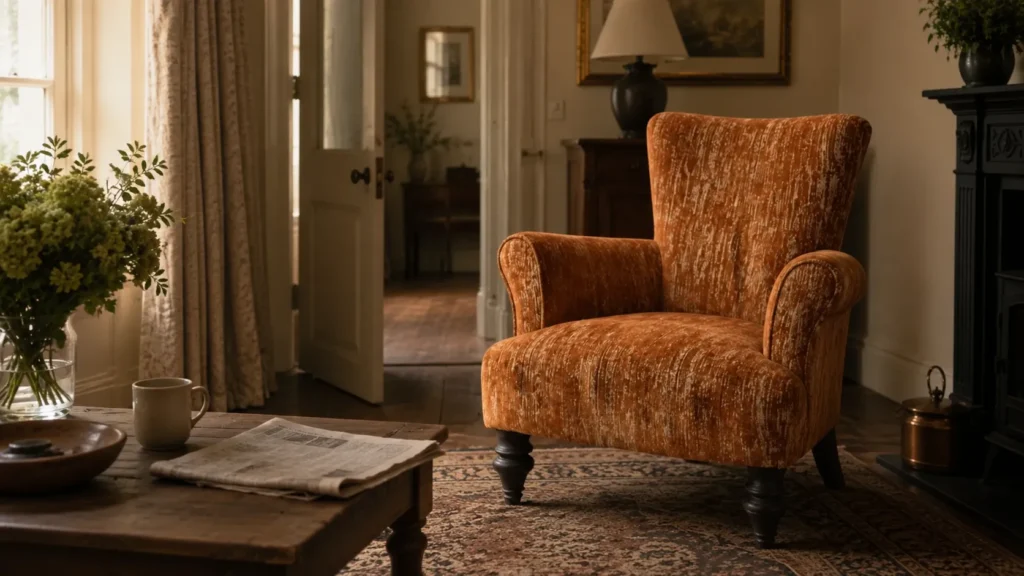
Long after a conversation has moved elsewhere, something of it remains. Two chairs still face one another. A glass waits on the table. The newspaper lies folded at the page where somebody stopped to answer the telephone.
The room carries the shape of what has just happened.
It also carries the expectation that it will happen again.
That expectation may be what makes familiar rooms feel so different from unfamiliar ones.
A hotel bedroom can be perfectly comfortable and still feel as though it belongs to nobody.
Everything has been returned to its proper place before we arrive. The chair stands at the angle somebody decided it should stand. The cushions have no preference for one person over another. Nothing has been left unfinished because the room is not expecting a particular life to continue.
At home, unfinished things are everywhere.
A pair of glasses beside a book.
A sewing basket beneath a chair.
A plant turned towards the window.
A charger trailing towards the place where a phone is usually left.
None of these things has been arranged to tell a story.
That is why they do.
The strongest evidence of belonging is often visible only when the person is absent.
A favourite chair tells us very little while someone is sitting in it. It is simply doing what chairs are made to do.
See it empty at dusk and it becomes something else.
The cushion has settled unevenly. A throw has slipped towards the floor. A small table stands within exactly the right distance for one particular hand to reach it. The lamp is angled not towards the centre of the room, but towards the page of a book.
The arrangement may look accidental.
It is anything but accidental.
It is the result of hundreds of evenings in which the same person reached, adjusted, folded, moved and settled until the room quietly learned how they preferred to inhabit it.
Nobody designed it that way.
That may be why it feels so true.
Rooms are often carefully considered when we first move into them. We decide where the sofa should stand. We measure shelves. We choose which pictures belong on which walls.
Then life begins correcting the arrangement.
A table moves closer to the chair because that is where the tea is always placed. A lamp shifts because someone cannot read comfortably beneath it. The basket intended for magazines gradually fills with toys, blankets or unopened post.
The room becomes less like the one that was planned.
It becomes more like the people living there.
Perhaps a room becomes meaningful when it stops needing to be arranged.
Things settle.
Not perfectly, but convincingly.
The people who live there no longer notice the distance between one chair and another. They do not think about why the lamp remains on after someone has left the room. They simply know that the person will probably return.
That knowledge changes the atmosphere.
The illuminated room is not waiting anxiously.
It is waiting confidently.
There are moments when this confidence becomes especially visible.
Early evening is one of them.
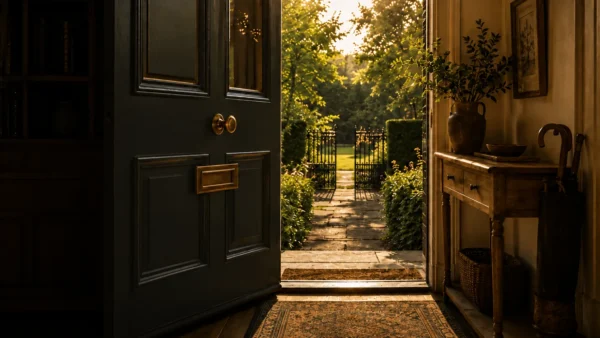
Daylight has begun leaving the windows, but the house has not yet decided that night has arrived. One room is already lit. Another remains in shadow. Somewhere, a door has been left open between them.
From the hallway, the familiar room appears almost like a photograph.
A chair.
A table.
A book.
The small pool of light beneath a lamp.
No person is visible, but the room contains so much evidence of one that their absence feels temporary.
Perhaps they are making tea.
Perhaps they have gone upstairs to find something.
Perhaps they are standing in another room, continuing a conversation that began here.
The exact explanation does not matter.
The room still belongs to them.
Sometimes, however, the person does not return.
A child leaves home.
A parent moves somewhere smaller.
A house is sold.
A chair that stood in one position for twenty years is carried through the front door and placed in another room, in another building, beneath unfamiliar light.
Only then do we realise that rooms were never passive backgrounds to our lives.
They were participants.
They knew where everyone sat. They held the pauses between conversations. They received the objects people put down without thinking and kept them until they were needed again.
When the room is finally emptied, it can feel as though something more than furniture has been removed.
The expectation has gone.
This may explain why returning to an old home can feel so unsettling.
The rooms are physically present, yet their language has changed.
Someone else’s shoes stand by the door. A different table occupies the familiar corner. The wall that once held family photographs has been painted, and the chair that always faced the window is no longer there.
The room has not forgotten how to wait.
It is simply waiting for somebody else.
We understand, perhaps for the first time, that the feeling we remember did not belong entirely to the architecture.
It belonged to the relationship between the room and the people whose lives repeatedly moved through it.
Objects often preserve that relationship longer than rooms can.
A chair may move from one house to another and still carry something recognisable with it.
Its proportions remain familiar. The hand finds the arm without looking. The body settles into a shape learned over years. Even in an unfamiliar room, it provides a small continuity between one life and the next.
This does not make the chair magical.
It makes it experienced.
It has participated in enough ordinary evenings to become attached to them.
The same can be true of a table, a lamp, a chest of drawers or the bowl that has always held the keys. Their value is not created by age alone. It comes from repetition.
They have been present often enough to become part of what happens next.
Perhaps that is why certain objects are so difficult to discard.
From the outside, they may appear worn, outdated or easily replaceable.
To the person living with them, they perform another function.
They make the room recognisable.
Remove them and the room may remain attractive. It may even become more orderly. Yet something in its language has changed. The eye searches for a familiar shape and does not find it. The hand reaches towards a surface that is no longer there.
It takes time for the room to learn a new arrangement.
It takes time for us to learn it too.
We often speak about creating atmosphere as though it can be added to a room.
We choose warmer light.
We soften colour.
We introduce objects that appear personal.
These decisions can make a room pleasant, but atmosphere in the deepest sense cannot be installed.
It must accumulate.
It forms through repetition: the lamp switched on at roughly the same hour, the door left open, the chair turned slightly towards another, the book placed down and picked up again.
Atmosphere is ordinary life made visible.
The room does not need to be beautiful.
It does not need perfect proportions, expensive objects or carefully coordinated colours.
It needs evidence that somebody belongs there.
That evidence is usually quiet.
A slight hollow in a cushion.
A photograph placed where it can be seen from one particular chair.
A blanket that is never folded in quite the way it was intended.
A light left on because someone will be coming back.
These things do not make a room impressive.
They make it known.
By night, the house begins gathering its rooms back into darkness.
One lamp is switched off.
Then another.
Books are closed. Cups are carried towards the kitchen. Doors that remained open throughout the evening are pulled quietly to.
Eventually, the familiar room is left alone.
In the darkness, it contains no obvious evidence of the people who have passed through it. Yet everything remains where their habits have placed it.
The chair waits.
The book waits.
The room waits.
Not because it is empty.
Because tomorrow, ordinary life will return and continue almost exactly where it stopped.
Perhaps that is what the rooms we love have always offered us.