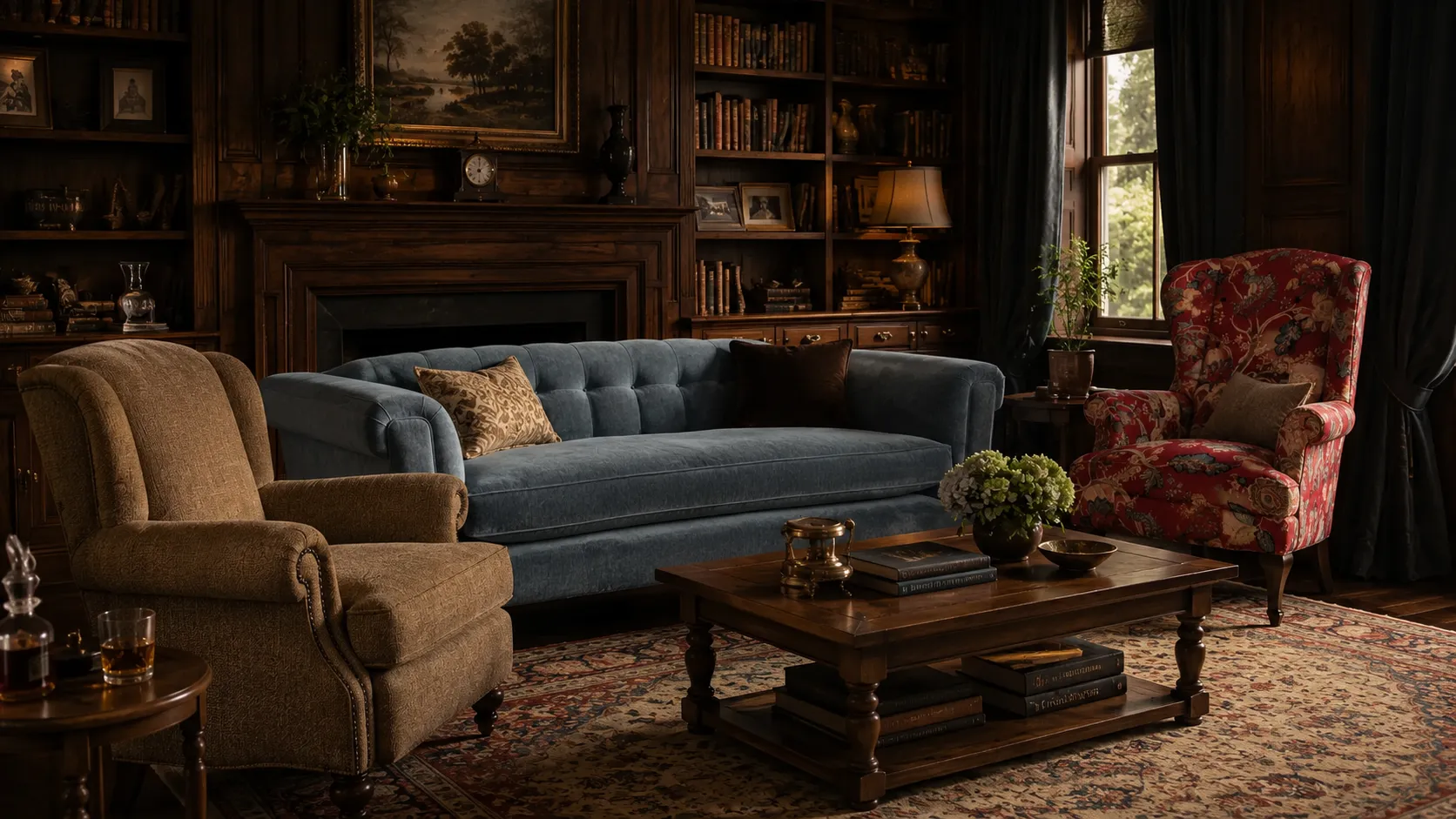
Dave Hemsley has followed John Sankey furniture from its first roll of fabric to the moment it becomes part of somebody’s home.
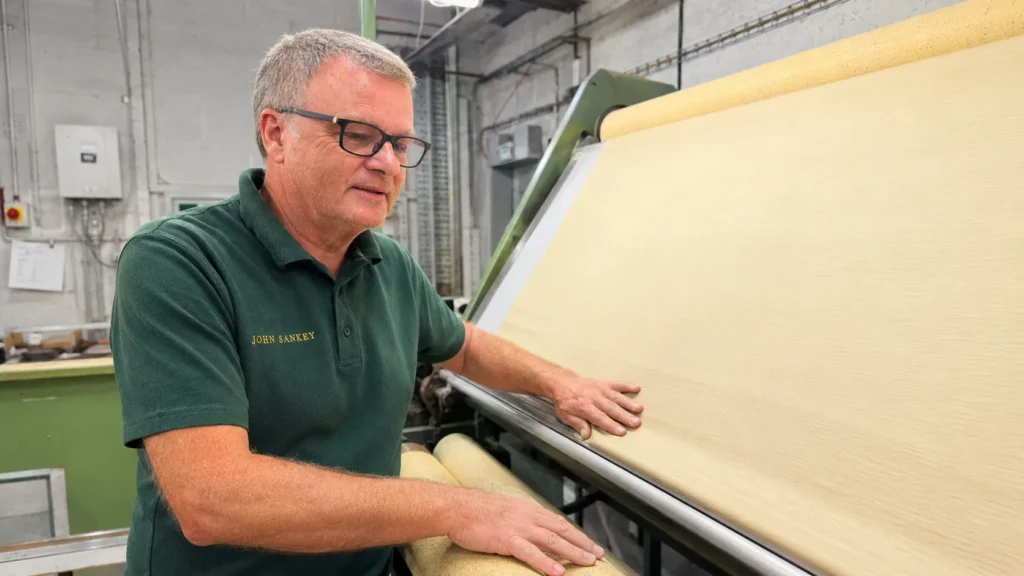
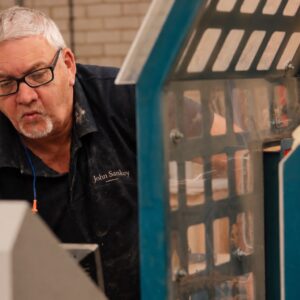
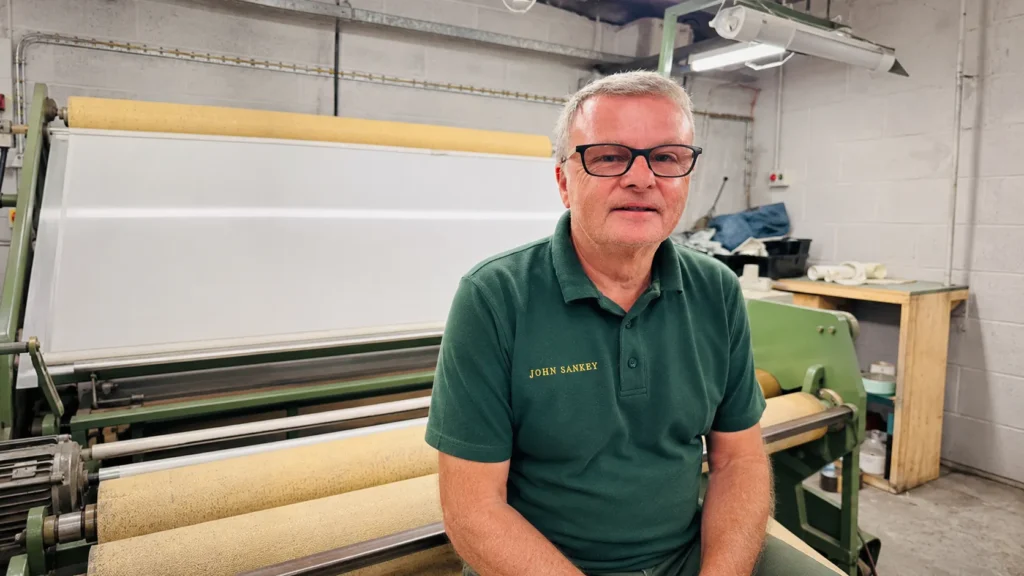
Dave Hemsley is standing beside the fabric-inspection machine he first worked on when he joined John Sankey more than twenty years ago. The machine remains in the factory, and so does Dave, although almost everything he understands about the furniture has changed since the days when he knew it only as fabric passing beneath his hands.
When he began, rolls of material would travel across the machine beneath the factory lights while he checked them for faults. On a busy day, he might inspect around five hundred metres before the fabric continued into production, but at that stage he could not have known where any particular length would eventually go.
One might become the back of a chair in Manchester. Another might cover a sofa overlooking the Thames. Some would be carried into cottages at the end of unmarked country lanes, while others would arrive at houses still so unfinished that the delivery team had to cross mud, building materials and missing floorboards before they could put the furniture down.
At the inspection machine, none of those homes existed yet. There was only fabric moving steadily beneath Dave’s hands, although over the years his work would gradually follow it much further.
He began issuing material to the upholstery teams and helping to prepare complete jobs, bringing together frames, fabrics, seat interiors and scatter cushions so that nothing was missing when work began. He later moved into dispatch, receiving deliveries and checking finished pieces before they left the factory.
Whenever another pair of hands was needed, Dave also began accompanying the delivery team. Without planning it, he had travelled almost the entire journey of a piece of John Sankey furniture, from the arrival of the fabric to the moment the finished piece entered somebody’s front room.
Few people have seen both ends of that journey. Fewer still have spent more than twenty years discovering what happens afterwards.
Furniture he has met before
A little while ago, Dave arrived at a house in Manchester with another delivery. The customer mentioned that they already owned several pieces of John Sankey furniture and then led him into another room, despite his wife apparently warning him that it was too untidy to show anybody.
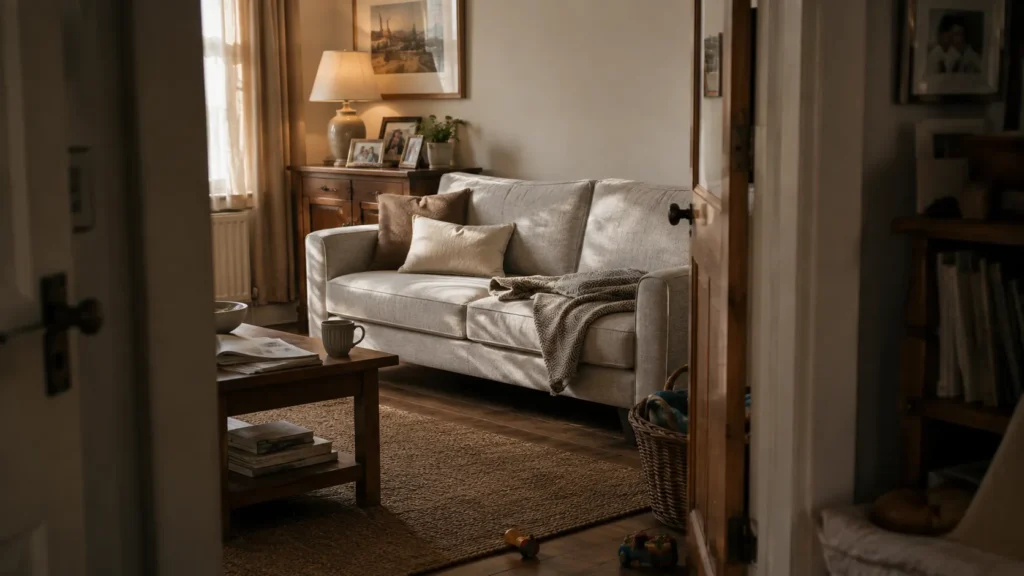
Inside were two older sofas that had formed part of the home for well over ten years. Dave looked at them, recognised the design and named the fabric, leaving the customer surprised that somebody arriving with a new delivery could identify furniture that had been sitting there for more than a decade.
Dave began wondering whether he had encountered the sofas before. He might have inspected the fabric when it first arrived, issued it to the upholstery team or helped prepare the original job. He may even have accompanied the first delivery with his former colleague Gordon.
Now, more than ten years later, the furniture was still there. The owners had three John Sankey pieces in that room, others elsewhere in the house and another delivery arriving that day. The older sofas showed their years, but they had worn well and become familiar enough for their owner to lead Dave through the house specifically to see them.
Dave encounters versions of this surprisingly often. He arrives carrying one piece and is shown another, perhaps a chair upstairs, an older sofa in a second sitting room or furniture the customer’s parents owned before they bought their own.
Sometimes Dave walks into a room and realises that he has met the furniture before.
There is pride in the way customers show it to him. They do not simply mention that they have owned a sofa for fifteen years; they open another door and take him to see it, often apologising for the room, the mess or the fact that nobody had expected a tour.
The furniture has become part of the family evidence. It needs introducing.
The final few feet
A great deal happens before a John Sankey piece reaches somebody’s house. The frame has been made, the fabric inspected and cut, the upholstery completed, the order checked and the delivery arrangements agreed, but the customer sees almost none of that work.
They see Dave.
However well the sale, upholstery and communication have been handled, the delivery team becomes the final human face of the company. They are the people standing at the door with the object somebody has chosen, considered and imagined within their room for weeks or months.
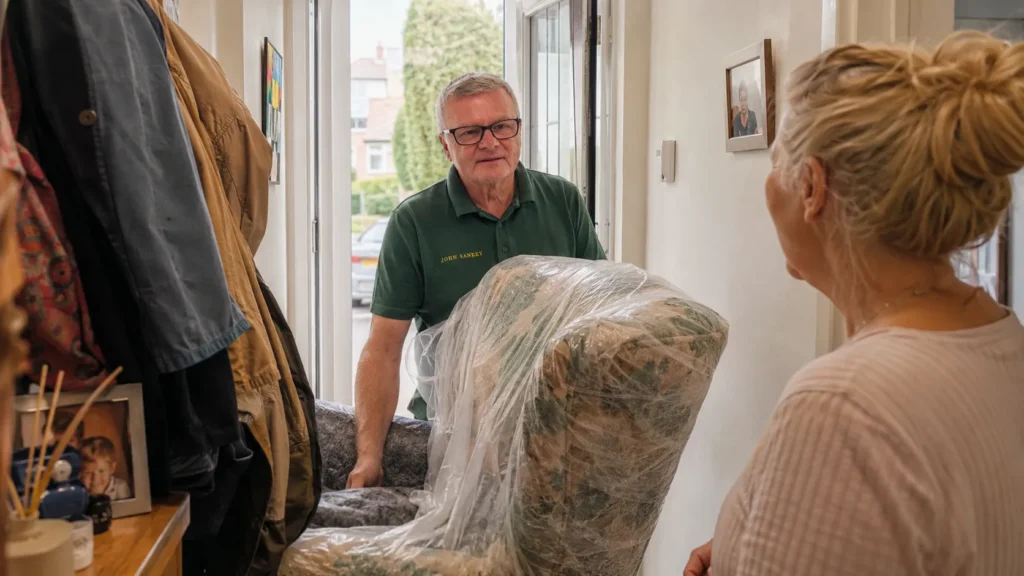
Dave carries it inside, removes the protective covering and asks the customer to inspect it. He also encourages them to sit down while he is still there, rather than waiting until the van has disappeared from the drive.
Most customers need little encouragement. They have chosen the design, considered the fabric and pictured where it will go, and the moment Dave unwraps it is the first time all those separate decisions become one finished object inside their own home.
“They can’t wait to sit on it,” he says. Feet go up, somebody begins imagining the glass of wine that might follow, and the thing that has been manufactured, inspected, packed and delivered begins performing the role for which it was made.
Something changes when the customer first sits down. Inside the factory, it was furniture, and inside the van, it was a delivery, but within the room it becomes theirs.
Dave once compared the experience to arriving with a present. There is something of Father Christmas in the job, although this particular Father Christmas sometimes has to negotiate narrow hallways, muddy drives and houses without visible name signs before he reaches the tree.
A delivery driver’s favourite architectural feature
After enough years carrying sofas into homes, people develop strong opinions about architecture. Dave’s concerns are rarely about period detailing or the direction of the evening light because he is usually looking at the doors.
A narrow entrance can change the direction of an entire morning, while the discovery of a clear route around the side of the house can restore everybody’s optimism. The finest words a customer can offer are usually:
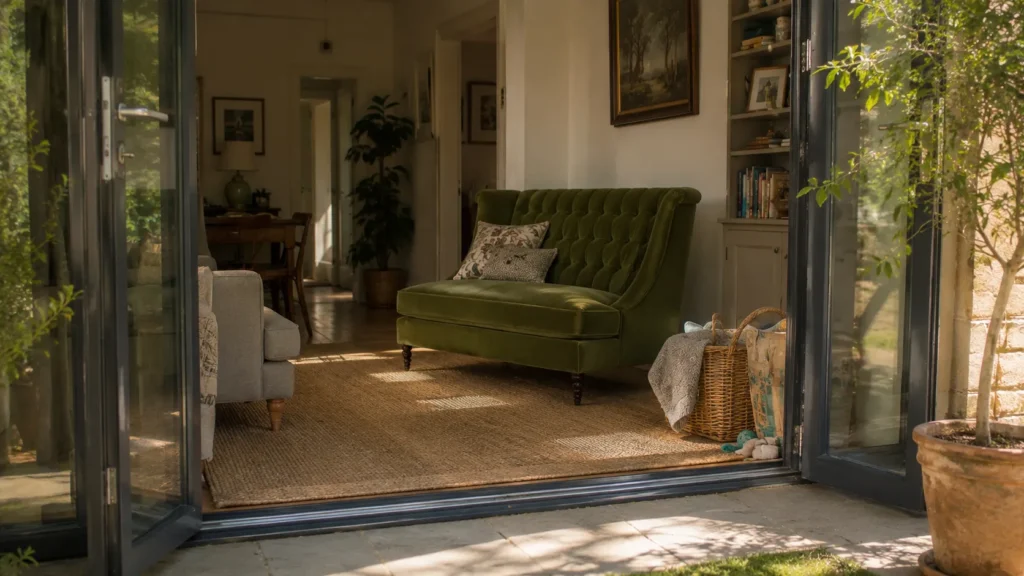
“We’ve got bifold doors at the back.”
To Dave, that is music. The doors open, the route becomes obvious and the furniture travels directly into the room without pivoting on a landing, lifting over gates, removing pictures from the hallway or wondering whether the ceiling becomes higher after the first flight of stairs.
Dave loves bifold doors. This may be among the most practically informed endorsements they have ever received.
Not every delivery is so accommodating. At an apartment near Battersea, the lift, the access and the furniture had apparently all been measured beforehand, but when the sofa reached the lift it would not fit.
Dave and Gordon carried it around the apartment building to try the service entrance, but that failed too. They then attempted the staircase, made it beyond the first flight and reached a turn where the ceiling dropped too low for the sofa to continue.
After around three hours of lifting, manoeuvring and reconsidering every possible angle, the furniture remained stubbornly outside the apartment. The customer asked whether the delivery team carried a saw.
They did not, and the sofa came back.
At another house, the floorboards had been lifted while work was being completed. Dave warned Gordon about the opening, but Gordon stepped backwards and sat straight into it with his legs disappearing beneath the floor.
Nothing serious happened, although it was, Dave observed, a little early in the delivery to be sitting down.
They have crossed unfinished building sites, lifted furniture over gates and left pieces temporarily in whichever room the builders had managed to complete first. They have also walked along country lanes in heavy rain looking for houses whose names appeared everywhere except on the buildings themselves.
Most deliveries work. Occasionally, they work only after everybody has exhausted the obvious approaches first.
The homes people remember
Dave has been inside houses most people would never forget. One contained an enormous basement kitchen with the front half of an XR2i mounted on the wall, complete with wheels, lights and its original number plate.
It had been the owner’s wife’s first car. She had written off the back of it, so they kept the front, installed it as part of the kitchen and wired the lights so that they still worked.
In another vast house near the Mersey, Dave remembers two vans carrying perhaps fifteen or sixteen pieces of John Sankey furniture. He had been told the house was connected in some way with the man who built the Titanic, although the exact history has blurred with time.
What has not blurred is the scale of the delivery. Room after room received another piece until an entire home appeared to be assembled from the contents of two vans.
Yet the size of a house is not necessarily what makes it welcoming. Dave has also delivered furniture to garden rooms and small buildings at the bottom of ordinary gardens, and he has entered grand houses that felt strangely empty as well as modest homes that felt lived in from the moment the door opened.
The details he remembers most clearly are rarely architectural. He remembers the people.
One customer insisted that Dave and Gordon come inside and eat before they unloaded the furniture. This was not merely an offer of tea and a biscuit, but a full breakfast, and only when everybody had finished eating did the delivery begin.
Customers regularly ask Dave how long he has worked for John Sankey. They tell him where they once lived, which relative already owns the furniture and why they chose the piece arriving that day, so a conversation that begins with measurements and paperwork can end with somebody explaining a family connection stretching across several generations.
Dave remembers one customer telling him that his parents already owned John Sankey furniture. Another conversation involved a family in which a grandmother, parents, children and the next generation all appeared to own pieces.
It seems, in Dave’s words, to “snowball along.” Somebody grows up with the furniture, remembers the experience of living with it and later recognises the name when choosing something for their own home.
The brand becomes familiar before the purchase is ever considered.
What arrives with the furniture
By the time Dave arrives, the customer has often been imagining the room for weeks. They know where the piece should go, which fabric they chose and sometimes even which side they expect to sit on first.
Some already own other John Sankey furniture and understand the years that may follow. Others grew up in houses where the furniture existed quietly in the background, becoming part of family life before they were old enough to consider who had made it.
Dave’s job is to carry the new piece through the door. He then witnesses something that most people inside the factory never see.
He sees the expression when the protective covering comes away, the first hand move across the fabric and the small adjustment as the furniture is positioned a little further towards the window or away from the wall. Then comes the first sit, the moment when the customer stops imagining the piece and begins living with it.
Afterwards, Dave gathers the protective wrapping, checks the paperwork and walks back to the van. By the time he drives away, another ordinary home has quietly absorbed another piece of furniture into its own story.
Years later he may return with another delivery. Someone will probably apologise for the mess before leading him into another room. They will want to show him the sofa that has quietly lived there ever since.
Dave has spent more than twenty years walking into people’s homes.