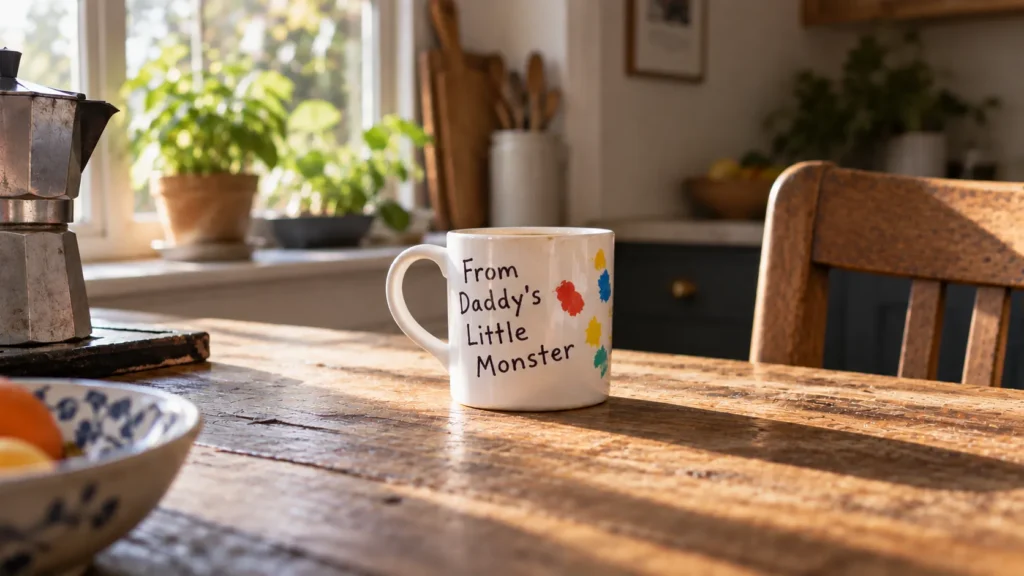
There is a mug in our house that would be worth almost nothing to anyone else. It was given to me by my son, Jack, for my first Father’s Day, and on the side are the words, “From Daddy’s Little Monster.” I cannot remember what it cost, if indeed I ever knew. I cannot imagine anybody wanting to buy it.
Jack’s arrival changed our family completely. The bond was immediate, and not long afterwards Farley arrived, our first dog and an absolute lunatic who seemed remarkably well matched to Jack. When I look at the mug now, it belongs to that particular period when the three of us had become a family and were beginning to discover what that meant. Farley joined the chaos shortly afterwards.
The mug was not bought to mark any of that. Nobody could have known what it would eventually come to mean, and I certainly did not receive it thinking that I ought to look after it for the next twenty years. It was a Father’s Day present with a funny line on the side.
Somewhere along the way, its value changed.
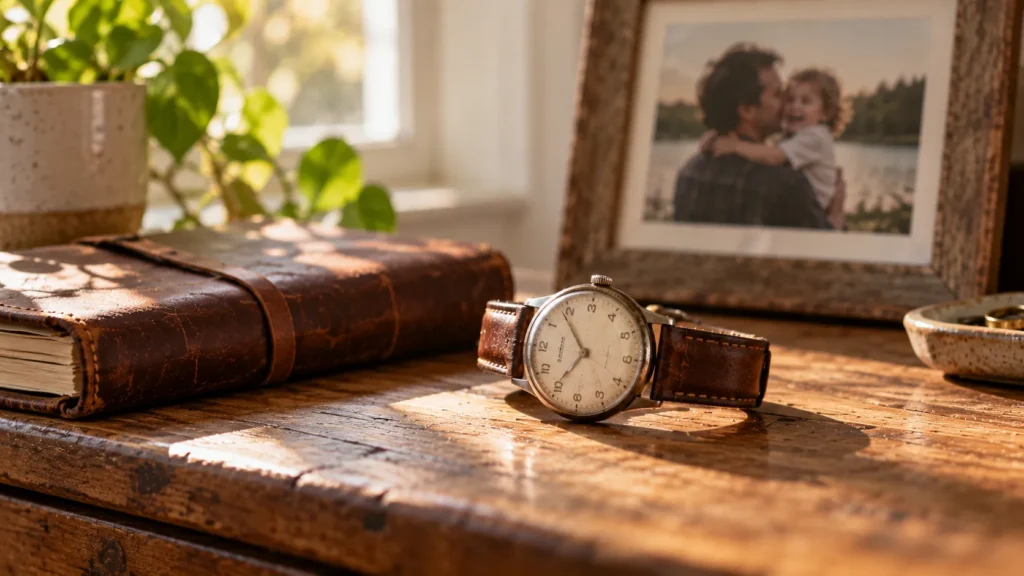
I have a watch that I bought for myself after reaching a milestone when I was starting out in business. I wanted the watch at the time, but the reason I would never sell it now has more to do with when I bought it. It takes me back to a younger version of myself who had reached something he had worked very hard for.
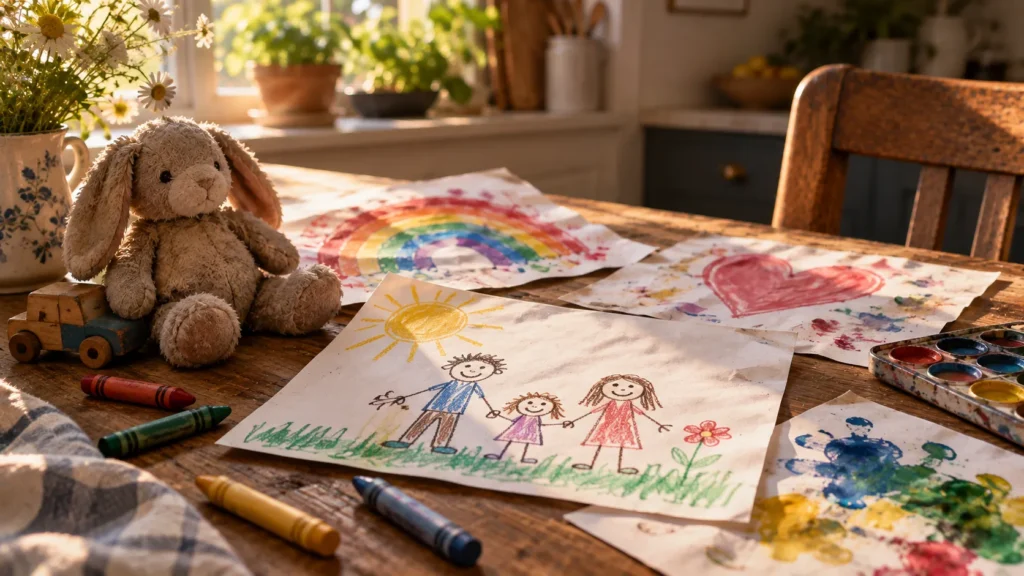
We have things Jack made when he was little too. Some are, objectively, interesting. His approach to colour was wonderfully unpredictable, including occasions when one colour was apparently quite sufficient for something that most people would have thought required several. Improving them now would remove the very thing worth keeping. They look as they do because that was how Jack made them then.
My wife, Jude, has something smaller still. It is a handkerchief that belonged to her late dad, and it goes everywhere with us. It comes on holiday and travels to places he never visited. Taking it with her is a way for Jude to take a little part of her dad along too. To everybody else, it still looks like a handkerchief.
Almost everything else we own has a price somewhere. Houses, cars, watches, furniture and televisions can be valued, insured, sold and usually replaced. Even when replacing them is expensive, there is a number attached to them.
If our house were on fire and everyone was safely outside, almost nothing I would want to carry out first would be amongst the most expensive things we own. I would be trying to save the things an insurance company would probably value least.
Perhaps you already know what you would take.
Imagine the Father’s Day mug was broken and somebody offered to make another one. They could reproduce the shape, the colour and the words so accurately that nobody looking at it could tell the difference.
It still would not be my mug.
The replacement had not come from Jack on my first Father’s Day. However good the copy, I would know that. It would be another mug with the same words on the side.
The same is true of Jude’s handkerchief. Someone could find the same fabric, reproduce every stitch and age it until the two appeared identical. The copy would never have belonged to her dad.
Most other people would pay very little for either of these things. I was asked recently whether there was a number at which I would sell the mug. £1,000 perhaps. £10,000. £100,000.
There genuinely isn’t a number.
It is not rare, and the design is not particularly important. It is simply the one Jack gave me at a point in my life that I cannot revisit. Another one could look exactly the same.
We never set out to collect any of this. Nobody selected these things because they were likely to become important. Most arrived looking completely ordinary, and their significance came later.
We spend a surprising amount of time choosing the things that enter our homes. We compare them, save for them, search for the right one and occasionally spend far more than we intended. Yet some of the things that eventually matter most were never chosen on those terms at all.
There may be no reliable way of knowing which ones will do it.
How does an ordinary object become priceless?
I am not sure there is a complete answer. Love is certainly part of mine, but that still does not explain why one particular object can come to matter while hundreds of others pass through our lives unnoticed.
Maybe we do not really choose the items that mean the most to us. They just do.
The mug was just a mug when it arrived. The handkerchief once had an entirely ordinary purpose. Jack was simply choosing his colours.
Years later, they are still here.
And if I had to leave the house carrying only what could never really be replaced, I know exactly what I would be looking for.