Some things a company knows have never been written down.
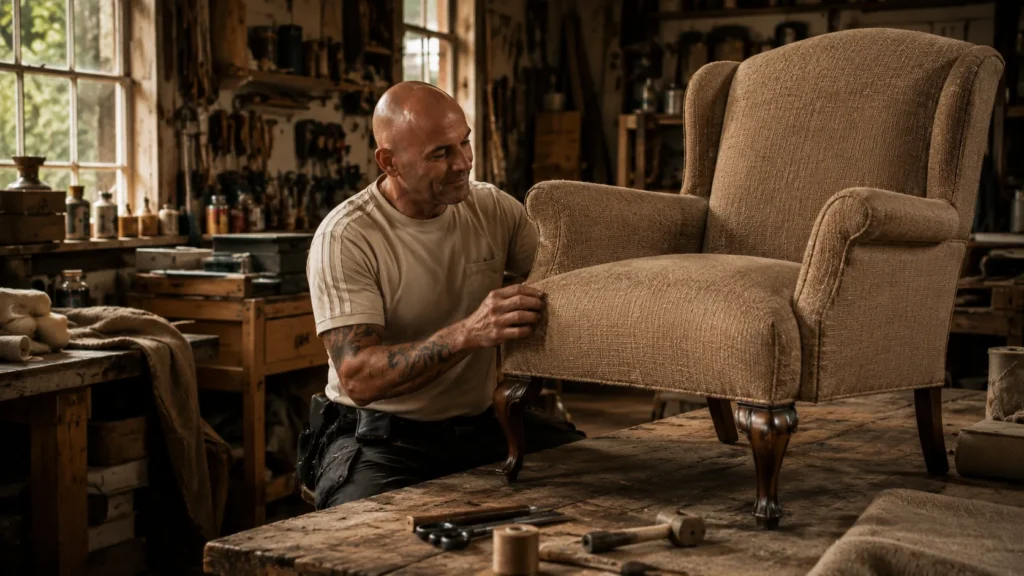
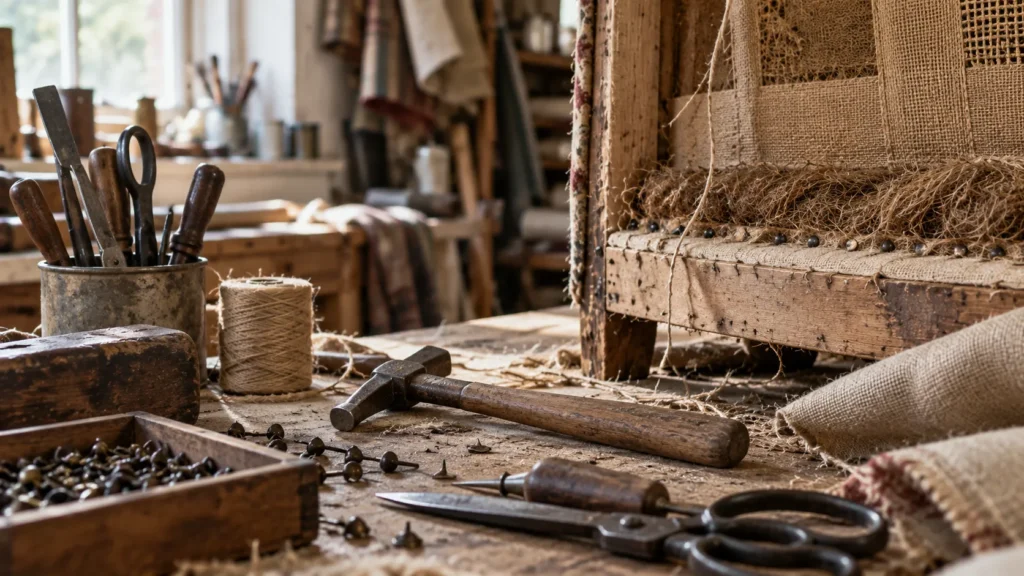
Scott Bell has an old hammer in his toolbox. He has had it since he first worked at John Sankey roughly twenty-six years ago, although he thinks it may already have been second-hand when he got it. He doesn’t use it much anymore, but for some reason it has stayed with him.
Most of the other tools around him are simply tools. They are picked up, put down, replaced when necessary and occasionally hunted for when somebody else has borrowed them. The hammer has survived a little differently. Scott left John Sankey, worked elsewhere and eventually returned, and somewhere through all of that the hammer remained in his box.
Ask him about upholstery and the answers come differently from the way they might appear in a manual. He talks about springs and clips, the density of foam, how an arm has been prepared and whether something underneath the fabric is quite right. One answer leads into another because the finished chair is the result of many smaller things that have already happened by the time anybody sees it.
Some of those decisions are difficult to separate from the person making them. Scott says two upholsterers can work on the same chair in the same fabric, and the finished pieces can still be slightly different. One person pulls differently, another makes a pleat differently, and somebody else prepares the work in their own way. There are instructions for upholstery, of course, but there are also things that become easier to notice after doing the job for years.
You see versions of that in all kinds of work.
There is usually somebody who hears the machine change before anyone else does, somebody who recognises the name on an old order, or somebody who knows why an apparently unnecessary step is still there. Often nobody has deliberately appointed them keeper of that knowledge. They have simply been around long enough for people to start asking them.
Konrad carries a different part of John Sankey with him. His memories reach back to 1992, when he was running another furniture business and went looking for machinery from a company that had gone into administration. He needed a bandsaw. He eventually came away with rather more.
He remembers buying equipment, fabric, stock and patterns, then finding former John Sankey people and beginning again. He remembers names that lead to other names, factories that lead to retailers and conversations that happened before anybody had reason to imagine someone might want to record them thirty years later. The dates occasionally need checking, but the shape of the period is still there.
Then Suzanne arrived. Konrad remembers her approaching furniture from somewhere quite different, researching the Bloomsbury set, the Mitford sisters, fragments of fabric, poetry and other references before they found their way into designs. He remembers exhibition spaces with blood-red walls, then black walls and individual pieces under spotlights, when showing furniture began to feel a little more theatrical.
None of those memories arrives neatly labelled as company history. They appear while he is talking about somebody else, or because one name suddenly reminds him of another. A question about a sofa may end up in an exhibition twenty-five years earlier. This is often how the useful parts emerge, sideways rather than chronologically.
Documents are better at dates. Photographs are better at showing exactly what something looked like. Old brochures can tell us which models existed and archive material can settle arguments that memory cannot. But the archive cannot tell us everything that was in somebody’s head when a decision was made.
Eventually the furniture leaves the factory, and another kind of memory begins.
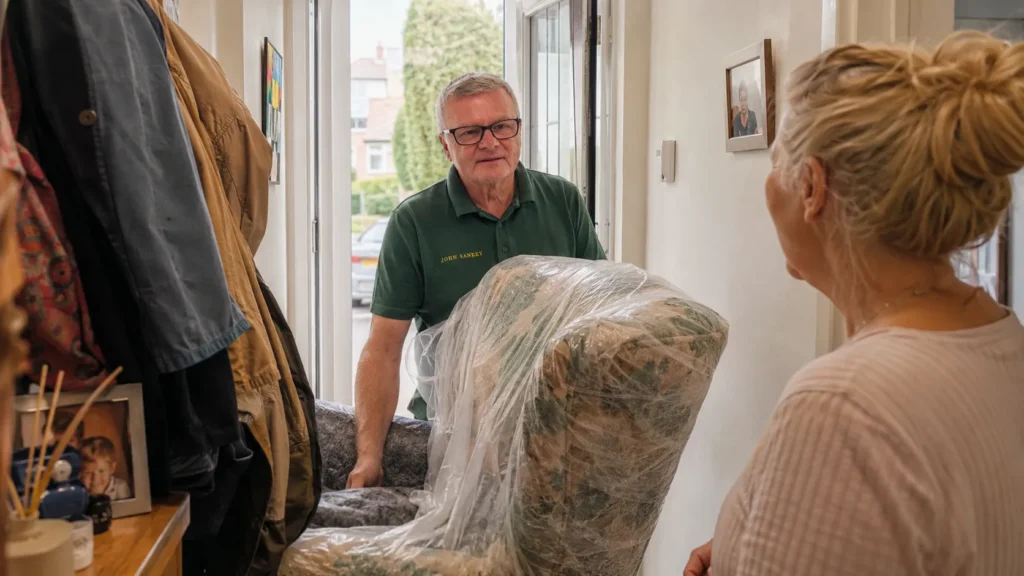
Dave has spent more than twenty years moving through different parts of John Sankey. He has worked with fabric, kitted production, worked in dispatch and delivered finished furniture. That gives him an unusual view of the same piece, because he can remember things both before and after they have gone through somebody’s front door.
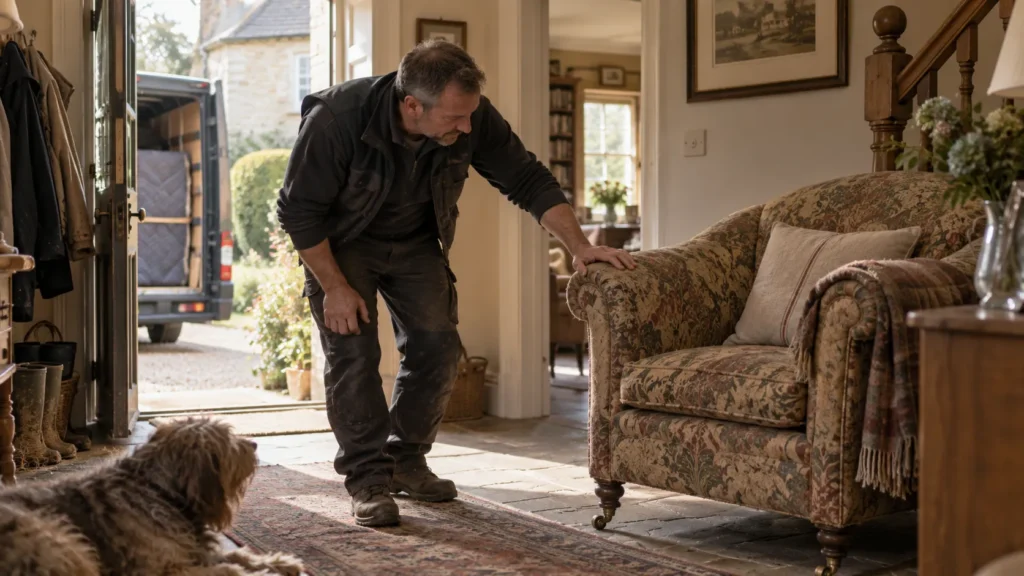
Not long ago, he arrived at a house in Manchester and found several John Sankey pieces already there. Two of them were Tolstoy sofas more than ten years old. Dave looked at the fabric and thought he recognised it as Soft Check Cognac.
Then he began wondering whether he had seen the sofas before. Perhaps he had delivered them with another driver. Perhaps he had handled the fabric when the jobs were first going through production. He could not say for certain, and after more than a decade there was no reason he should have been able to.
The customer had several Sankey pieces around the house. Dave says people sometimes take him into other rooms when he arrives with another delivery, almost as though the new piece has reminded them of the older ones. “Come and have a look at this,” they say, and he finds himself standing beside something that left the factory years earlier.
There is an odd gap in the life of furniture from the factory’s point of view.
A piece is ordered, made, checked, loaded and delivered, and then it disappears. Nobody at the factory sees the ordinary evenings that follow, or knows which room it ends up in after the house is rearranged, or whether another piece joins it ten years later.
Dave occasionally gets to see the other side of that gap. He has met customers buying Sankey because their parents owned it, and he has heard families talk about pieces moving through generations. He sees furniture after the factory has stopped being part of its daily life.
That gives the company three very different kinds of recollection. Scott remembers things because his hands have repeated them. Konrad remembers the people and decisions that changed the business. Dave sometimes remembers the furniture after everybody at the factory has stopped seeing it.
None of them is a perfect archive.
Memory shifts, dates blur and two people can remember the same event differently. That is one reason companies keep records in the first place.
But records have their own limits. A specification can tell somebody which foam belongs where without teaching them everything Scott notices while fitting it. An old brochure can show a chair without explaining why Suzanne had been reading about a particular group of people before it was designed. A delivery note can prove that two sofas went to Manchester without knowing that, more than ten years later, the delivery driver would walk into the house and recognise the fabric.
Perhaps this is why certain questions inside long-established companies nearly always end up being asked of a person rather than a filing cabinet.
Someone remembers what happened. Someone knows who to ask next. Someone looks at the thing in front of them and says, almost without thinking, that they have seen this before.
Scott still doesn’t use the old hammer very often.