There is a moment in almost every home when we stop learning where things are.
It does not happen on the first day. It is not complete after the first month. There is no morning when we wake up and realise that it has happened. Instead, it arrives so gradually that it disappears into ordinary life. One day we are thinking about the house. Before long, we are simply living in it.
You can often hear the change before you notice it anywhere else.
Every house has its own sounds, but the people who live there rarely think of them as sounds at all. A staircase settles beneath familiar feet. A cupboard catches just before it closes. A washing machine begins its final spin. Somewhere upstairs, a door is pushed shut with just enough force to make the glass in another room answer quietly. None of these moments asks to be remembered. They happen often enough that they become part of the silence.
That silence is surprisingly informative.
Without looking up, you know who has come through the front door. You recognise the rhythm of their footsteps before they speak. You know which cupboard has just been opened, which room someone has walked into, and whether the kettle has been filled or only switched on. Nobody sits a family down to explain these things. They are learned in the same quiet way that a path appears across grass after enough people have walked it.
It is only when you spend time somewhere unfamiliar that you realise how much your own home has been teaching you.
You wake in the night and reach towards the wrong wall for the light switch. A floorboard creaks beneath your feet and you stop because you do not yet know whether another one will answer it. You open the wrong cupboard looking for a mug. You hesitate before turning a corner because you are still thinking about the shape of the house instead of moving through it. The unfamiliar place has done nothing wrong. It simply has not had time to become part of you.
Perhaps that is what familiarity really is.
We often imagine it as knowledge, but it feels closer to instinct. It lives below conscious thought, quietly taking over small decisions until we stop making them at all. The body remembers before the mind notices that it has remembered.
The same thing happens with the routines that slowly gather around a home.
Nobody formally decides where shopping should be left before it is unpacked. Somehow the bags always find the same patch of floor. Somebody reaches for the kettle before taking off their coat, while somebody else always opens a window first, whatever the weather. There is usually one chair that remains fractionally pulled away from the table because the same person has only just stood up from it. None of these habits feels important enough to discuss. Together, they become the rhythm of the household.
The days themselves are much harder to remember.
Ask someone what happened on an ordinary Wednesday four years ago and they will probably smile before admitting they have no idea. They are unlikely to remember what was cooked for dinner, what was on television, or which conversation wandered from the kitchen into the hallway because nobody stayed still for very long. The details have disappeared almost completely.
Yet the house has not forgotten.
The paint beside one doorway has become smoother because hands have passed there every day. A favourite drawer glides more easily than the others because it has been opened every morning for years. A cookbook seems determined to fall open at the same stained recipe, as though it has quietly accepted that this is where it belongs. Even the bowl by the door holds the keys in exactly the way it did yesterday, although nobody remembers the day it first became the place for them.
These changes never arrive all at once.
A stair does not become worn in a single winter. A handrail is not polished by one hand. A cushion does not soften because of one evening spent reading. Wear gathers patiently. It waits for repetition to do its work until evidence of living becomes almost impossible to separate from the object itself.
We often assume that homes become emotional because of life’s largest moments.
Birthdays. Christmases. New babies. Difficult conversations. Final goodbyes. Those days deserve remembering, and many remain vivid for decades. But they are far too few to explain why walking through the front door can sometimes feel different from arriving anywhere else.
Most homes are built another way.
They are built from Mondays that looked very much like Tuesdays. They are built from cups of tea made before anybody else has come downstairs. From lunches eaten standing at the kitchen worktop because there was no reason to sit properly. From familiar voices drifting between rooms while someone asks what everyone would like for dinner before anyone has decided. From evenings that felt so ordinary at the time that they seemed almost invisible.
That invisibility matters.
We do not become attached to home because we remember every ordinary day. We become attached because ordinary days quietly teach us how to stop noticing them.
Once that happens, the relationship changes.
You no longer think about where to leave your keys. Your hand reaches for the right cupboard without checking. You find the light switch in the dark before your eyes have adjusted. The house begins to ask less of your attention because it has already given so much to your memory. Not the memory that recalls anniversaries or holidays, but the quieter memory carried in hands, feet and habit.
That is why even the smallest interruption can feel unexpectedly strange.
Somebody moves the mugs to another cupboard. The dining table is turned the other way round. A familiar chair is borrowed for another room. None of these alterations is especially important, yet each asks your mind to notice something your body had quietly stopped thinking about years before. We often discover our routines only at the moment they are interrupted.
Perhaps that is also why the objects within a home become more than objects.
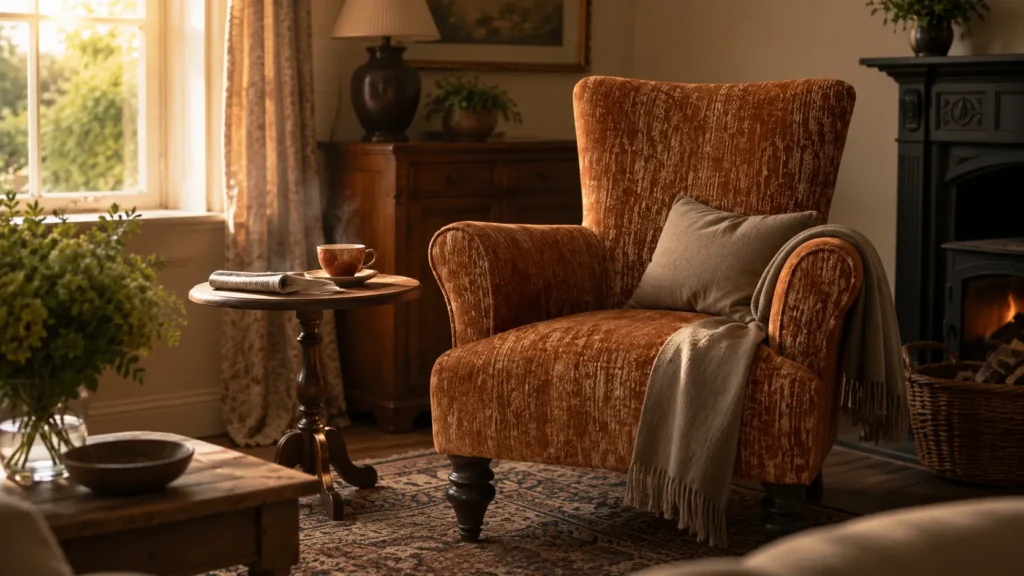
A chair matters because somebody always chooses it without realising that they do. A table matters because conversations continue around it long after the plates have been cleared away. A worn arm, a polished handle or the slight hollow left in a favourite cushion tells us remarkably little about age and a great deal about repetition. They are not signs that something has been used. They are signs that life kept returning.
We sometimes speak as though home is a place we create.
In truth, it may be closer to something that quietly creates us. Not through dramatic moments or carefully preserved memories, but through thousands of ordinary repetitions that shape the way we move, listen, wait and belong without asking us to pay attention.
Perhaps that is why coming home has never felt quite the same as arriving anywhere else.
The door opens. The keys find the bowl without looking. The kettle is filled almost before the coat has been taken off. Nothing remarkable has happened. Nothing that deserves a photograph or a diary entry. And yet everything feels unmistakably familiar.
Not because the house remembers one extraordinary day.
Because it has quietly remembered all the ordinary ones.