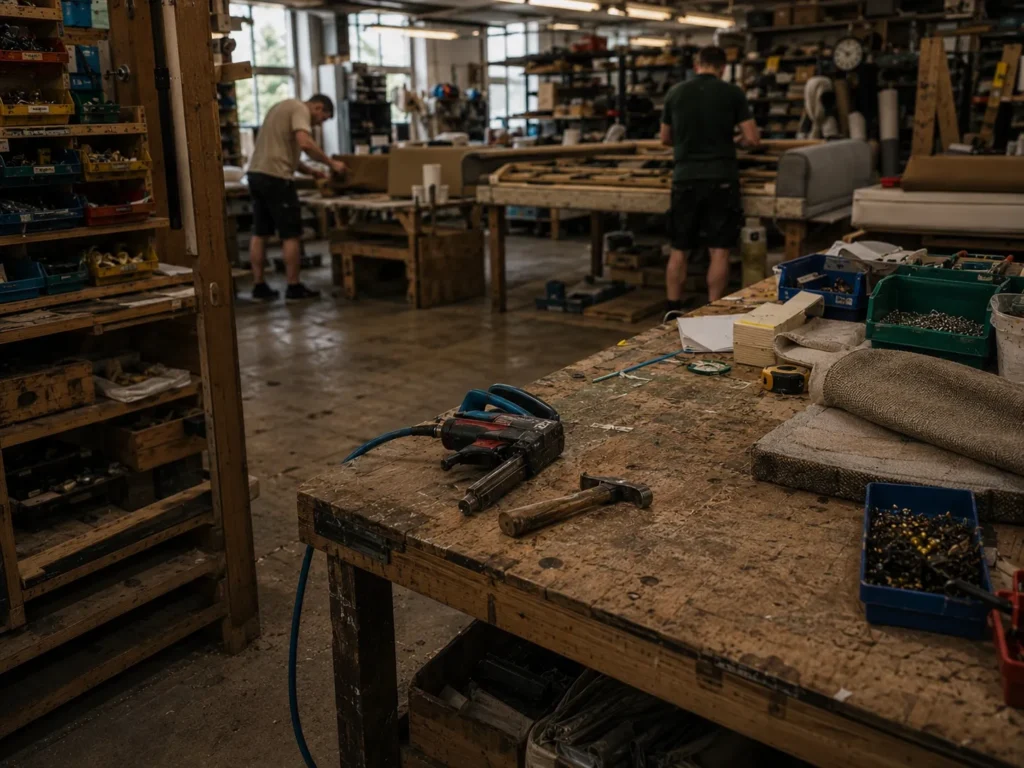
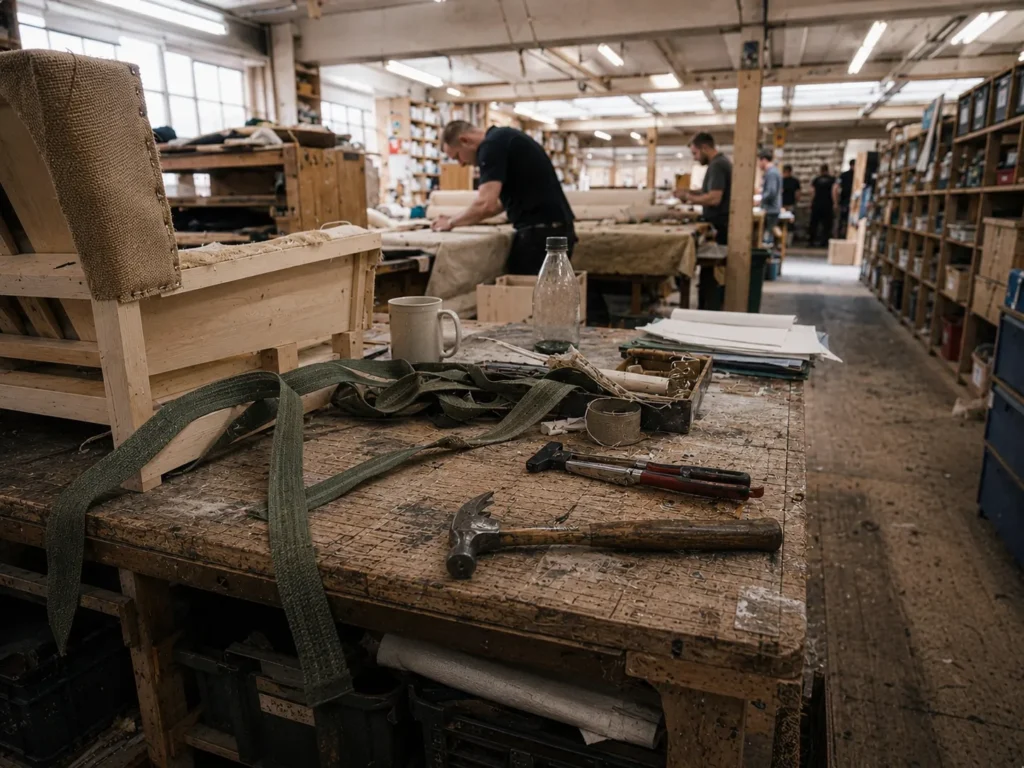
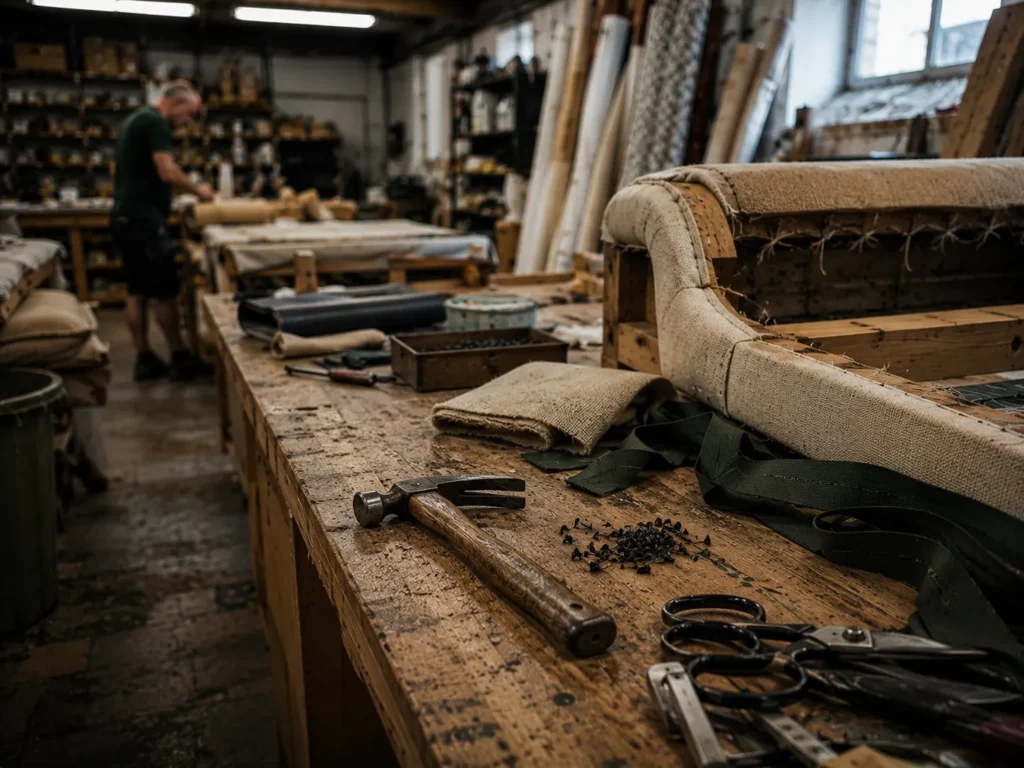
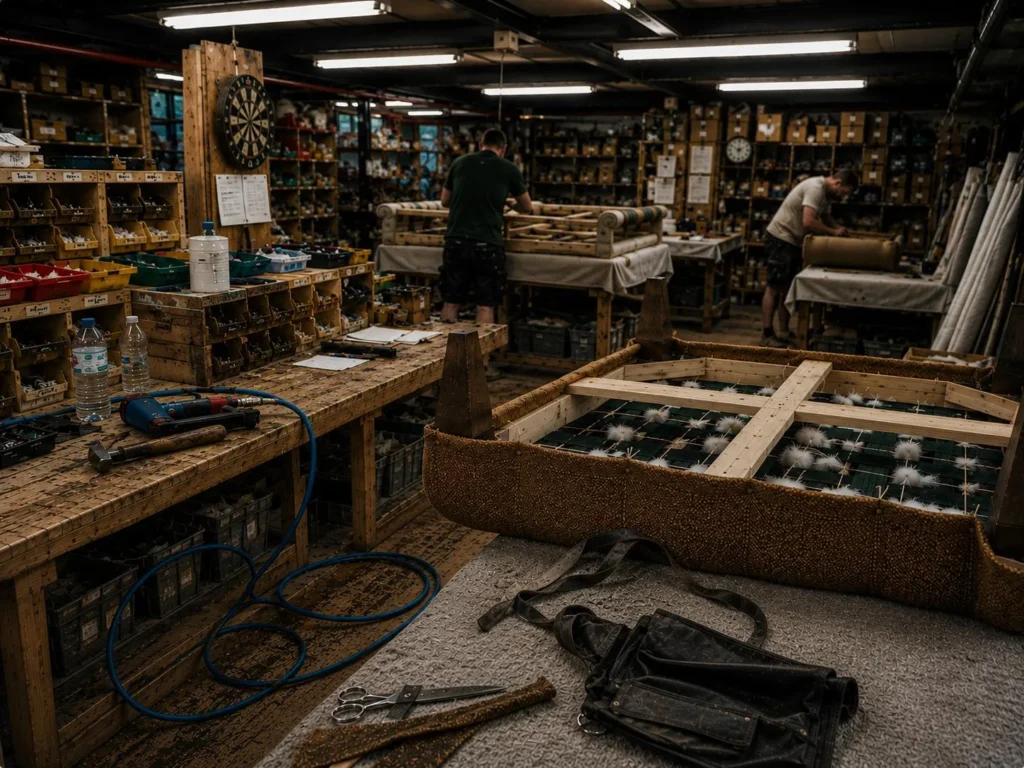
At John Sankey, it hangs where it has always hung.
Within easy reach.
Close enough that a hand finds it almost without looking.
It is picked up.
Put down.
Picked up again.
Every working day.
Nobody pauses to admire it.
Nobody tells visitors about it.
It isn’t displayed behind glass or treated as a relic from another age.
It is simply part of the workshop, as ordinary as the benches, the lights above them and the familiar sound of people quietly getting on with their work.
It has become almost invisible.
And perhaps that is exactly what makes it remarkable.
Because this hammer has been doing the same job for twenty-six years.
Not occasionally.
Not ceremonially.
Every day.
It has helped build furniture that has travelled into homes across Britain, and tomorrow morning it will quietly do exactly the same thing again.
Twenty-Six Years of Ordinary Work
The hammer arrived at John Sankey almost without ceremony.
It wasn’t bought because it was rare.
Or beautifully made.
Or destined to become part of the company’s history.
It was bought because someone needed a hammer.
And the next morning, it went to work.
That was around twenty-six years ago.
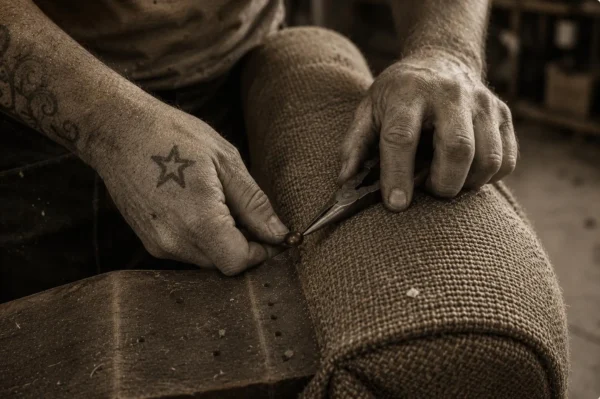
Since then, it has been picked up thousands of times. It has driven tacks into timber, persuaded stubborn joints into place and become part of countless ordinary working days. It has passed from bench to bench, but for most of those years it has belonged to Scott.
Like so many things in a workshop, it earned its place not through sentiment, but through reliability.
Then, for a time, it left.
When ownership of John Sankey changed, Scott took the hammer with him. It wasn’t an act of preservation or nostalgia. It was simply the tool he worked with every day. Wherever the work went, the hammer went too.
When Scott returned to John Sankey, the hammer returned with him.
No announcement marked its arrival.
Nobody gathered to welcome it back.
It was placed on the bench, within easy reach, exactly as it had always been.
The next piece of furniture was waiting.
So the hammer was picked up.
And work continued.
That is perhaps the most remarkable part of its story.
Not that it has survived for twenty-six years.
But that, throughout those years, it has never stopped doing the job it was bought to do.
Every mark on its handle has been earned through use.
Every worn edge is evidence of another ordinary day in the workshop.
Its history was never written in special occasions.
It was written in the quiet rhythm of work, repeated often enough that nobody thought to notice it at all.
Why Nobody Replaces It
There are newer hammers.
Lighter hammers.
Better balanced hammers.
At least, that is what their manufacturers would say.
Scott has never felt the need to find out.
After twenty-six years, the hammer no longer feels like something he holds.
It feels like part of the way he works.
He knows its weight before he lifts it.
He knows how much force is needed before it meets the timber.
He doesn’t think about where his hand should sit on the handle, or how high to raise it, or how the head will fall.
Years of repetition have quietly removed those decisions.
The hammer has become part of his judgement.
That is what experience does.
It turns conscious actions into instinct.
The mind is no longer occupied with using the tool.
Instead, it is free to think about the furniture.
Is the tack seated properly?
Does the frame sound right?
Has the fabric remained under the correct tension?
The hammer is no longer the thing demanding attention.
It allows attention to be given elsewhere.
Perhaps that is why craftsmen are slow to replace familiar tools.
Not because they dislike change.
But because familiarity has become part of the quality of their work.
The tool itself has become almost invisible.
Only the judgement remains.
The Tool That Made Thousands of Chairs
No one has kept count.
Nobody knows how many times this hammer has been lifted from the bench.
Or how many pieces of furniture it has helped to make.
It has almost certainly worked on Tolstoy.
Voltaire.
Bloomsbury.
The Gibson Chair.
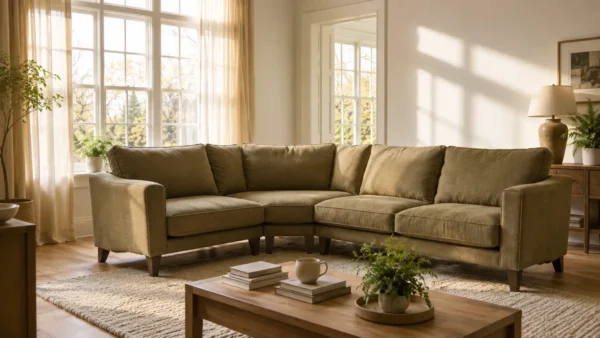
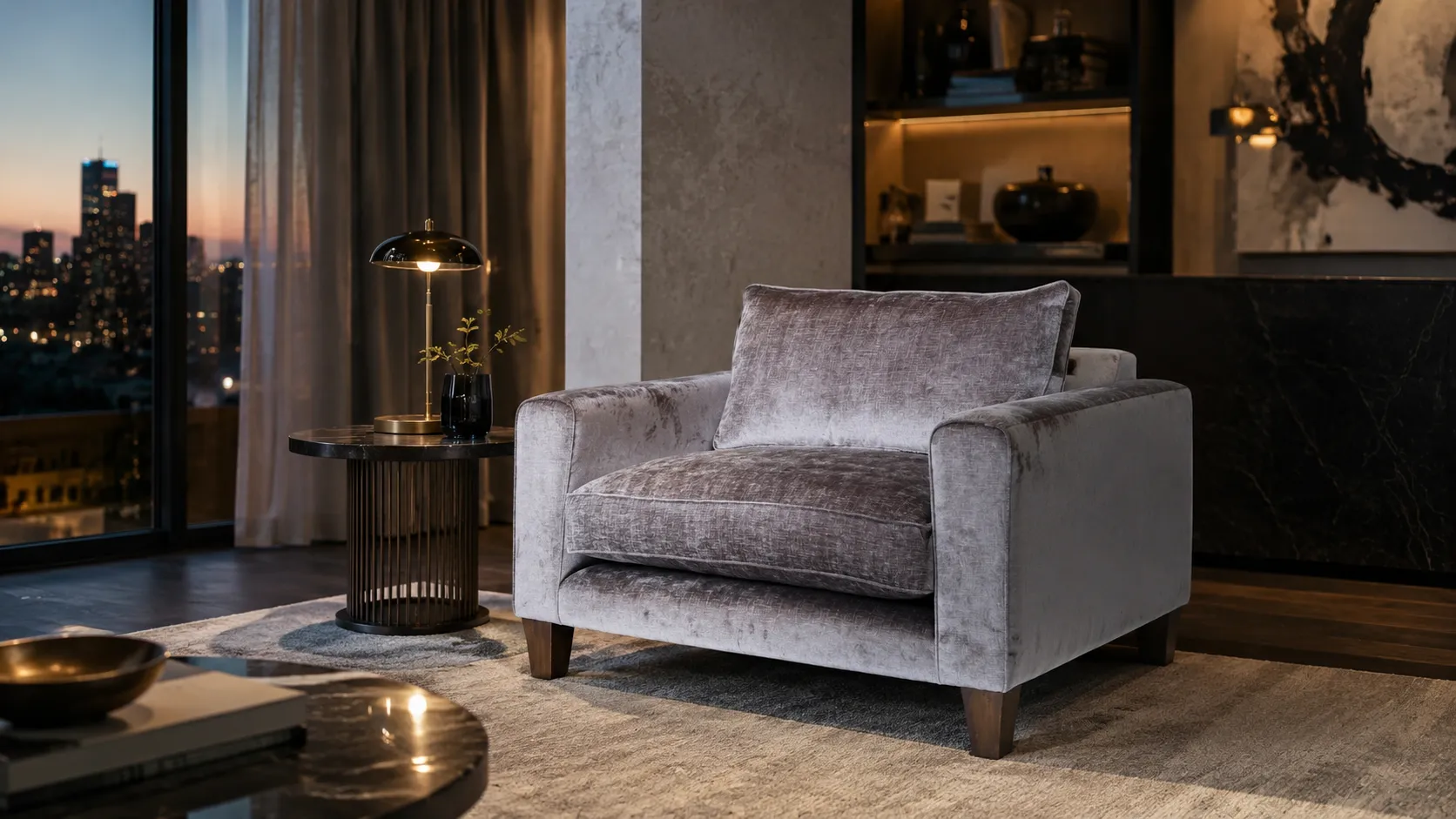
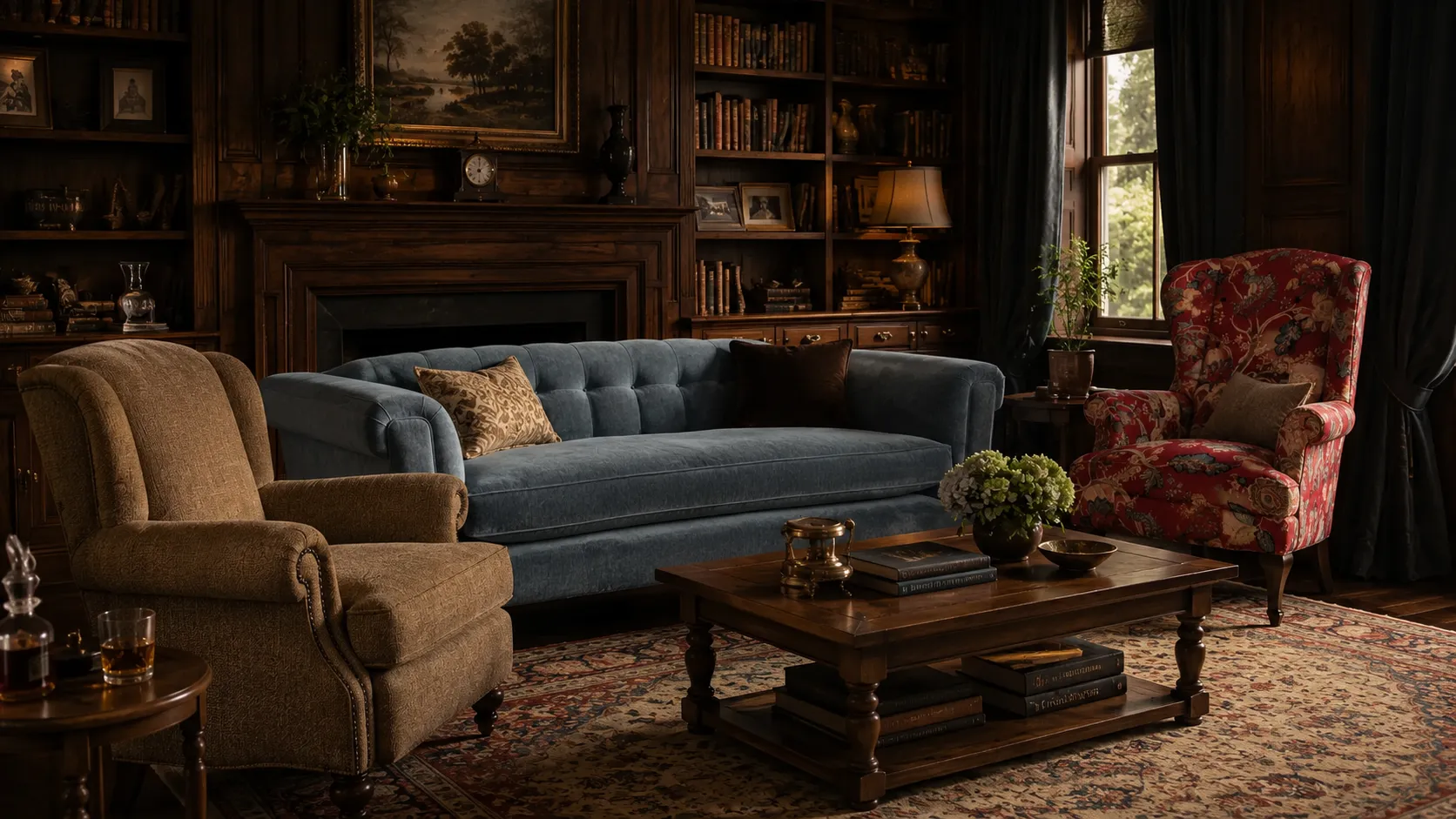
It has helped shape sofas and chairs that now sit in homes across Britain, many of them belonging to families who will never know the story of the workshop that made them.
But the most remarkable thing is not that it has touched these collections.
It is that it has also touched hundreds of pieces whose names are now forgotten.
Furniture made for ordinary homes.
Furniture lived with every day.
Furniture that has quietly become part of family life.
The hammer makes no distinction between an iconic design and an unnamed commission.
Every piece receives the same attention.
The same careful judgement.
The same patient craftsmanship.
That is why it has become part of John Sankey’s story.
Not because it created famous furniture.
Because it was there every morning, doing ordinary work well enough that the furniture could take its place in somebody else’s life.
Its history has never been written in milestones.
It has been written in repetition.
Heritage Isn’t Old
It is easy to mistake age for heritage.
They are not the same thing.
Old objects are everywhere.
They gather dust in lofts.
They fill antique shops.
They sit behind glass in museums, admired for what they once were.
Heritage asks something different.
It asks whether something still has a purpose.
Whether it continues to earn its place.
This hammer has never become an exhibit.
Nobody has retired it because it reached a particular age.
Nobody has polished it for display or placed a small brass plaque beneath it.
It remains where it has always been.
Close to hand.
Ready for the next piece of furniture.
Its value has never come from surviving.
It comes from continuing.
Every working day adds another chapter to its history.
Not because anyone intends to preserve it.
But because it still does exactly what it was made to do.
Perhaps that is the truest definition of heritage.
Not something remembered.
Something still alive.
Editorial Conclusion
Perhaps that is the difference between age and heritage.
Age is measured in years.
Heritage is measured in continued purpose.
For more than twenty-six years, this hammer has done exactly what it was made to do.
It has passed through changing ownership, witnessed thousands of pieces of furniture taking shape and remained quietly within reach of the people who rely upon it.
Most visitors would never notice it.
The craftsmen who use it every day rarely stop to think about it.
And perhaps that is precisely why it matters.
The finest traditions are not protected because they are admired.
They endure because they continue to serve a purpose.
Long after fashions change, long after collections evolve and long after names are forgotten, the workshop still opens each morning.