Fashion Changes. Homes Endure.
Furniture is often discussed as though it belongs to the world of interiors.
New collections.
New colours.
Next season’s trends.
It is easy to believe that good furniture should always feel new.
Scott has spent nearly three decades watching something very different.
The pieces people remember are rarely the newest.
They are the ones that quietly stayed.
The chair that was reupholstered instead of replaced.
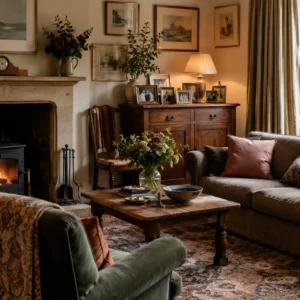
The sofa that moved from one family home to the next.
The armchair that every grandchild still remembers sitting in.
They stop being part of the room.
They become part of the family.
That is why the finest furniture isn’t designed simply to look beautiful today.
It is designed to earn its place over decades.
Because the real measure of good furniture is not whether it looks current now.
It is whether somebody still wants to live with it twenty years from today.
Built for the Long Conversation
The life of a piece of furniture is decided long before anyone chooses a fabric.
Long before a customer sits on it.
Long before it arrives in a home.
It begins with decisions that are almost invisible.
The strength of the frame.
The way each joint is made.
How the seat will be supported.
Whether the upholstery can one day be renewed instead of replaced.
None of those decisions makes a showroom more exciting.
Few customers ever ask about them.
Yet they quietly determine whether a chair lasts five years…
…or fifty.
That is the quiet difference between furniture designed to be sold…
…and furniture designed to be lived with.
Timeless Isn’t an Appearance
People often mistake timelessness for a style.
A rolled arm.
A particular leg.
A traditional fabric.
But fashions have always changed.
What looked modern fifty years ago looks familiar today.
What feels fashionable now will eventually become part of history.
Timelessness survives because it was never trying to be fashionable in the first place.
It belongs somewhere much deeper.
It is found in thoughtful proportions.
Honest materials.
Careful construction.
Furniture that earns its place in a home year after year.
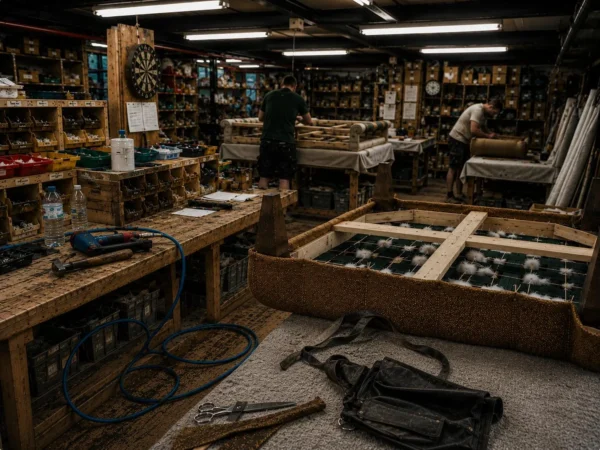
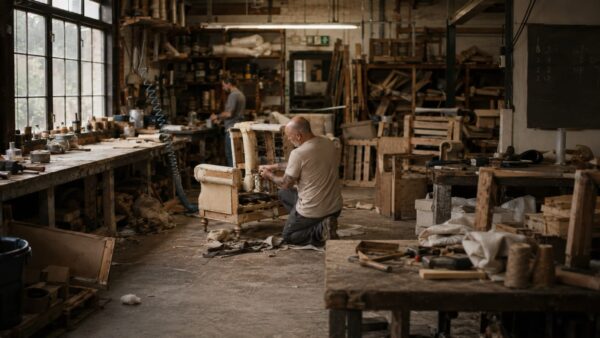
Scott has spent nearly three decades working on pieces that people continue to bring back, not because they are broken, but because they still matter.
New fabric.
Fresh comfort.
The same chair.
That may be the clearest definition of timeless furniture there is.
Not something that escapes time.
Something that deserves more of it.
Built to Be Repaired
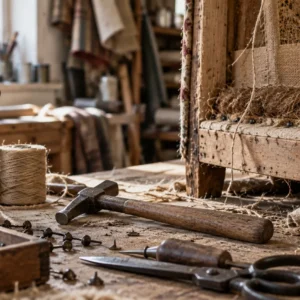
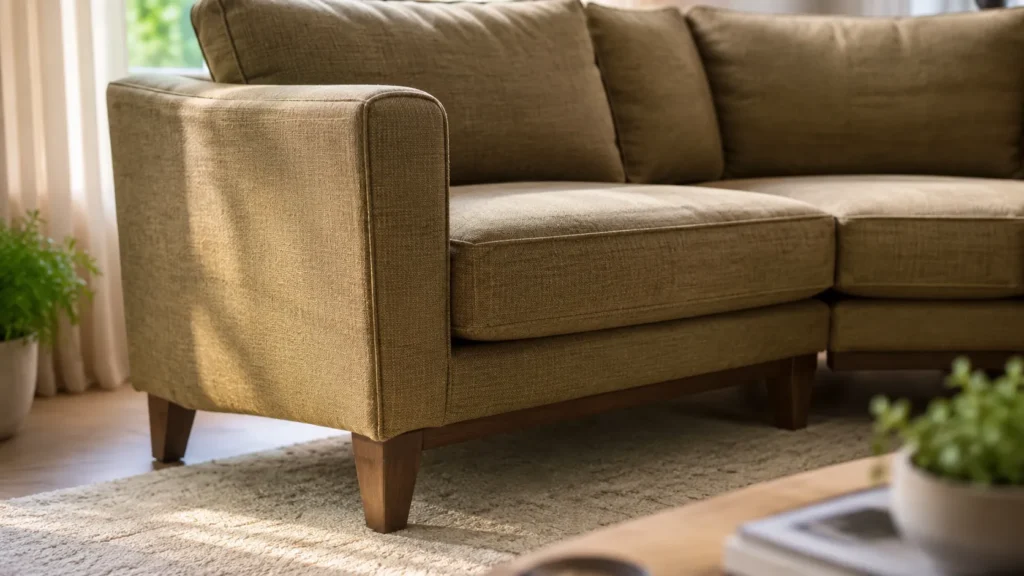
One of the quietest signs of confidence in a piece of furniture is that it can be repaired.
Not because it is expected to fail.
But because it is expected to stay.
The strongest furniture is never designed to be temporary.
Its frame is built to last.
Its upholstery can be renewed.
Its cushions can be refilled.
Its comfort restored.
The story continues.
That way of thinking asks something unusual.
Instead of asking, “How long will this last?”
It asks,
“How many lives could this still be part of?”
Perhaps that is why restoration feels so different from replacement.
One assumes an ending.
The other assumes a future.
Scott’s View
Scott rarely talks about trends.
He talks about making the chair properly.
If a fabric needs pulling again, he pulls it again.
If a pleat doesn’t sit naturally, he starts again.
If something doesn’t feel right, he changes it.
Not because someone will necessarily notice today.
But because somebody might still be living with that chair decades from now.
That way of thinking changes everything.
Craftsmanship stops being about today’s customer.
It becomes a conversation with people the maker may never meet.
The family who will inherit the chair.
The upholsterer who may restore it one day.
The person who will sit down years from now without ever knowing how much care went into making it.
That is what craftsmanship quietly hopes for.
Not admiration.
Endurance.
Editorial Conclusion
Furniture that outlives trends rarely does so by accident.
It survives because somebody expected it to.
Somebody chose stronger timber.
Somebody refused to rush a joint.
Somebody pulled the fabric one more time until it felt right.
Those decisions are almost invisible when the furniture leaves the workshop.
Years later, they become impossible to miss.
Perhaps that is why the best furniture rarely announces itself.
It simply remains.
Long after fashions have changed.
Long after colours have fallen out of favour.
Long after magazines have been recycled.
Still quietly earning its place in someone’s home.
Perhaps that is the real purpose of craftsmanship.
Not to make furniture that survives the passing of time.
But to make furniture that deserves to.