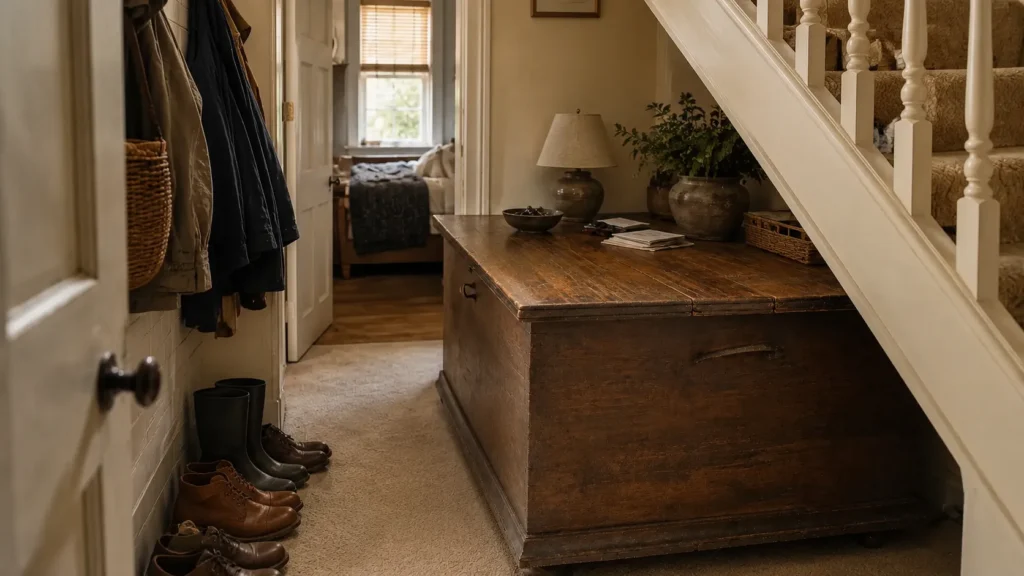
There are two enormous wooden boxes in our house. I am not entirely sure where they came from, although I think we found them in an antiques shop when we moved from a small house into a much bigger one and suddenly discovered that having more space also meant needing considerably more things to put in it. Whatever judgement we used when buying them, measurements do not appear to have played a significant part.
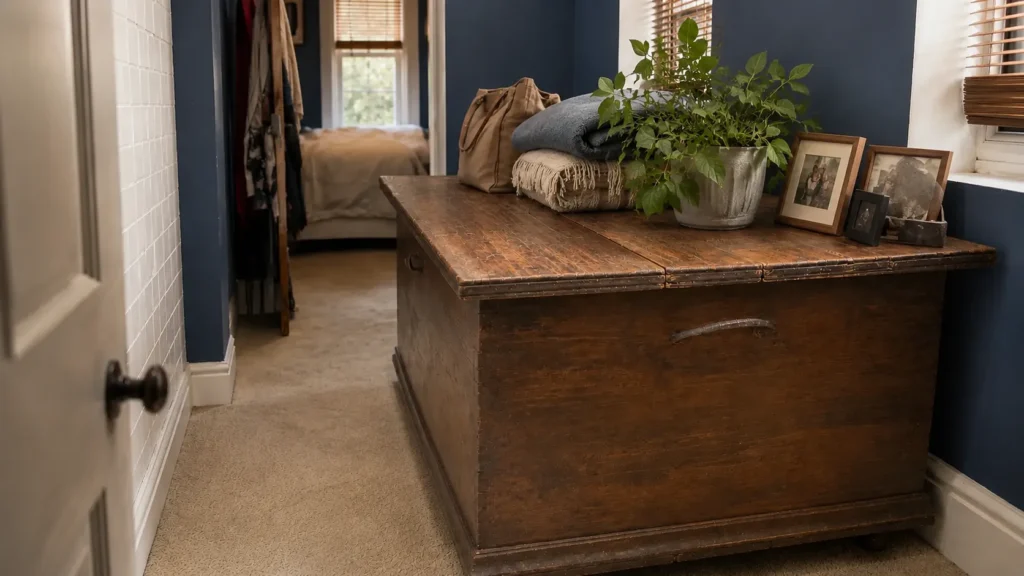
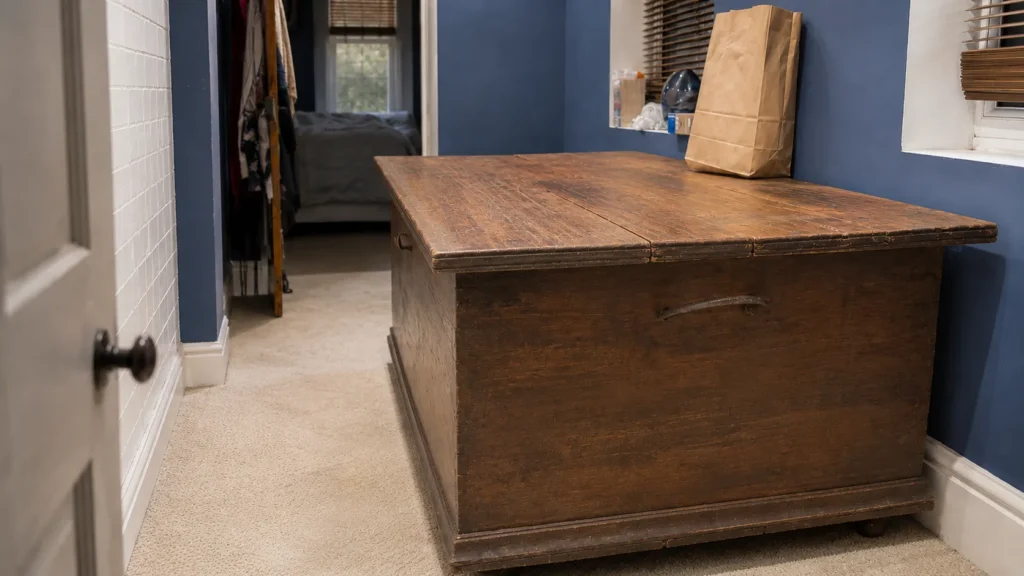
One now lives under the stairs. The other sits in the corridor outside our bedroom, where it occupies enough of the available space to make walking past it a more deliberate act than the architect probably intended. There are pieces of furniture that seem perfectly made for the place they occupy. This is not one of them.
We have had them for years, and during that time they have stored almost everything. Baby toys disappeared into them, then shoes, clothes and all the other possessions that a family needs somewhere to put without necessarily knowing exactly what category they belong to. For a while, one of the boxes also stored our son Jack, although not in any officially recognised storage capacity. He used to climb inside it to play, and there is a photograph of him sitting there among the brightly coloured plastic evidence of that particular stage of family life.
The toys eventually disappeared and Jack became much too large to fit inside. The box remained, found another job and carried on as though nothing particularly significant had happened.
Neither box has ever been especially concerned with what we originally bought it for.
There must have been a moment when each was placed where it now stands, although neither of us remembers it. Perhaps somebody said it could go there for the time being. What is certain is that nobody stood in the corridor making a considered design decision and concluded that the thing the space really needed was an enormous dark wooden box occupying a substantial proportion of it.
Yet years later, moving it would now feel like the more peculiar decision. We have learned where to walk. We know what belongs inside it. Things are put on it, taken from it and returned to it without anybody reconsidering whether this is the most efficient arrangement available. The box is no longer waiting for us to solve the problem of where it should go.
This happens quietly in homes.
A piece of furniture moves because the original position does not quite work, and the temporary position turns out to be better. Something bought for one purpose proves unexpectedly useful for another. Nobody announces these changes, and after a while nobody remembers that there was ever another plan.
Many homes probably contain two different arrangements.
There is the one imagined at the beginning, when rooms are empty enough for decisions to seem permanent. Then there is the one produced afterwards by years of taking the shortest route, reaching for whatever is easiest, moving something out of the way and discovering that convenient is surprisingly difficult to improve upon.
The second arrangement often makes less sense to somebody seeing the house for the first time. They do not know why that piece is there, or why something obviously too large has survived several opportunities to be replaced by something much more suitable. They see the arrangement. The people who live there see no particular reason to discuss it.
I sometimes look at the box in our bedroom corridor and think that, objectively, there must be a better answer. Something narrower would give us more room. Something designed for the space would probably look neater and make considerably more sense.
But replacing it would require us to look at that part of the house as though we were arranging it for the first time.
We stopped doing that years ago.
The house we live in now is not quite the house we originally arranged. It has been amended by children, shoes, changing routines, things that needed somewhere to go and countless decisions too small to remember making. Somewhere in that process, two ridiculously large wooden boxes stopped being furniture we had bought and became simply where things go.