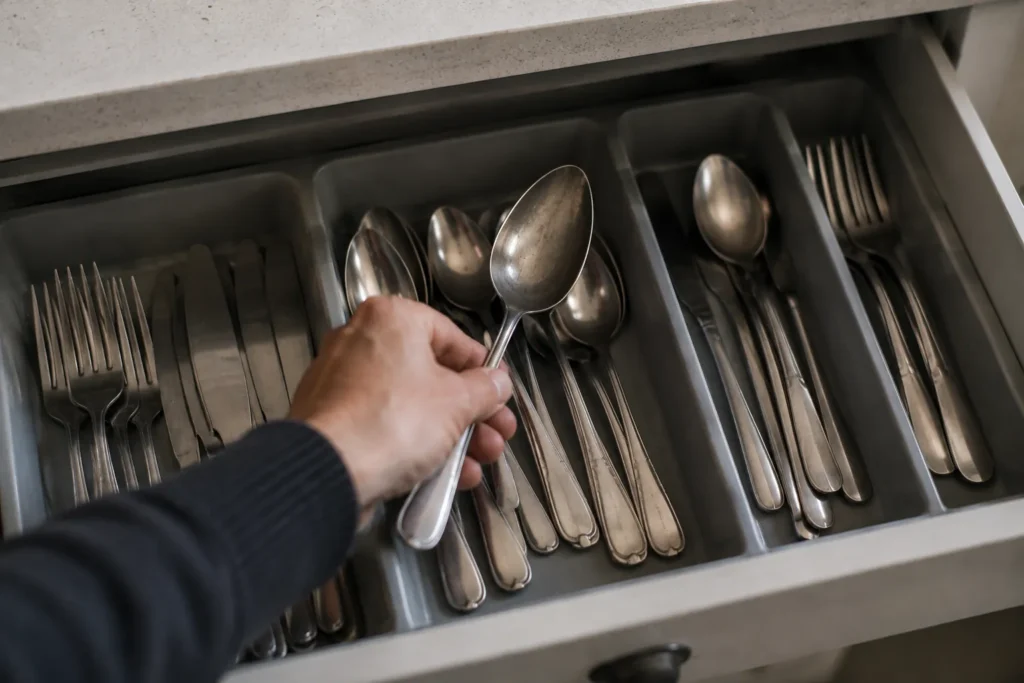
There are six or seven bottles on the bathroom shelf, but most mornings the hand goes to the same one. There may be three pairs of sunglasses in the drawer, several jackets by the door and more than one perfectly good pan in the kitchen. Yet one of each seems to get used far more than the others.
Nobody formally chose them as the favourites. There was no final comparison, no moment when the others were informed that they had lost. We simply kept reaching for one of them, and after a while the reaching became so automatic that the choice almost disappeared.
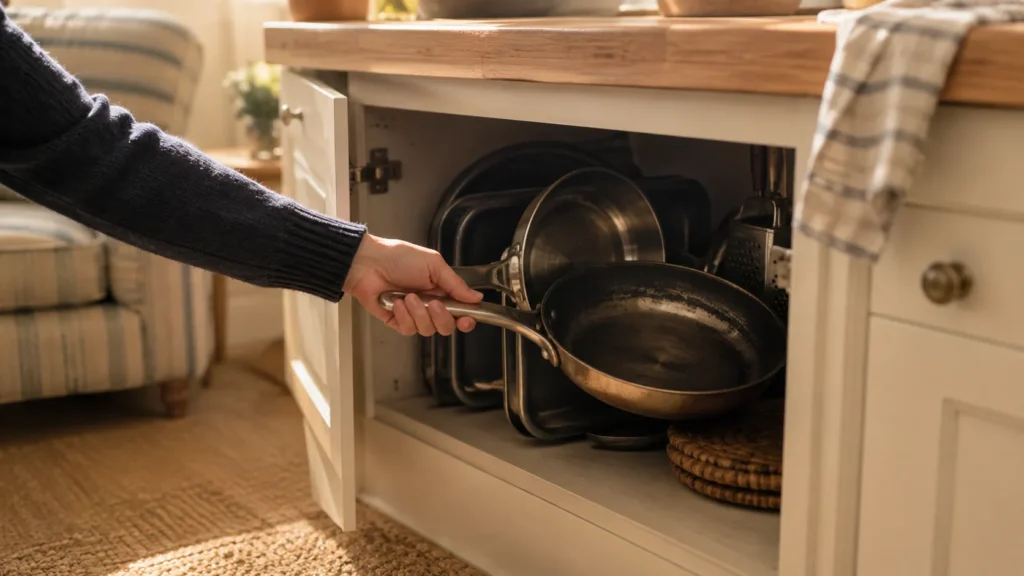
You can see the evidence if you look. One pair of shoes has softened in exactly the places a foot asks it to. One pan is easier to reach because it was put back at the front after being used yesterday, and probably the day before that. The jacket we wear most often has everything already in the pockets where we expect to find it.
None of these things necessarily started out as the best. The shoes may not have been the most expensive pair. The pan may not be the newest, and the jacket might not be the one we would choose if somebody asked us to pick our favourite. They acquired their position in a quieter way. They worked, and then they worked again.
That sounds almost too ordinary to be interesting, until you notice how much of everyday life operates this way.
We tend to think of choosing as something that happens before we own something, when we compare the possibilities and decide which one to take home. But some choices continue long afterwards, made again in tiny ways each time we open a cupboard, get dressed or reach into a drawer.
Most of those decisions barely register. We don’t stand in the kitchen each morning reconsidering every pan on its individual merits. We don’t usually examine three pairs of shoes and remind ourselves which performed best in the rain last Tuesday. Experience has already done some of that work for us.
This may be why replacing something familiar can be surprisingly irritating.
The new version may be objectively better, but for a while it still needs something from us. We have to discover how it behaves, where it rubs, which setting works, whether the handle gets hot, how much of something to use and whether it will do tomorrow what it did today. The old one didn’t ask those questions anymore.
There is a particular kind of confidence in that. Not the confidence that comes from believing something is perfect, but the more useful confidence of knowing what will happen next. The zip occasionally catches. The left shoe has a mark on it. The pan is no longer especially handsome. None of that matters very much because its behaviour is known.
Perhaps this is why our actual favourites can be difficult to identify when somebody asks us about them. We may name the special watch, the beautiful coat or the thing we saved up to buy. Meanwhile, the object we genuinely depend upon has already been used four times that week without receiving a moment’s consideration.
The things we trust most are often the things we have stopped checking.
You can see it in the absence of a pause. A hand reaches for something without turning it over first. A familiar setting is selected without reading the numbers. Something is taken from its usual place and returned there afterwards, ready to be found again. Repetition has removed the little moment when a decision once had to be made.
A normal day contains enough variables already.
Messages arrive, plans change, traffic builds, somebody needs something and something else needs answering. Against all of that, there is quiet usefulness in a handful of things whose outcomes are already known.
New things can become familiar in exactly the same way, through use rather than introduction. They have to live with us for a while before we discover whether they will become the thing at the front of the cupboard or the one behind it. Until then, they still require a little attention.
Some never quite make that journey. They remain the alternative pair, the spare one, the thing we thought we would use more often than we do. Nothing is particularly wrong with them. We simply keep reaching past them.
That may be the more interesting way to discover what we really value.
Not by asking what we admire most, or even what we would say is our favourite, but by watching what happens when nobody is asking the question. Tomorrow morning, there will still be several things to choose from. The hand will probably go to the same one.