At around five in the morning, someone unlocks the factory. The shutters come up, fire doors are opened and lights begin appearing across workshops that have been standing quietly through the night. In winter, there are wood burners to get going before anyone else arrives.
Then the kettle goes on. There may be only two people inside a building that, within the hour, will be filled with machines, conversations and timber being moved from one place to another. For now, you can hear footsteps from much further away.
Walking through the factory
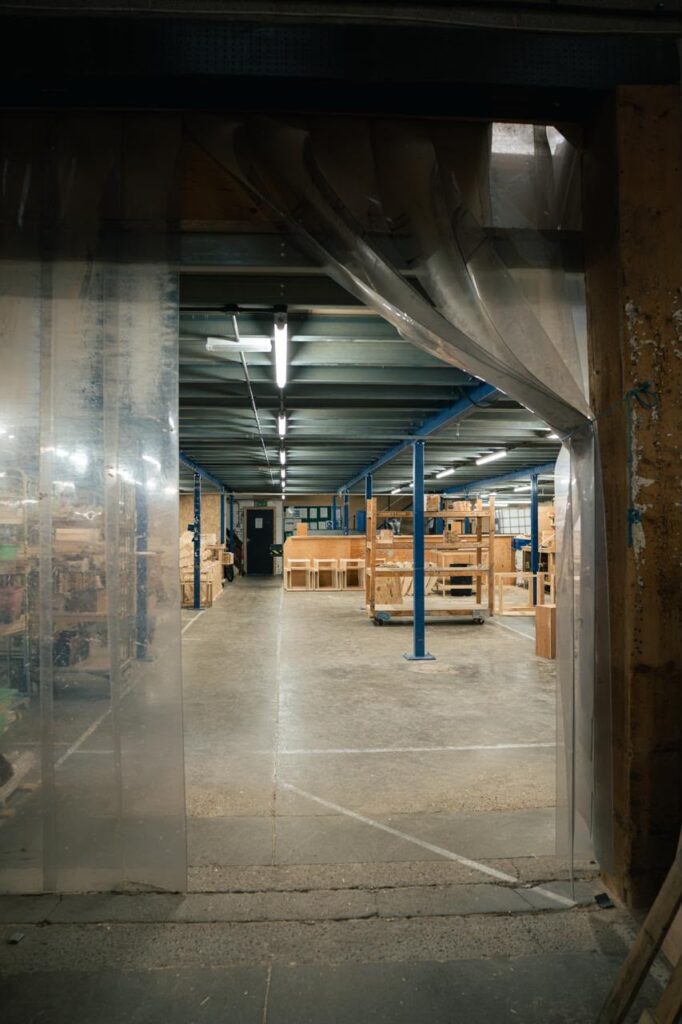
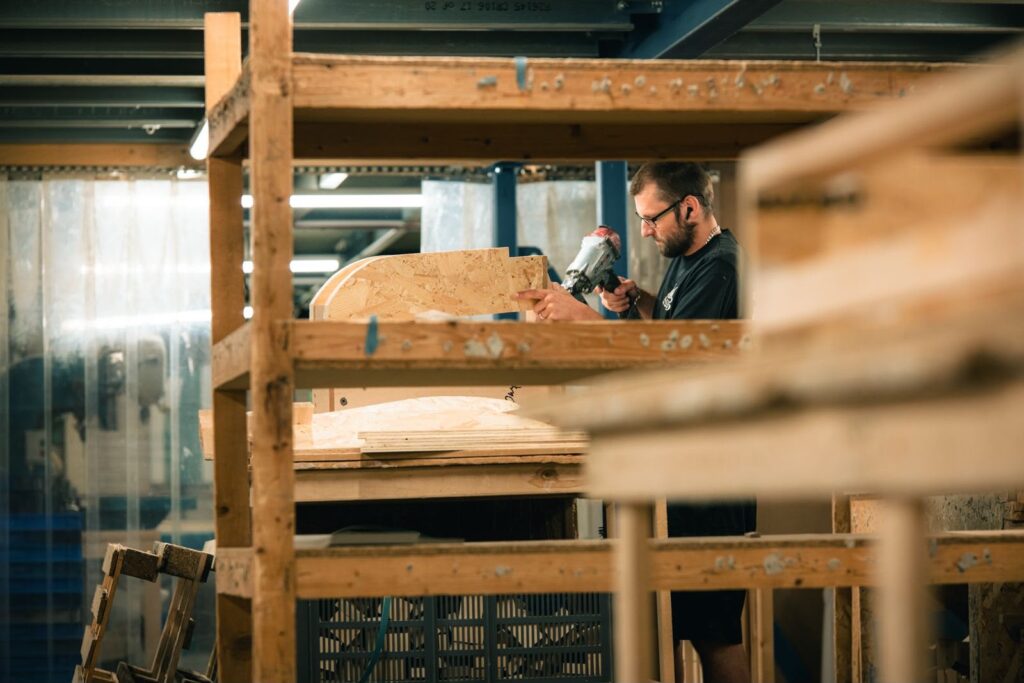
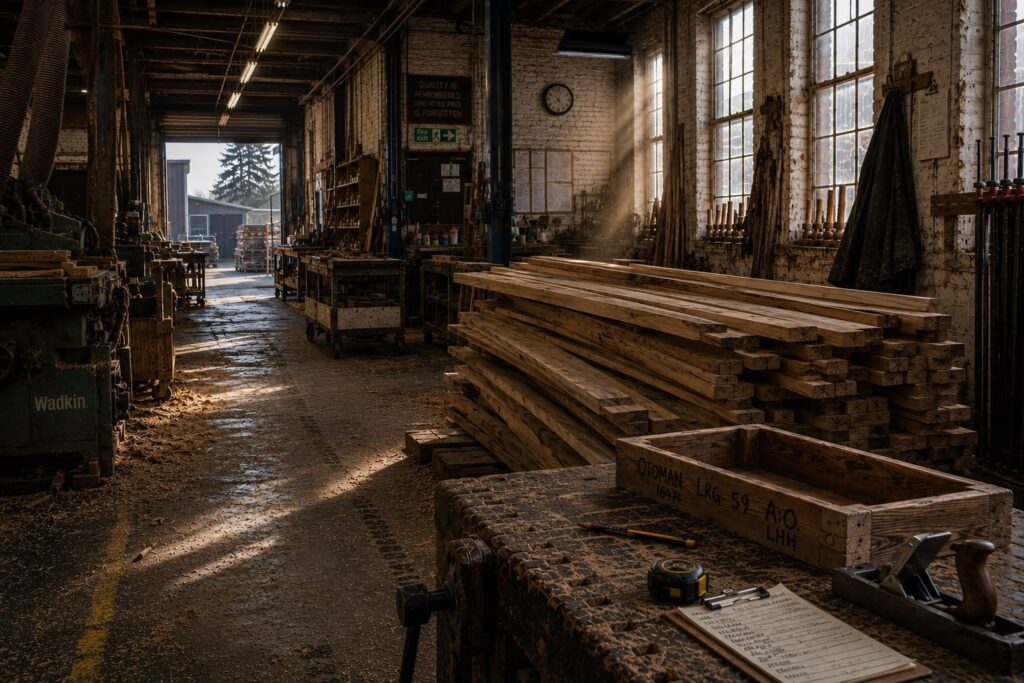
Walking through the factory at this hour feels different, although almost nothing about the building has changed. The strip curtains still carry their scratches, unfinished frames are standing where yesterday left them and the fluorescent lights are the same ones that will illuminate the working day. What has changed is where your attention goes.
We usually notice a working place by what happens there. Arrive before the work begins, and you start noticing the place itself. Benches, timber, machines and tools that will shortly disappear behind the activity around them are suddenly much easier to see.
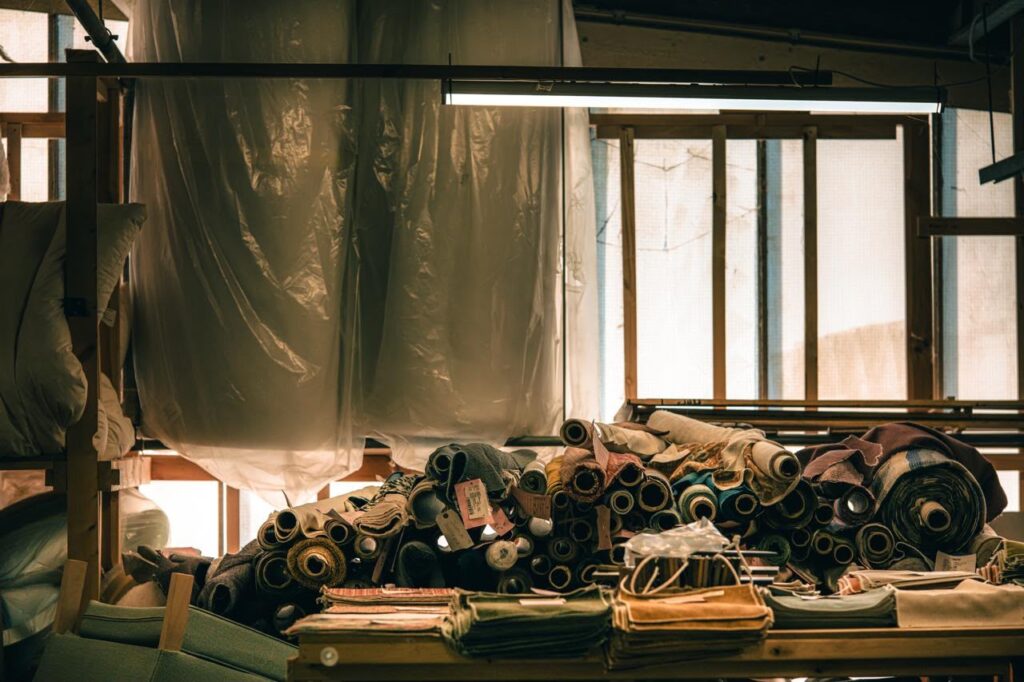
Materials are particularly good at waiting. Rolls of fabric sit together beneath a window, timber lies beside machines, and components remain wherever somebody will expect to find them later. Nothing has been arranged for the morning because nothing needs to be.
There is yesterday everywhere. A frame stopped at the point somebody reached before going home, a trolley left ready for its next journey, tools returned to familiar places. Before today’s work begins, you can still see where yesterday’s finished.
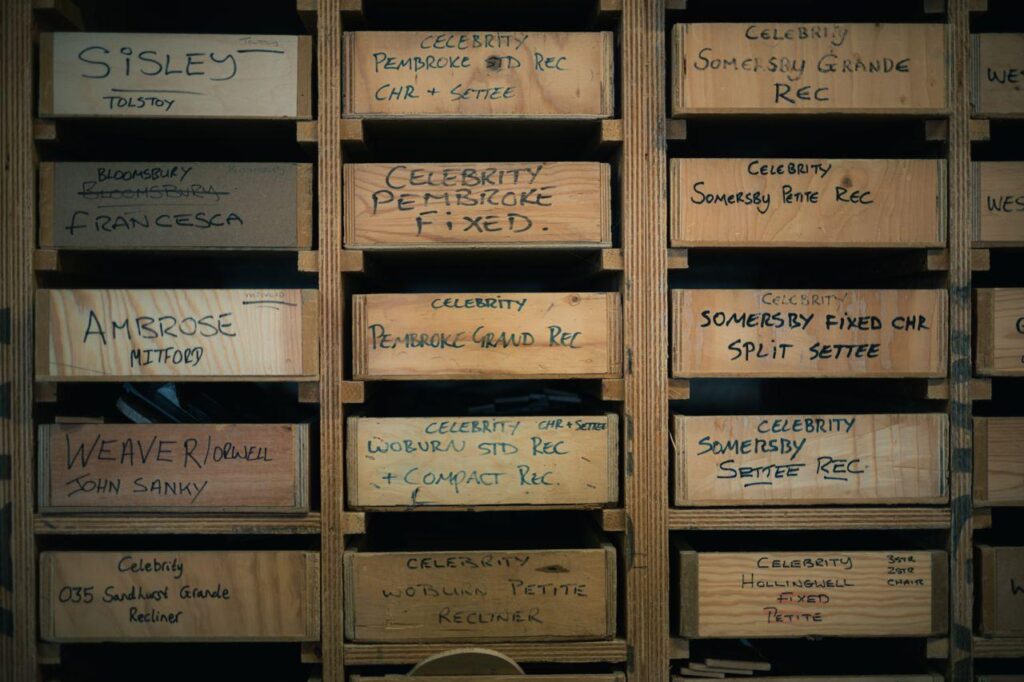
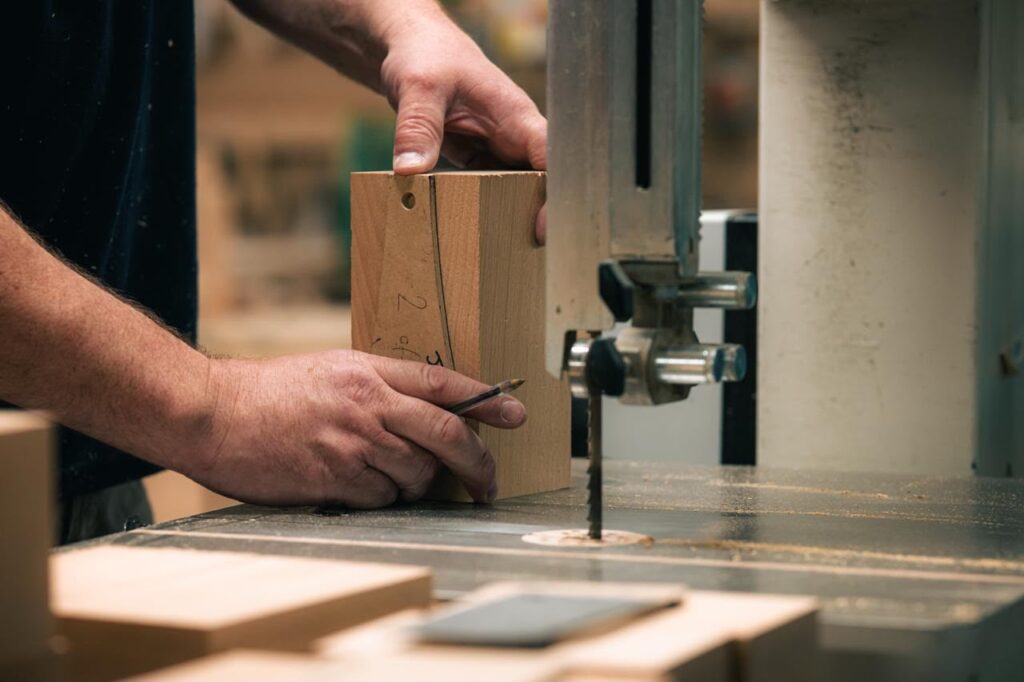
People are present long before many people have actually arrived. Their handwriting is on boxes, measurements remain on pieces of timber, benches carry the marks of repeated use and tools tend to return to the places where particular hands expect to find them. An almost empty factory can contain an extraordinary amount of evidence of the people who work there.
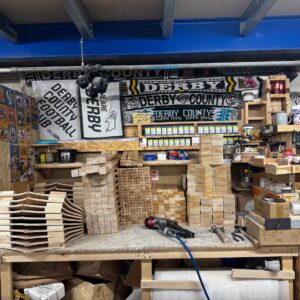
The handwritten component boxes have probably never seemed remarkable to anybody who uses them. Nobody designed the lettering or thought about how they might look in a photograph. Someone needed to know what was inside, so someone wrote it on the box.
By now, the first jobs have been done. The building is open, the lights are on and the kettle has boiled, but there can still be ten or fifteen minutes before the normal working day begins. Nobody appears to have given those minutes a name.
[sankey_join_card]
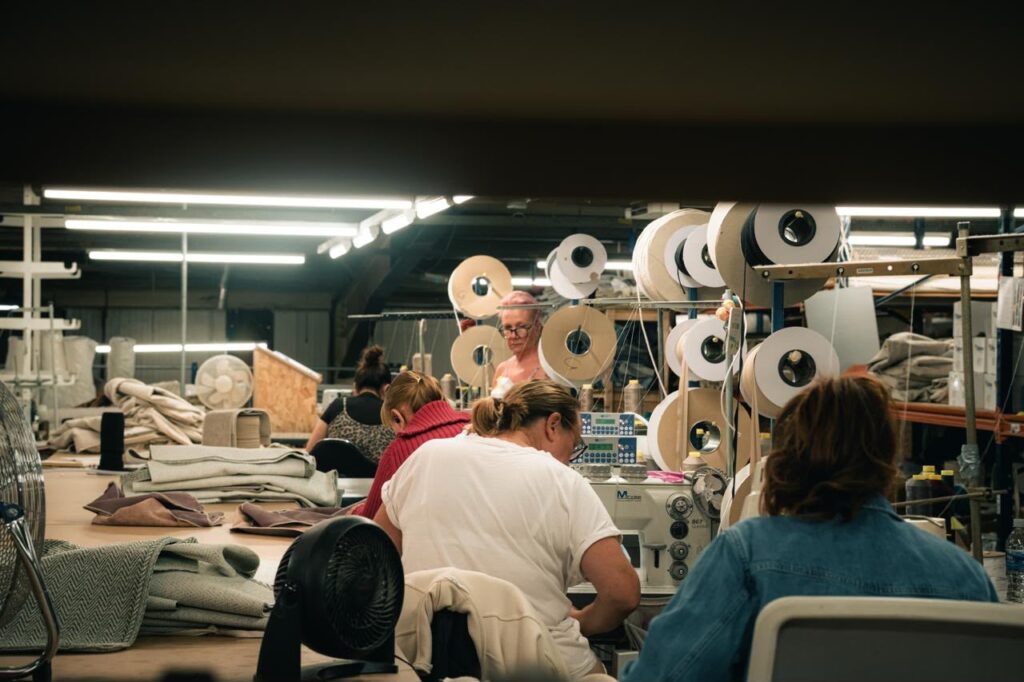
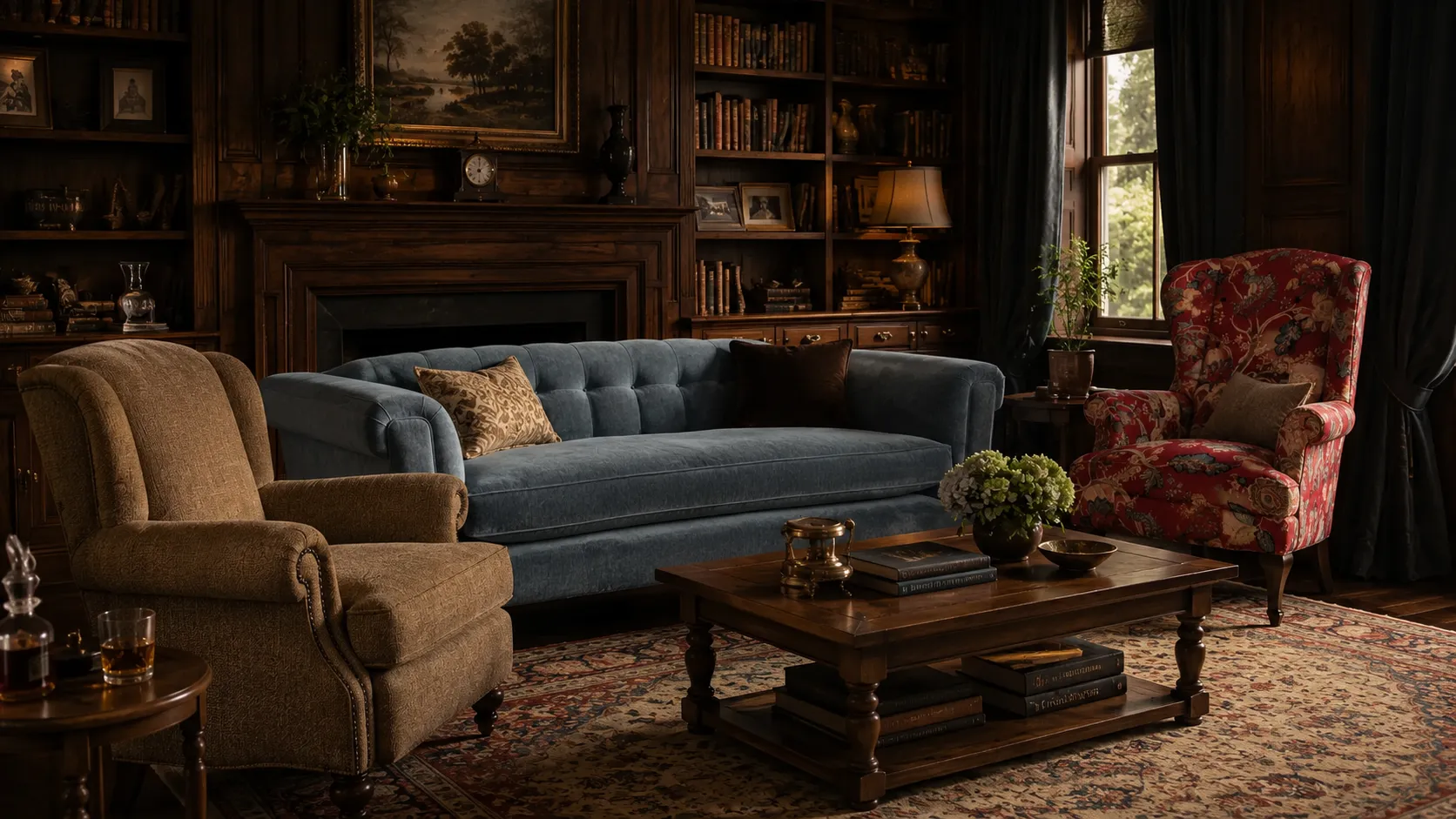
Some of the first people in work around timber, components and frames, close to the beginning of the making. With a few minutes spare, they sometimes wander further through the factory into upholstery to see what is there. Pieces they may once have known as timber and components are now recognisable as chairs and sofas, waiting for the next person to continue with them.
They are not inspecting the work. There is no meeting, and nobody has put fifteen minutes of appreciation into the working day. They have made a cup of tea and gone for a look.
It is a small habit, and an easy one to miss. Most of the day will be spent concentrating on whatever is immediately in front of you, because that is how making works. One person finishes something so that another person can begin.
A furniture factory naturally separates a piece into stages. Someone machining timber may never upholster the frame it becomes, just as the person upholstering it may never have seen the pieces of timber from which it began. The furniture travels through more of the factory than any one person needs to.
For a few minutes before six, those divisions matter a little less. Someone who spends much of the day near the beginning can walk through and see where work that has already left them is heading. The beginning gets to look at the ending.
Nobody needs to say much about it. In a few minutes, everyone will have something requiring their attention and the opportunity to wander around looking at somebody else’s work will largely disappear. The factory is about to become useful again.
The change happens gradually. Another car arrives outside, then another person appears in a doorway. A conversation starts somewhere nearby, something is moved across the floor and eventually a machine starts in a part of the building that had been silent a moment earlier.
By six o’clock, attention has moved back towards people and what they are doing. Machines are running, upholstery is underway and work begins travelling through the factory again. The same benches, boxes, timber, fluorescent lights and worn floors are still there, but they have returned to the background where they spend most of their lives.
There are versions of that quiet hour in plenty of other places. An office before everyone arrives, a shop before the doors open or a house before the rest of the family wakes can briefly show you things that disappear once the day gets going. The place has not changed; for a little while, there is simply less happening to stop you noticing it.
The factory will do the same thing tomorrow. Someone will arrive first, open the building and turn on lights that illuminate almost nobody. Things will wait where they were left, footsteps will travel further than usual and, for a few minutes, there may still be time to wander through and have a look before everyone else arrives.