What happened when an old table finally found somewhere to belong.
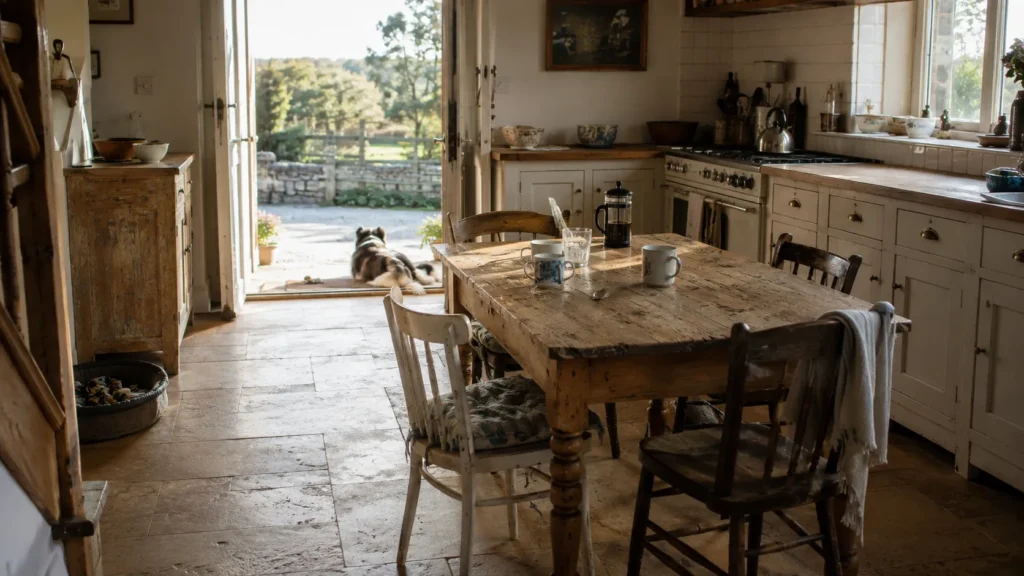
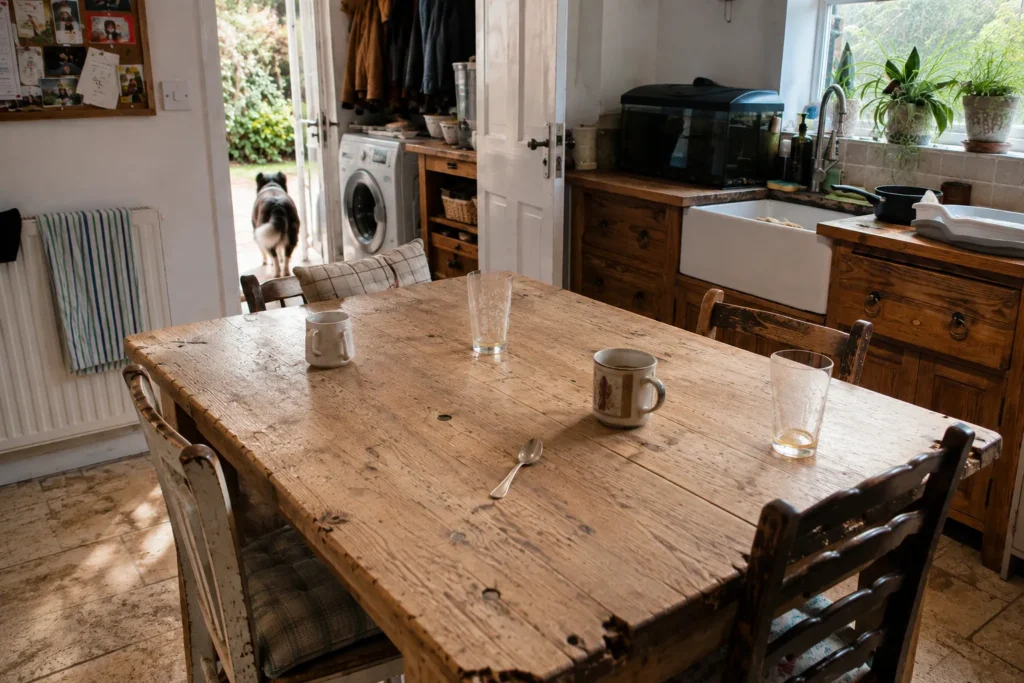
Occasionally, a pea escapes from somebody’s plate at our kitchen table. It rolls into one of the deep grooves in the old timber, disappears briefly, and has to be retrieved with a finger or the end of a fork before dinner can continue.
Nobody designed the table with somewhere for peas to hide. It has simply had a fairly hard life.
We bought it second-hand years ago and, for a while, it lived outside. Somebody had painted it white before we owned it, and we used it for barbecues and garden parties until eventually it became one of those useful things you stop paying much attention to. Rain, people and years did their work, bits disappeared from the edges, the paint largely disappeared too, and for a long time the table was simply there.
Then we moved house.
Our previous kitchen had been small. It did everything a kitchen technically needed to do, but there wasn’t really room for people to spend time in it. If somebody was cooking, everybody else tended to be somewhere else.
Food at home could easily become the consumption of calories rather than something we particularly participated in: a microwave meal, a takeaway, or something cooked by one person while everyone else was in another room. Quite often, dinner ended with plates balanced on knees in front of the television.
There was nothing terribly wrong with any of this. We were a family living ordinary, busy lives, and dinner happened somewhere amongst everything else that needed doing.
I don’t remember us ever deciding that we wanted to change it.
The new house had a slightly larger kitchen.
Not enormous. Not some architectural transformation involving an island the size of a small county. It simply had enough space for that battered old table to come inside.
And slowly, without anybody deciding that this was what would happen, we started spending our evenings differently.
We try now to have some sort of idea what we are going to eat during the week. That usually means somebody starts preparing dinner at roughly the same time that the gas hob goes on and Alexa is asked to play some music.
The relationship between the music and the food is gloriously unreliable. Classical music might accompany fajitas, rap might get shepherd’s pie, and dance music has every chance of finding itself responsible for a curry.
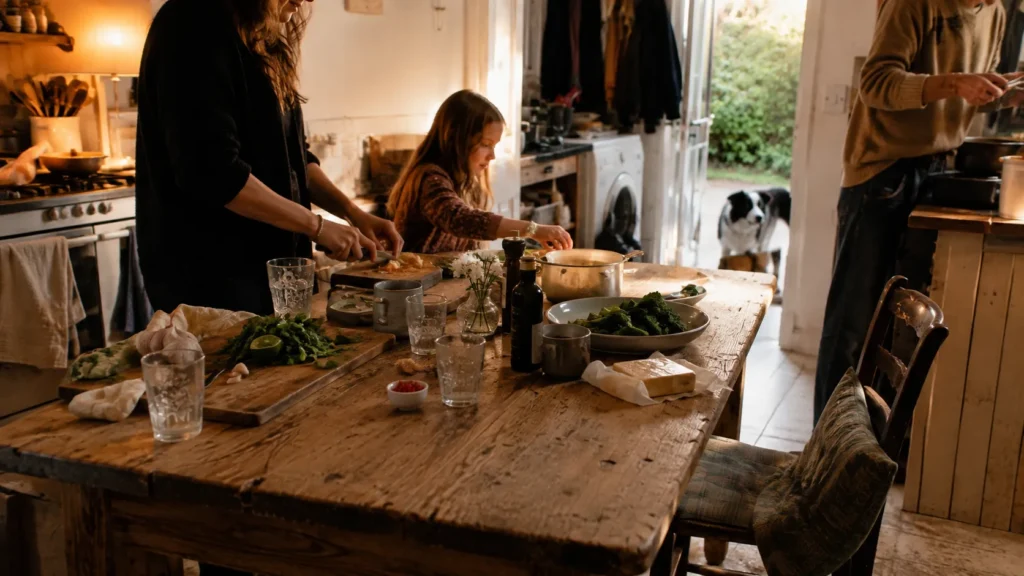
Our son Jack is home from university for the summer, so at the moment there are often three of us in the kitchen. There is no allocation of jobs and very little evidence of management. Someone chops something, someone washes something, someone finds an ingredient we thought we had but apparently don’t.
Jack is learning to cook simply by being amongst it.
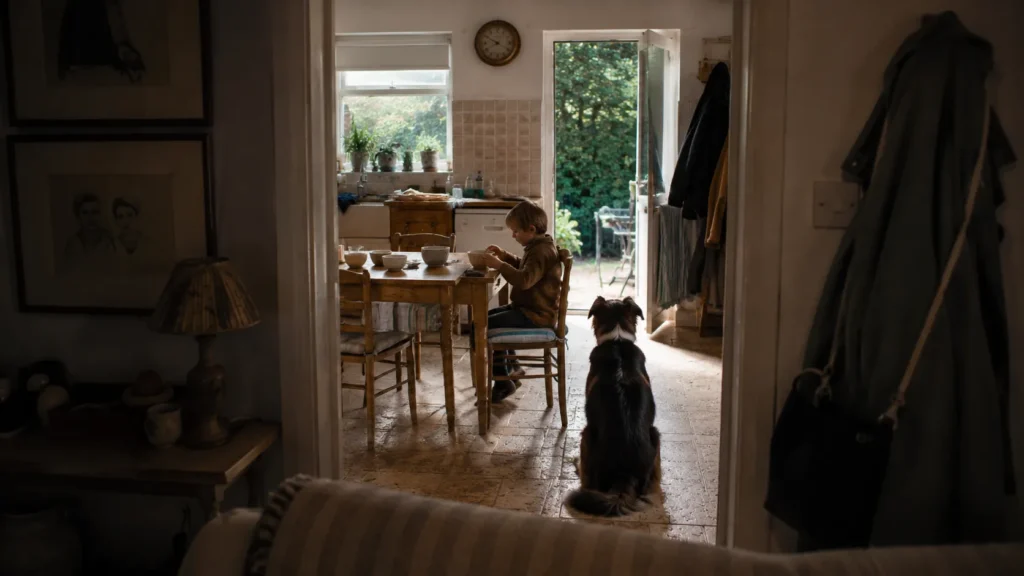
We talk while all this is happening. Someone moans about something that happened at work, we ask about each other’s day, somebody remembers something ridiculous, and the conversation wanders wherever it wants to go. A glass of wine or a beer might be opened, the music carries on, and the dogs maintain the sort of unwavering concentration usually associated with considerably more serious work.
Their optimism is not entirely irrational.
A piece of chicken was dropped in this kitchen about three years ago, and they appear to have concluded that the event established a precedent. Every evening since has therefore presented another entirely reasonable opportunity for chicken.
Jack will sometimes disappear after half an hour. Xboxes have a mysterious ability to summon their owners from other parts of the house, particularly when those owners have already completed the interesting parts of preparing dinner.
Eventually somebody shouts that dinner is ready and our rugby-playing consumer of almost all available food reappears with impressive speed.
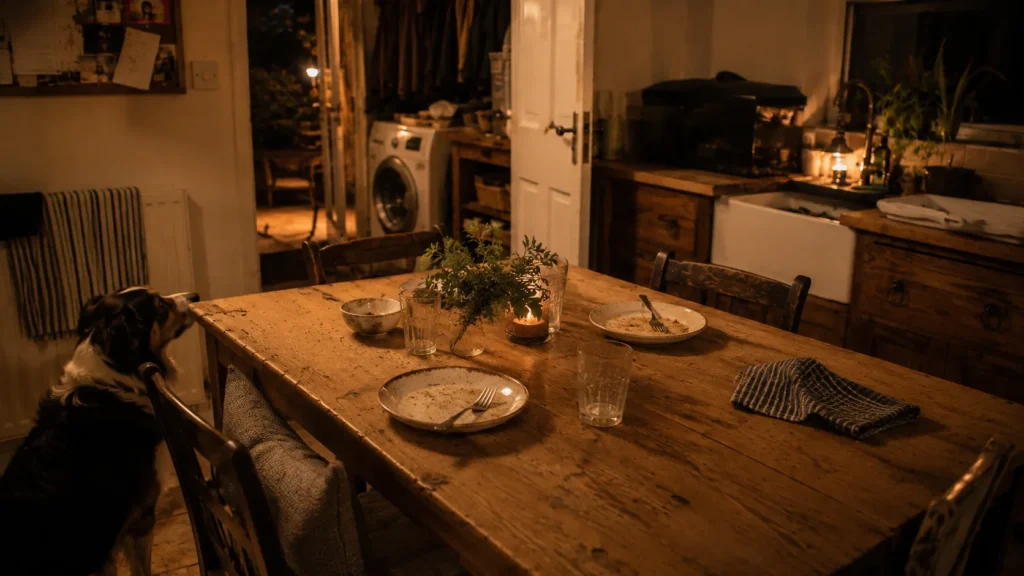
By then, somebody who wasn’t cooking has usually washed some of the things that were. The music is still playing, glasses may be topped up and the food makes the short journey from where it was cooked to the old table.
Then something else happens which nobody has organised.
We all sit in our chairs.
I don’t remember those chairs ever being allocated. There has been no family meeting, no name cards and certainly no discussion of seating rights, yet sitting in somebody else’s place feels strangely wrong.
Many homes seem to develop rules like this without anybody making them.
And that, I think, is the part I had missed.
We thought we had moved the table into the kitchen. In practice, the kitchen had moved us towards the table.
One kitchen had been too small for us to occupy together. The next had enough room for an old table.
Once there was somewhere for us to be together, things that had previously happened separately began happening in the same room.
Cooking stopped belonging quite so much to the person responsible for producing dinner. Nobody had to suggest a family evening or persuade anybody to spend time together.
We were making a curry.
Sometimes cooking is really just the excuse for being there.
There have been other consequences too. Because we cook more often from scratch, we eat differently. We try things we wouldn’t previously have tried, Jack is learning things he will take away with him, and over time all three of us have become healthier and lost weight.
That wasn’t a project either.
Nobody moved house in order to improve their diet, and the kitchen table was never part of a health plan.
The larger change is harder to measure.
By the time dinner is eaten, we may already have spent well over an hour together. Most of that time would never qualify as an occasion: we have chopped onions, complained about work, disagreed with Alexa’s musical judgement, washed a saucepan and waited for something to cook.
Perhaps that is why it matters.
Jack will go back to university. The kitchen will become a two-person room more often again, and the quantity of food required to produce dinner will drop fairly dramatically.
For now, though, he is here.
And some of the time we have with him is being spent doing things so mundane that nobody would think to preserve them.
Then dinner finishes. Plates are cleared, whatever needs washing is washed, the dogs finally accept that another evening has passed without a repeat of the historic chicken incident, and eventually we leave the kitchen.
The old table stays where it is.
It is still battered. There are chunks missing from it, the remains of its previous paint can still be found, and its grooves remain capable of capturing an adventurous pea.
Nothing about the table itself became more valuable when we brought it inside.
But its place in our lives did.
Another beautifully normal evening has passed around it.