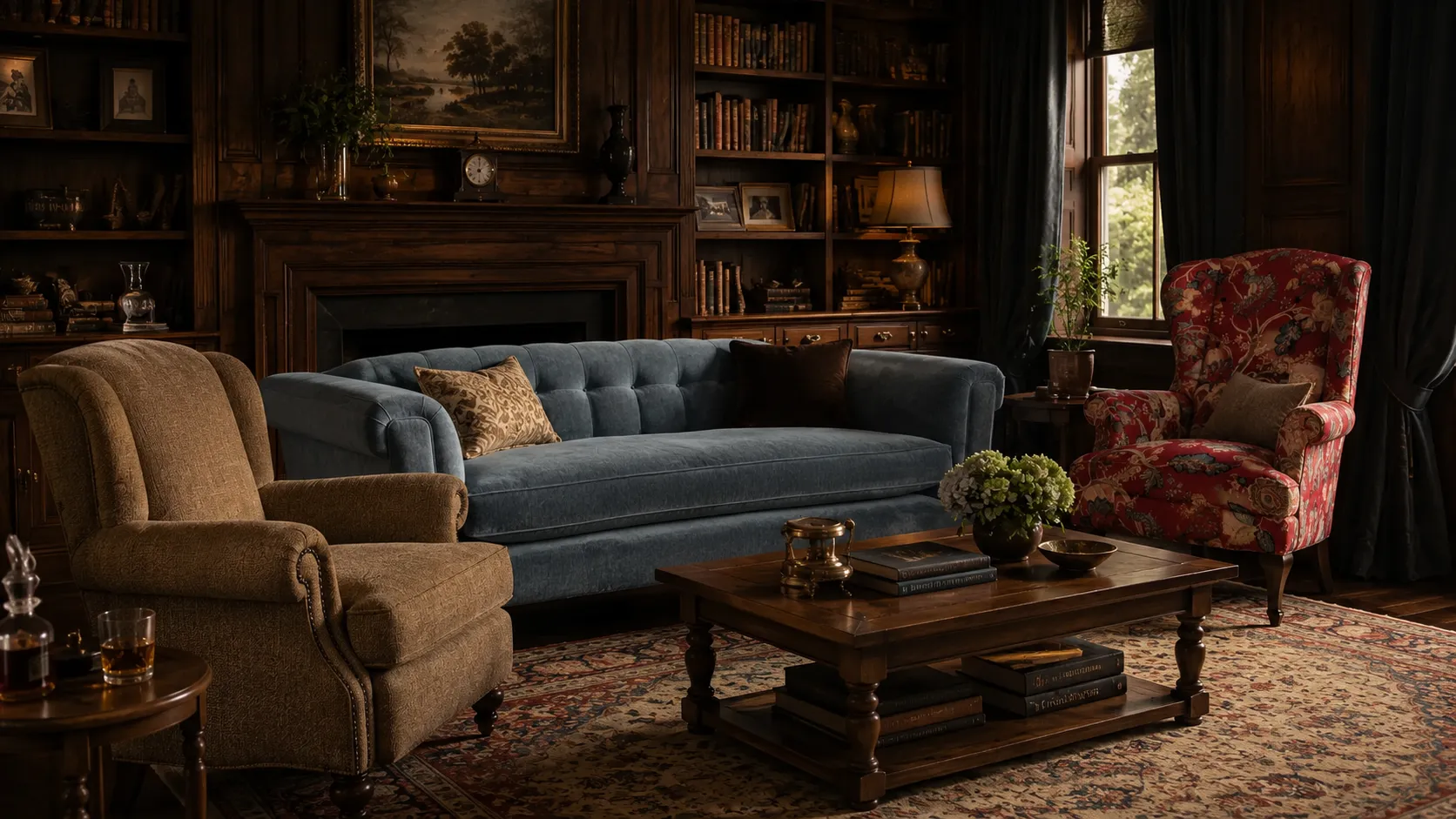
Long before Britain begins to wake, another day has already begun inside the workshop.
There is a moment each morning when the workshop belongs to almost no one.
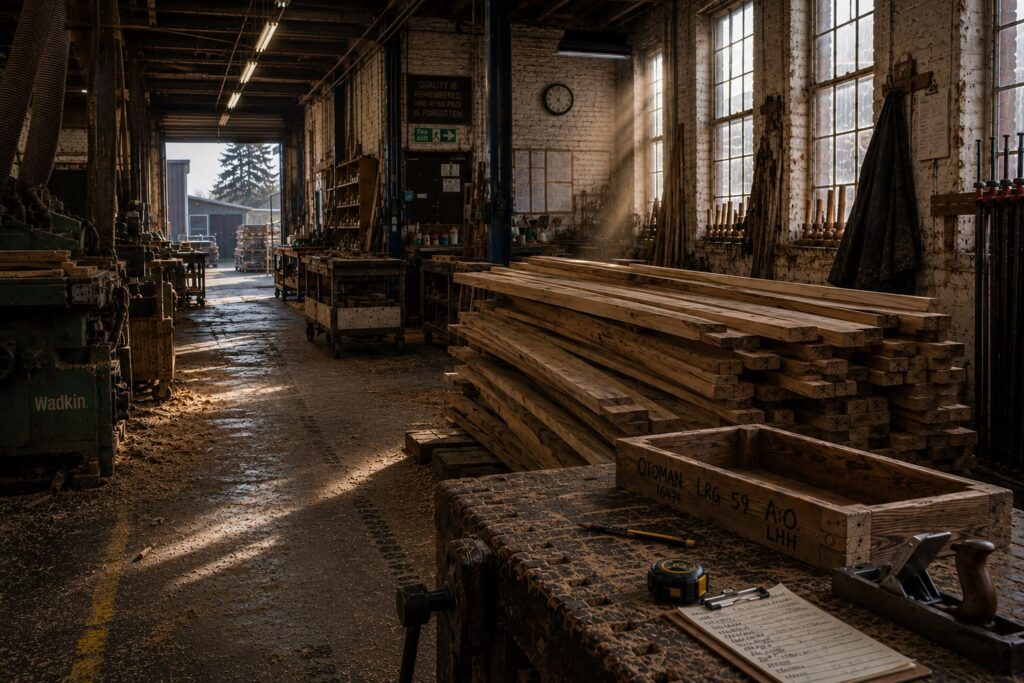
The lights are still finding their rhythm. The machines are quiet. The smell of timber hangs gently in the air.
Natural light begins to spill through the high factory windows, settling across workbenches that have witnessed thousands of mornings before this one.
The day has not yet started.
But it is about to.
One by one, people arrive.
Not dramatically.
Quietly.
A familiar greeting. A coat hung on the same hook. A kettle switched on. Tea mugs placed on well-worn benches that have earned their own stories over decades.
There is no rush.
The workshop has its own pace.
It always has.
Before the first machine begins its work, there is another ritual.
Hands pass across leather.
Not to inspect it.
To understand it.
Every hide is different. Some are softer. Some carry tiny marks that tell the story of the animal that once lived.
No two will ever be identical.
That is not a flaw.
It is the beginning of craftsmanship.
Nearby, rolls of cloth wait patiently. Timber rests quietly beside the machining area. Patterns lie neatly folded. Tools remain exactly where they were left the evening before.
Everything is ready.
Nothing feels hurried.
Good craftsmanship has never enjoyed being rushed.
Eventually, the first machine starts.
Then another.
The familiar sounds return.
Not noise.
Rhythm.
The steady heartbeat of people making something properly.
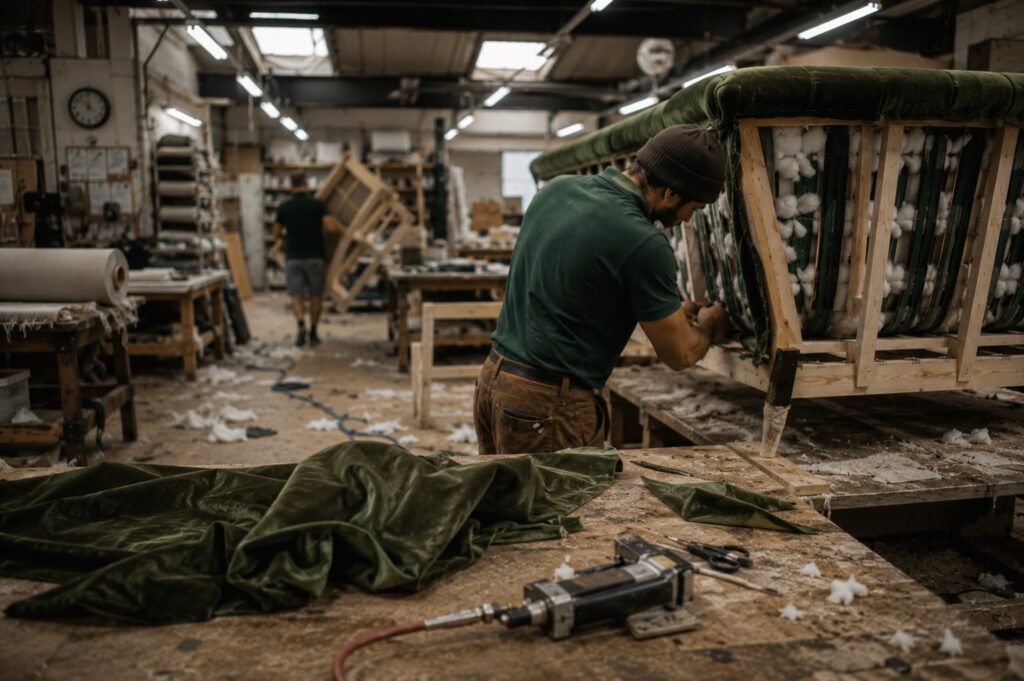
Each bench begins its work.
One frame.
One cushion.
One stitch.
One joint.
Hundreds of small decisions.
Almost all invisible once the furniture leaves the workshop.
Yet every one of them matters.
Visitors often imagine that craftsmanship is found in dramatic moments.
The final stitch. The finished chair. The completed sofa. The photograph. The showroom. The delivery.
The truth is quieter than that.
Craftsmanship lives inside decisions.
The choice to reject a piece of timber that is almost good enough. The patience to match the grain. The care taken to align a pattern so perfectly that nobody ever notices.
The willingness to begin again because “good enough” was never going to be enough.
That is where quality begins.
Long before anybody sees it.
Outside, the rest of the country is only just beginning its day.
School runs are being planned. The first commuters are leaving home. The kettle is boiling in thousands of kitchens.
Inside the workshop, furniture is already beginning another chapter.
Not as products.
As future witnesses.
One day, a child will build a den across one of these sofas. Someone will read a newspaper in one of these chairs every Sunday morning. A family dog will claim the same place beside it.
Years later, another family will inherit it.
The people making it this morning will never meet them.
Yet they are quietly shaping those memories all the same.
Perhaps that is the greatest privilege of craftsmanship.
The maker rarely witnesses the life that follows.
The work leaves.
The stories begin elsewhere.
And that is exactly how it should be.
Because the purpose of the workshop has never been simply to make furniture.
It has always been to make homes possible.
Tomorrow morning, while the country is still waking…
Somewhere, a workshop will already be alive.
A mug of tea will rest on a familiar bench. Morning light will fall across timber and leather.
Someone will quietly choose to do something properly rather than quickly.
Most people will never know their name.
But one day…
They may sit in the result of their work.
And feel, without ever knowing why…
At home.
Closing Reflection
The finest craftsmanship begins long before anyone notices it—and continues long after it has left the workshop.