How ordinary moments quietly become extraordinary memories. Nobody remembers the day it happens. Because there isn’t one.
Nobody buys an heirloom
They buy somewhere to sit. A chair by the fire. A table for six. A sofa that feels just right. It arrives wrapped in blankets, smelling of fresh timber, leather or fabric. Every stitch is new. Every surface untouched. It has no stories yet. It is simply furniture. And that is exactly how it should be. Because the most important part has not been made in a workshop. It has not even happened yet. We spend much of our lives waiting for the moments we believe will matter. A wedding. A new home. The birth of a child. An anniversary. A retirement.
The photographs on the mantelpiece remind us of them. But if we are honest, those moments are only a tiny part of a life. Most of life is something else entirely. It is Tuesday. It is putting the kettle on without thinking. It is rain against the windows while someone quietly reads. It is a dog asleep exactly where it always sleeps. It is a conversation that begins with, “How was your day?” and somehow ends an hour later. It is ordinary. So ordinary that we almost forget it while we are living it. And yet, when we look back years later, those are often the moments we miss most.
Perhaps memory has been misunderstood. We imagine it is built from extraordinary events. But memory is patient. It prefers repetition. The same chair. The same room. The same view from the window. The same place where children once built dens from blankets and cushions before disappearing upstairs to become adults almost overnight.
Life does not arrive all at once.
It settles. Quietly. Day after day. Until one ordinary afternoon carries the weight of hundreds that came before it. That is why some objects become impossible to replace. Not because they are rare. Not because they are expensive. Because they have become part of the background to a life that no longer exists in quite the same way.
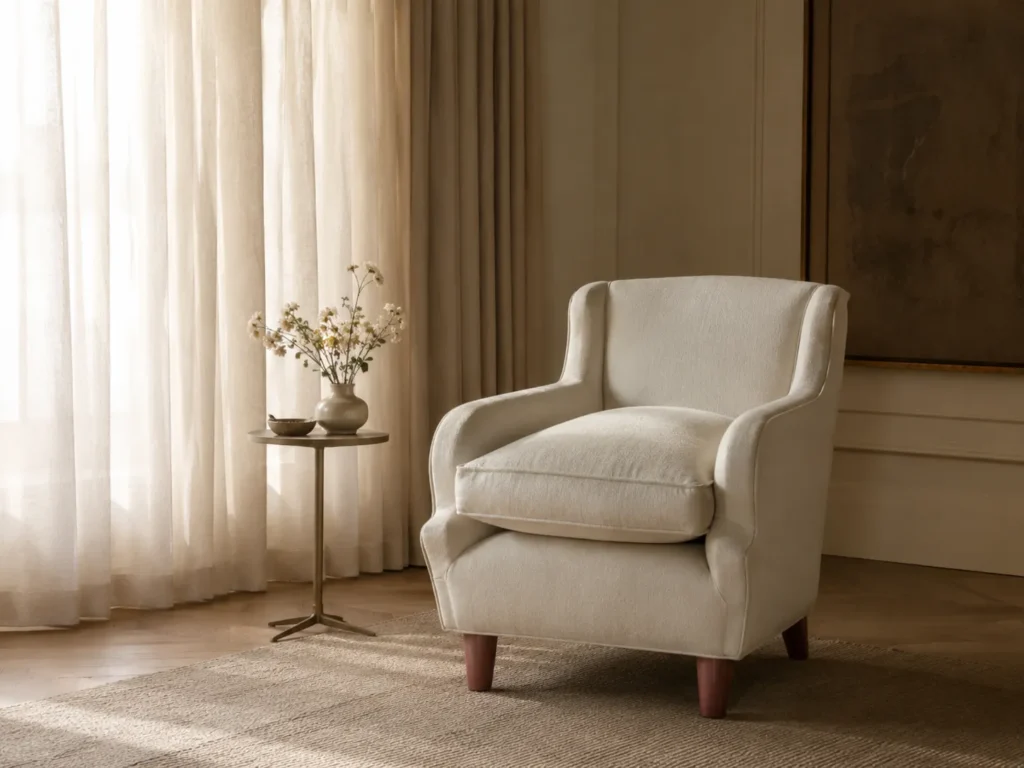
The old chair remembers nothing. And yet somehow, we remember more because it is still there. There comes a point when language quietly changes. Nobody announces it. Nobody notices it. But instead of saying, “Pass me that chair,” someone says, “That is Dad’s chair.” Instead of “the sofa,” it becomes “the sofa where everyone sits.” A dining table becomes “the table we have always had.” Without realising it, we stop describing furniture. We begin describing belonging. There is something deeply reassuring about that. In a world that changes with exhausting speed, there are still places that ask almost nothing of us.
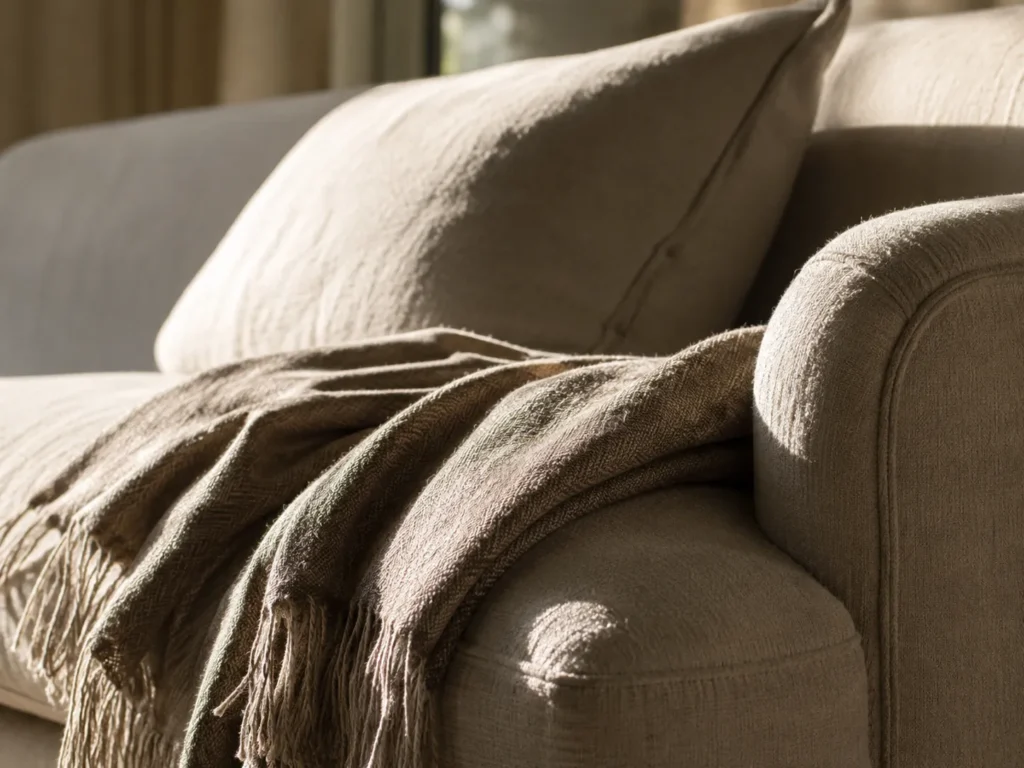
The chair does not care whether the day has gone well. The sofa does not know what year it is. The table waits with the same quiet patience it always has. Perhaps that is why coming home feels different from arriving anywhere else. Home remembers who we have been. Previous generations rarely spoke about mindfulness. Or slow living. Or wellness. Yet many of them understood something we are only beginning to rediscover. That life is not transformed by grand gestures. It is shaped by quiet routines repeated with people we love. The evening cup of tea. The Sunday newspaper. A familiar seat by the window. A hand reaching for another across the table. Ordinary moments. Repeated often enough, they become a life. And perhaps that is why the best furniture almost disappears. Not physically. Emotionally. It stops asking to be admired.
It no longer draws attention to itself. Instead, it quietly supports everything else. The conversation becomes more important than the chair. The family becomes more important than the room. The memories become more important than the furniture. Exactly as they should.
At John Sankey, we have never believed our work ends when a piece leaves the workshop.
In many ways, that is where its real purpose begins. Not to become the most beautiful object in the room. But to become the place where ordinary life unfolds. To be present for birthdays that are never photographed. For books left open halfway through a chapter.
For children who grow taller than the people who once carried them upstairs. For conversations nobody will ever remember word for word, yet somehow never forget. We cannot build memories. Nobody can. But we can build furniture worthy of quietly standing beside them.
Years from now, nobody will remember the day a chair arrived. But they may remember where they were sitting when they heard good news. Or difficult news. Or no news at all. They may remember who was beside them. The light coming through the window. The sound of rain outside. The warmth of the room. The furniture will simply be there. Exactly where it has always been. Waiting. Because one day, without anyone noticing, without anyone deciding, without anything extraordinary happening at all, it stops being furniture. And quietly, almost imperceptibly, becomes part of the family.
The things we keep are rarely the things we planned to keep. They are simply the things that stayed.