We’re in the process of updating our site - thank you for your patience in the mean time
A Room Doesn’t Need to Match to Belong Together
JournalA Room Doesn’t Need to Match to Belong Together
Three Orwell pieces. Two very different upholstery choices. And one small detail that quietly held the room together.
Most homes contain things that were never chosen together.
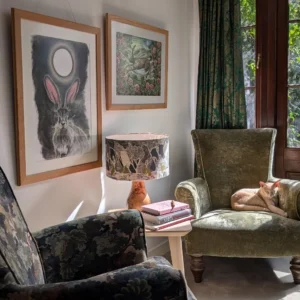
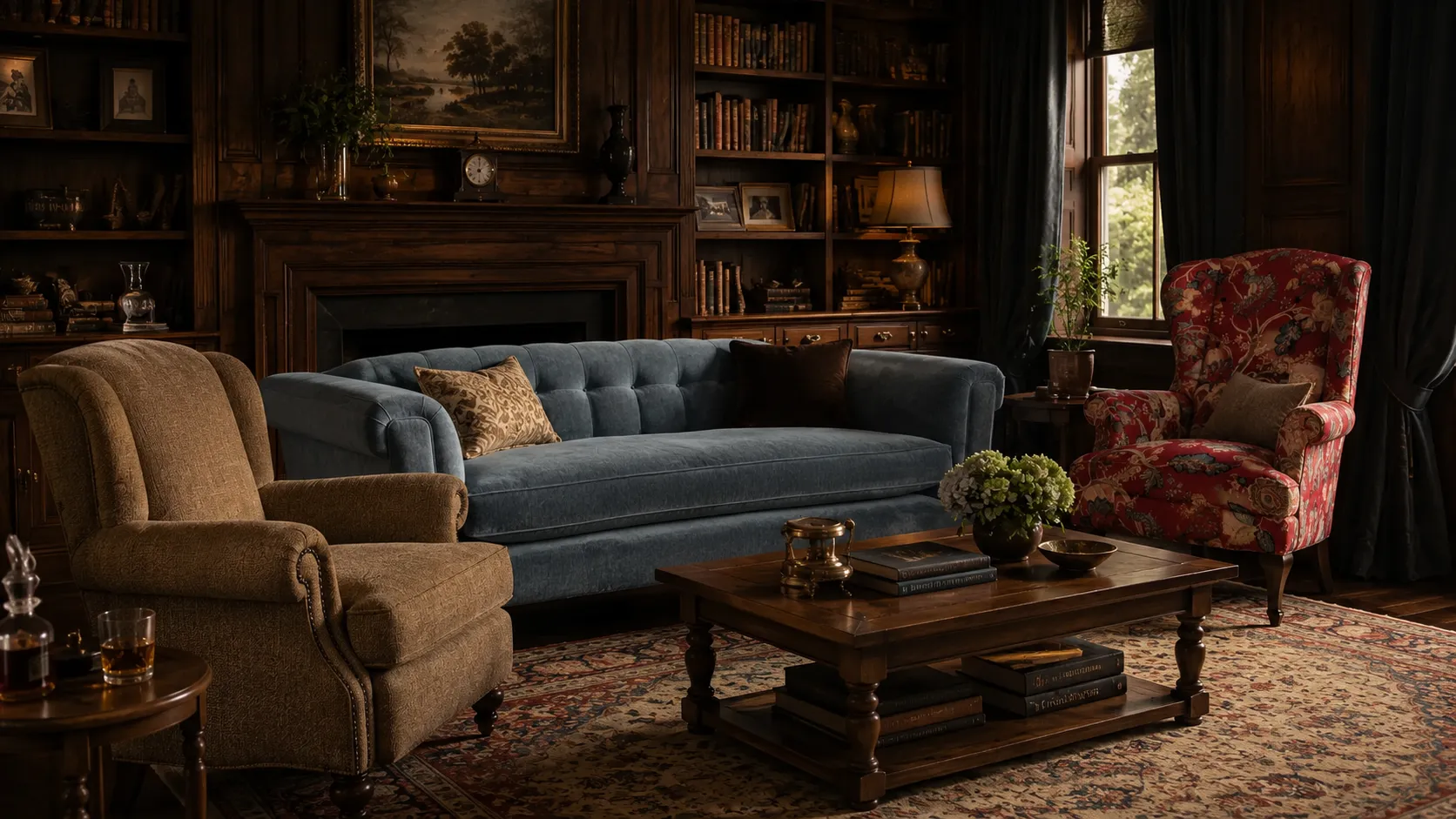
A chair bought years after the table beside it. Something inherited from another house. A lamp kept because somebody loved it. A picture that moved from one wall to another and somehow stayed. Different woods. Different colours. Different periods.
Very little of it was ever part of one plan.
And yet, after a while, nobody questions whether it belongs.
That is one of the quiet mysteries of home.
Rooms rarely arrive complete. They accumulate.
We add something. Move something. Keep something longer than expected. Take one piece from an old house into a new one. Replace a sofa but keep the chair.
Decisions made years apart begin to feel as though they were always meant to sit beside one another.
Nobody necessarily knows why.
We simply know when a room feels right.
If things do not have to match, what is it that makes them belong together?
Matching is easy to recognise.
The same fabric repeated. The same colour carried from one piece to another. The same collection. The same finish.
Matching creates order because the relationship is obvious.
Belonging is harder to explain.
Sometimes two objects have almost nothing visibly in common, yet separating them would somehow make the room feel less complete.
Perhaps one colour quietly answers another.
Perhaps one piece has enough presence to let everything around it become less certain.
Or perhaps the connection is so small that we barely notice it at all.
Years ago, John Sankey made a room around exactly that idea.
It was created for a lifestyle photoshoot and contained three pieces from the Orwell family.
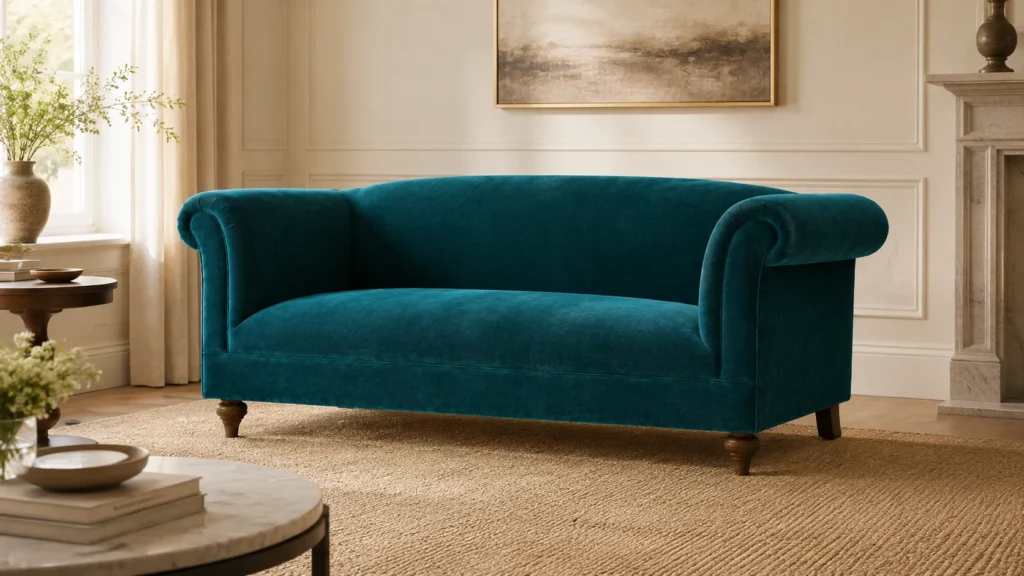
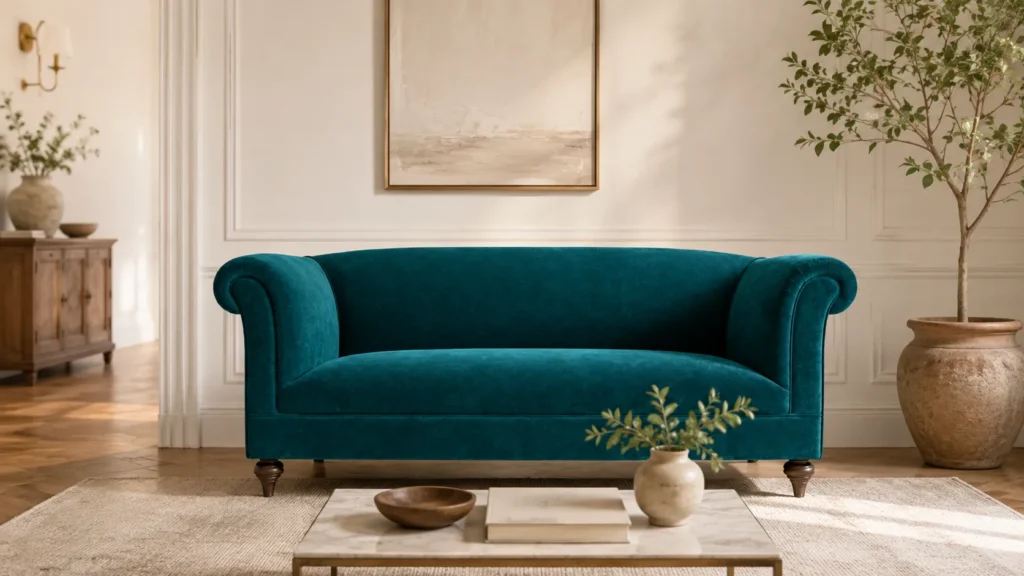
The largest was an Orwell Grand, upholstered completely in Eco Velvet Peacock.
Beside it sat an Orwell Large in the same deep Peacock.
The obvious decision for the third piece would have been to continue.
Another Orwell.
Another Peacock.
A matching suite.
But the Loveseat went somewhere else.
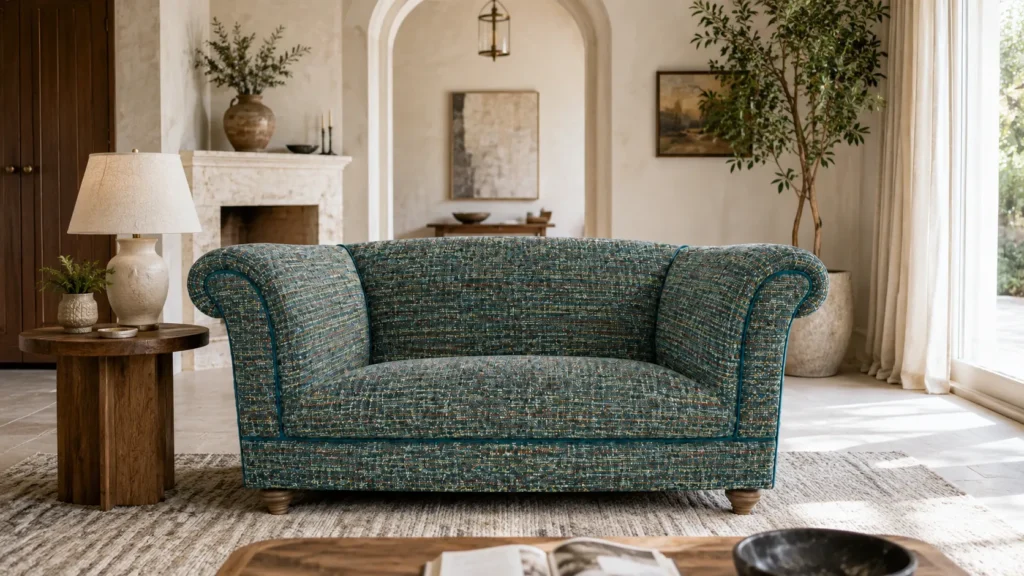
Its body was upholstered in Vita Bermuda, deliberately allowing it to stand apart from the two larger pieces.
Different texture.
Different colour.
A different expression.
And then, around its edge, one small detail connected it back.
Peacock piping.
Not another Peacock sofa.
Not enough colour to make the Loveseat match.
Just a narrow line.
Enough for one piece to recognise another.
Perhaps that is what makes the original room interesting.
The furniture wasn’t mismatched.
It was related.
The difference remained visible. The Loveseat was allowed to be itself, while one small repeated detail quietly told us that it still belonged to the same conversation.
Sometimes that is all a room needs.
Not repetition everywhere. Recognition somewhere.
The Orwell itself helps make that possible.
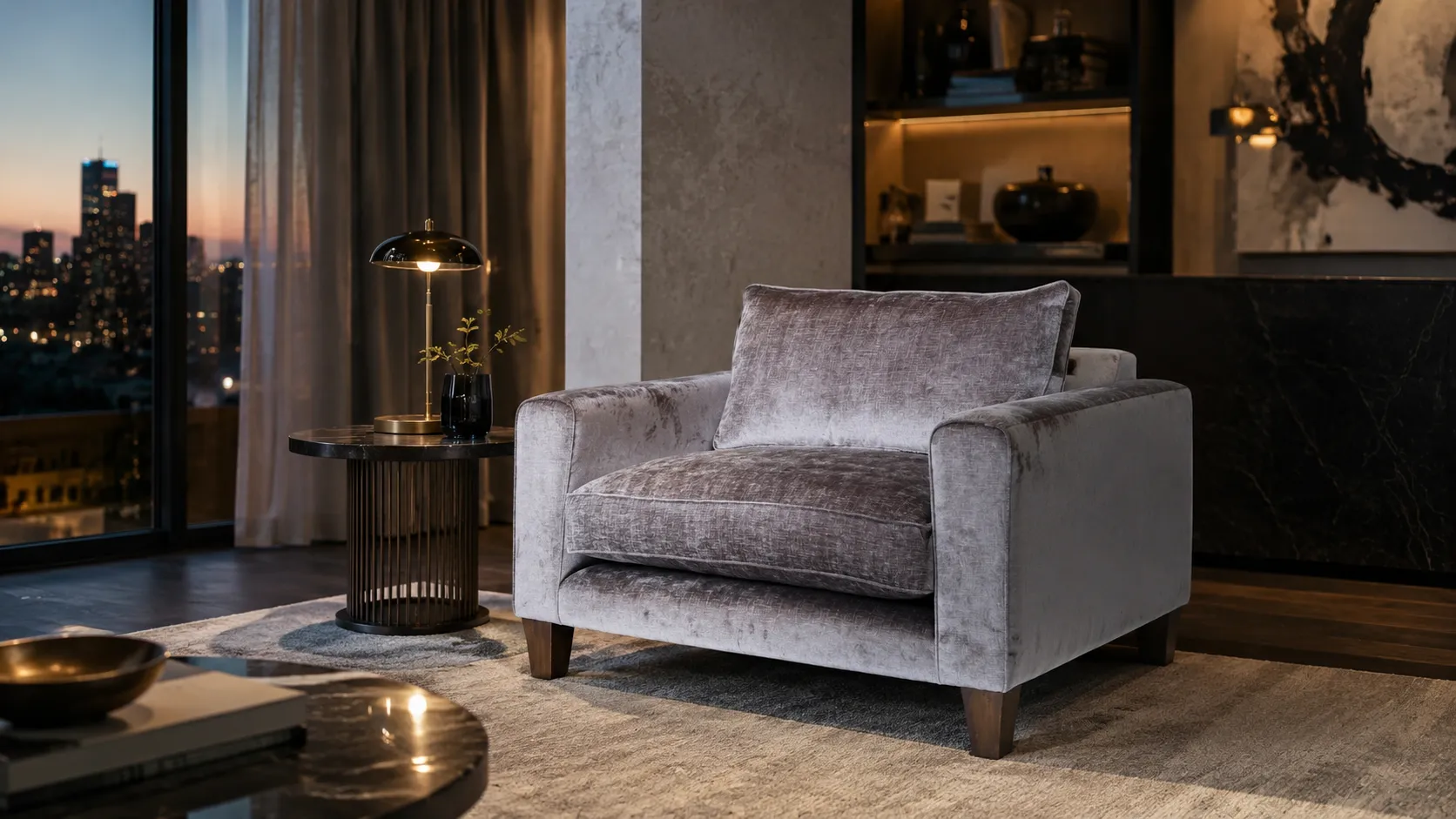
Its fixed upholstery moves through sweeping curves and fine pleating across the arm fronts. In Eco Velvet Peacock, those shapes become more visible as the pile catches the light and the colour changes across them.
Strong upholstery leaves very little room for indifferent tailoring.
The shape has to hold it.
And yet perhaps the most interesting piece of craftsmanship in that original room was still the smallest.
The piping.
A narrow upholstered edge carrying Peacock around a Loveseat otherwise dressed in Bermuda.
Sometimes craftsmanship matters because of how little it needs to say.
And there is another reason this particular room matters.
The Orwell Grand in those original photographs is not merely the same model as the piece you see here.
It is this piece.
The Eco Velvet Peacock Grand made for that John Sankey lifestyle setting.
The one that stood alongside the Peacock Large and the Bermuda Loveseat.
The one that physically took part in the idea the room was trying to express.
Its history is not important simply because it once appeared in a photograph.
The significance lies in what it was doing there.
It was part of a real piece of John Sankey creative judgement: a room assembled to demonstrate that coherence did not require uniformity.
Another Orwell Grand can exist.
Another might even be upholstered in Peacock.
Someone could recreate the specification.
What they cannot do is make another sofa become this one.
You can repeat a specification. You cannot repeat a history.
But perhaps the most interesting part of the story is what happens next.
Because the original room does not need to be recreated.
In fact, doing so might almost misunderstand the point.
This Grand does not need another Peacock sofa beside it.
It does not need the original Loveseat.
It does not need matching cushions, a coordinated rug or a carefully reconstructed version of the photograph it once appeared in.
It can enter a completely different room.
An old table.
A chair in another fabric.
Artwork chosen years ago.
Different woods.
Different colours.
Things already carrying their own histories.
The room does not have to become more like the Orwell.
The Orwell can simply become part of the room.
And perhaps that is the moment ownership becomes most interesting.
Not when somebody admires the colour.
Not when they understand the provenance.
But when they stop imagining the original photograph and begin picturing their own home instead.
Where would it sit?
What is already there?
What unexpectedly might belong beside it?
Perhaps nothing needs changing at all.
That was, after all, the original lesson.
Things can remain distinct and still belong together.
And if this Grand does find another home, something else will gradually happen to it.
At first, it will probably be noticed.
The Peacock Orwell.
The one from the John Sankey photographs.
The piece with the story.
Then familiarity will begin doing what familiarity always does.
Morning light will move across the velvet.
Someone will sit at the same end more often than the other.
The room will change around it.
Something new will arrive.
Something else will move.
Eventually, its history will still matter, but it will no longer be the most important thing about it.
It will simply become part of ordinary life.
The Peacock Orwell.
Then the new sofa.
Then the sofa.
Then, eventually, ours.
Perhaps that is what furniture is supposed to do.
Its making matters.
Its history matters.
Its provenance matters.
But none of those things should prevent it from disappearing gradually into the life around it.
The original three Orwell pieces were brought together to show that furniture did not need to match in order to belong together.
Now, rather beautifully, they do not need to remain together either.
The Grand can begin one room.
The Loveseat another.
The original relationship remains part of their history without determining their future.
Things do not have to remain the same — or even remain together — to continue belonging somewhere.
This individual Orwell Grand has already belonged to one carefully considered room.