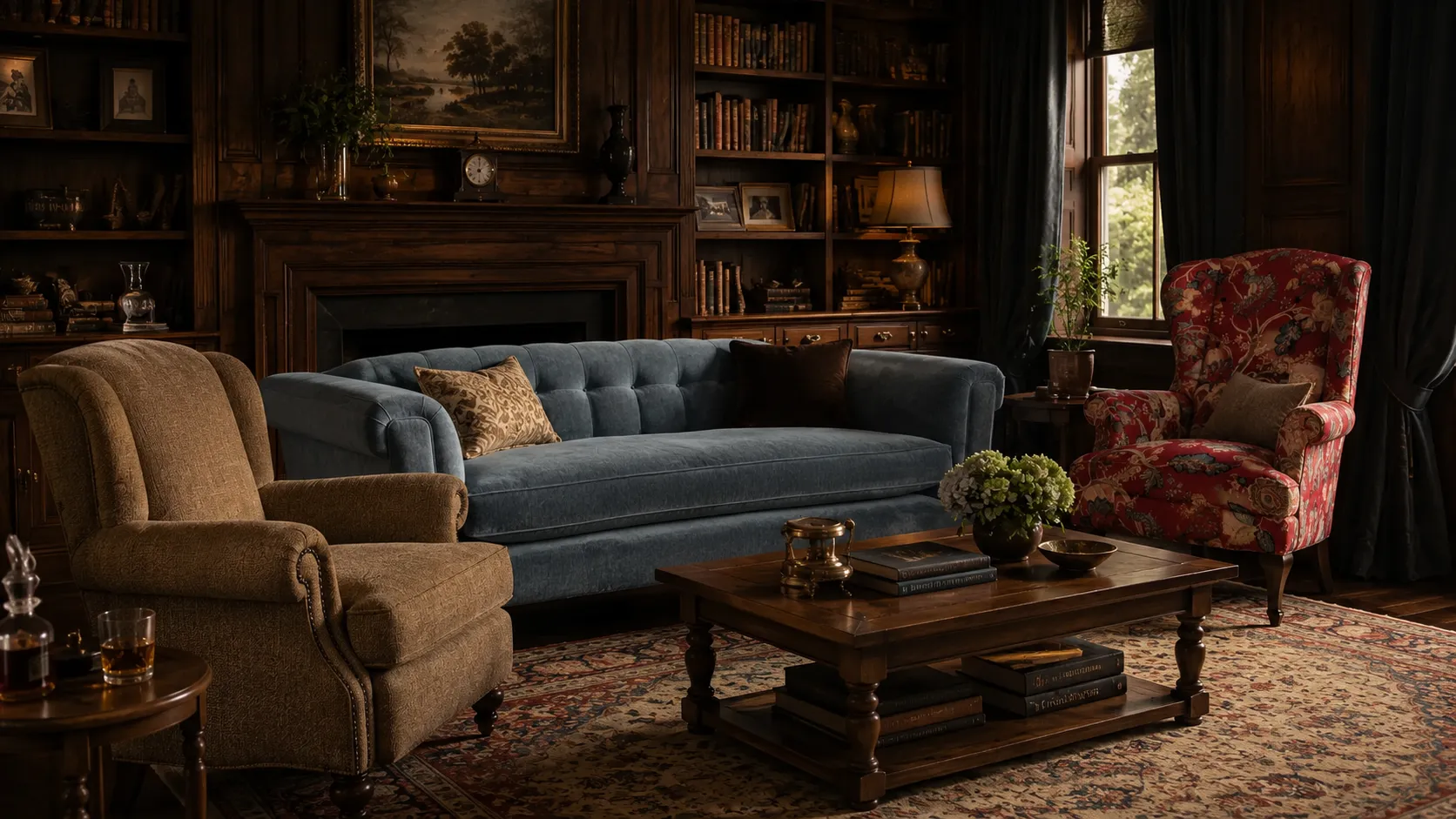
“The objects we treasure are rarely valuable because of what they are. They become valuable because of who we become around them.”
When Ordinary Objects Become Important
There is an old idea that people own things. It sounds obvious enough. We buy them. We place them in our homes. We decide whether to keep them or replace them. Ownership feels like a simple transaction.
Yet anyone who has ever tried to empty the home of a parent or grandparent knows that it is nothing of the sort. A cupboard is opened. Inside sits an old teapot nobody has used for years. Its handle has been repaired. Its glaze is beginning to crack. A newer one would pour better. A cheaper one could be bought this afternoon.
And yet nobody reaches for a bin bag. Instead, someone quietly says, “We can’t throw that away.”
Why? The teapot cannot answer. It has no feelings. No memories. No understanding of the family who gathered around it every Sunday afternoon. And yet everyone in the room behaves as though they are holding something infinitely more valuable than porcelain.
Because, in a way, they are. What they are really holding is evidence. Evidence that life happened here.
For a long time, psychologists believed our relationship with possessions was largely practical. We kept what was useful. Discarded what was not. It was a tidy explanation. It was also incomplete.
Because usefulness alone cannot explain why a faded concert ticket remains inside a drawer for twenty years. Why an old recipe card, stained with butter and flour, becomes impossible to replace. Why a child who has long since grown into adulthood still smiles at the sight of a threadbare teddy bear.
These things survive because they have quietly crossed an invisible boundary. They stop being objects. They become part of the story we tell ourselves about who we are.
The Objects That Hold Our Memories
Perhaps that is one of the quiet truths of being human. We do not remember our lives as one continuous film. We remember them as fragments.
A smell drifting from the kitchen. Rain against the window. A familiar armchair. The sound of someone turning the pages of a newspaper before anyone else was awake.
Memory rarely preserves the whole room. It chooses a detail. Then quietly builds the rest around it.
Neuroscientists often describe memory as reconstructive. Each time we remember something, we rebuild it rather than replay it. Perhaps that explains why ordinary objects can become such powerful companions. They anchor memories that might otherwise drift away.
A dining table remembers birthdays long after the balloons have disappeared. A hallway mirror quietly reflects generations growing taller. The scratch on a wooden armrest recalls an evening that nobody realised would become one of the last spent together.
The object becomes a doorway. Touch it, and the memory walks back into the room.
The Comfort of Continuity
There is another reason we keep things. They reassure us that our own lives have continuity.
The world changes constantly. Children become adults. Parents become grandparents. Homes are sold. Neighbourhoods evolve. Friends move away. The years gather more quickly than we ever imagined they would.
Against all that movement, certain objects remain reassuringly still. The same mug. The same blanket. The same chair beside the fire.
They remind us that not everything has changed. In doing so, they quietly remind us who we are.
Identity is a curious thing. We often think of it as something that exists entirely inside us. But in truth, much of it lives outside us too.
In photographs. Letters. Books with folded corners. The kitchen table where homework was finished. The garden bench where difficult conversations became hopeful ones.
These objects become extensions of ourselves. Not because they define us. Because they accompany us.
That companionship is difficult to explain until it disappears. Almost everyone has experienced returning to a childhood home after it has been emptied. The walls are still there. The windows. The staircase. Even the rooms remain exactly where they have always been.
Yet something feels profoundly absent. Not because the furniture was expensive. Because the life it carried has quietly been lifted away.
It is an unsettling experience. A reminder that home has never been made from bricks alone. Home is built from repetition. From rituals. From objects that patiently witness them.
This is why replacing everything at once can leave even the most beautiful house feeling strangely anonymous. Beauty can be bought. Belonging cannot. Belonging accumulates. One ordinary day at a time.
The Beauty Left by Time
There is a Japanese philosophy known as wabi-sabi that finds beauty not in perfection, but in the marks left by time.
A cracked bowl repaired with gold. Weathered timber. Softened leather.
It is a way of seeing that reminds us something need not remain untouched to remain beautiful. Perhaps homes work in much the same way.
The cushion that has lost its perfect shape. The dining table marked by homework, birthday candles and Sunday lunches. The leather arm darkened by years of familiar hands.
These are not flaws. They are a record. Evidence that life has unfolded exactly where it should.
The Quiet Value of Keeping
In a culture increasingly tempted by replacement, there is something quietly radical about keeping. Keeping asks us to value history over novelty. Repair over disposal. Patience over perfection.
It reminds us that the finest things are rarely those that remain unchanged. They are the things that continue to serve us even as both they—and we—grow older together.
Perhaps that is why the homes we remember most are never the most immaculate. They are the ones where life felt free to leave traces of itself.
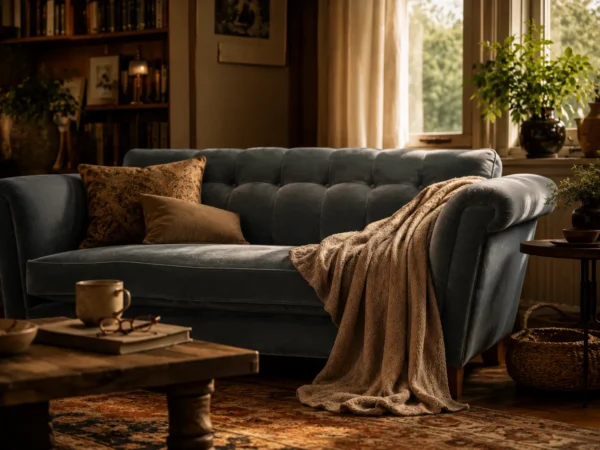
The blanket folded over the same arm of the sofa. The bookshelf that slowly ran out of space. The dog sleeping in the patch of afternoon sunlight it claimed years ago. The coffee ring no one rushed to polish away because everyone secretly knew it belonged there.
These are the quiet details that transform a house into somewhere no architect could ever fully design. A home.
The Things That Quietly Remain
Years from now, very few of us will remember the day we bought a favourite chair. Or the afternoon a particular blanket first appeared in the sitting room.
We will remember something much gentler. Who always sat there. Who tucked their feet beneath that throw. Who read stories in that corner. Who laughed until tea spilled across the table. Who was still there when everyone else had gone to bed.
The objects themselves will remain silent. As they always have. But if we listen carefully enough, they tell us something remarkable.
The things we keep are rarely the things that mattered most on the day we brought them home. They become the things that mattered because they quietly stayed long enough to become part of ours.
Every Sunday we publish new stories about British homes, craftsmanship, and family life. Continue exploring The Sankey Journal.