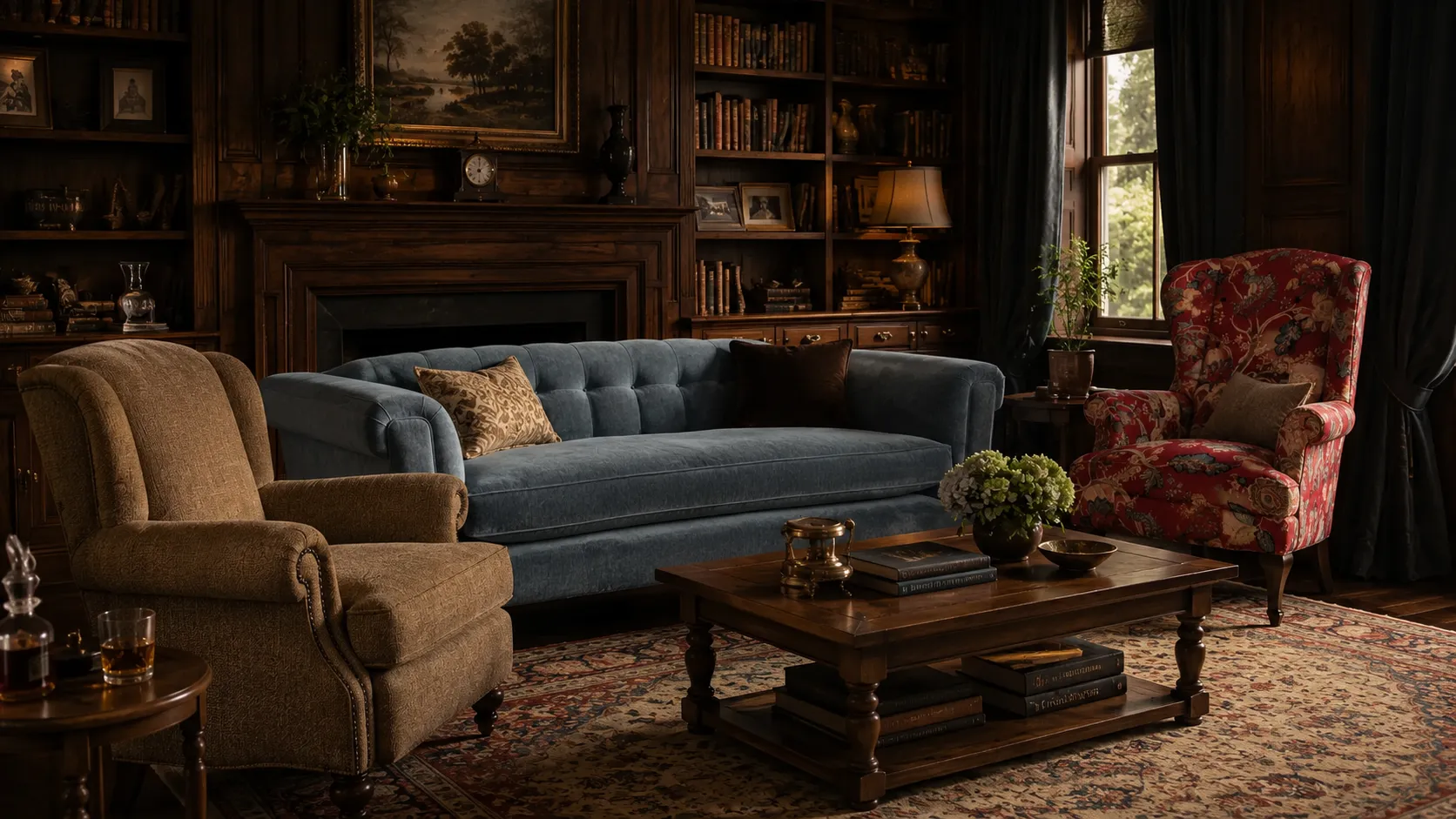
There is a quiet misunderstanding at the heart of modern life. We have become remarkably good at making things. Faster than ever before. Cheaper than ever before. More efficiently than anyone could have imagined.
Yet somewhere along the way, we quietly stopped asking a different question.
Not…
“Can we make it?”
But…
“Will it still matter in twenty years?”
The two questions sound similar. They lead to entirely different worlds.
One produces objects. The other produces companions.
Some things simply know where they belong.
Craftsmanship Is an Act of Optimism
There is a tendency to think of craftsmanship as a skill. A steady hand. An experienced eye. Knowledge passed from one generation to another.
All of those things matter. But they are not the reason craftsmanship exists.
Craftsmanship is, at its heart, an act of optimism. It is the quiet belief that something made today deserves to have a future.
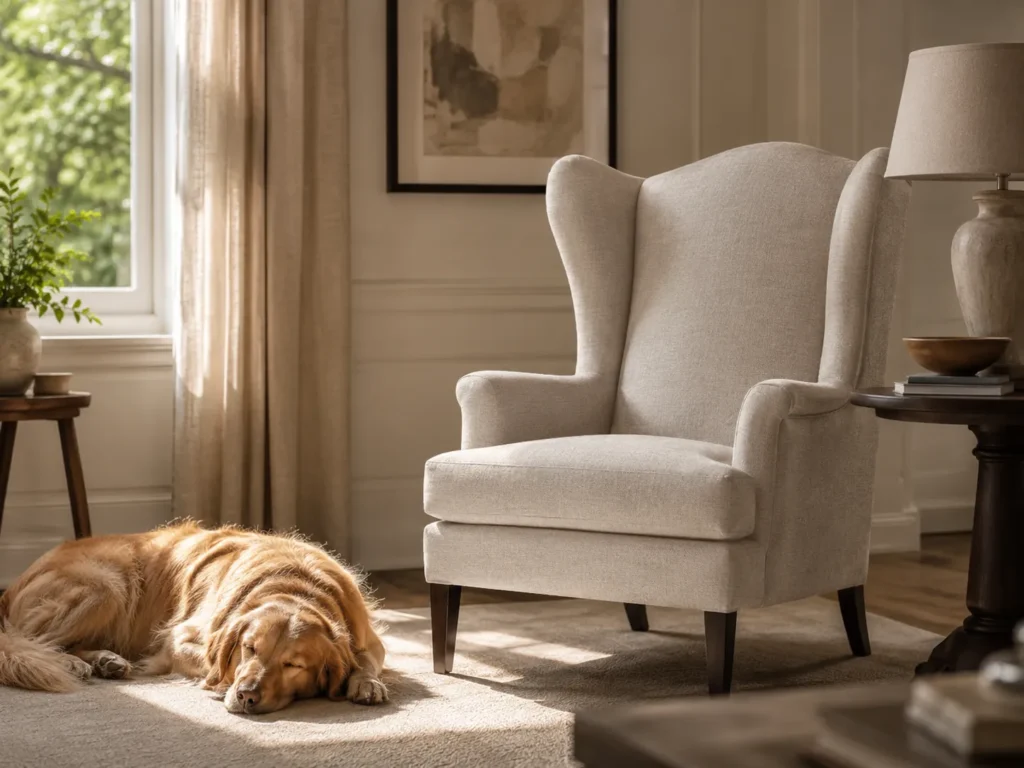
Every careful stitch is a vote of confidence in years that have not yet happened. Every well-made frame quietly assumes there will be birthdays. Christmas mornings. Rainy afternoons. Children building dens from cushions. Dogs falling asleep beside familiar chairs. Conversations that continue long after everyone intended to go to bed.
Craftsmanship is not preparing furniture for the showroom. It is preparing furniture for life.
The Story Has Barely Begun
That distinction changes everything.
The world often celebrates the moment something is finished. The ribbon is cut. The photograph is taken. The delivery arrives. The room looks complete.
Craftsmanship thinks differently. It knows the story has barely begun.
The day a piece enters a home is not its conclusion. It is its introduction.
Its real purpose unfolds slowly. Almost invisibly. One ordinary day at a time.
A leather arm begins to soften beneath familiar hands. Timber quietly deepens as the seasons pass. Fabric remembers the shape of the people who return to it every evening without ever noticing they always choose the same place.
Time Leaves Its Signature
Time leaves its signature on everything.
We often describe these changes as wear. Perhaps that is the wrong word.
Wear suggests loss. Decline. Damage.
Yet some things become more beautiful precisely because they have been lived with.
An old leather satchel. A favourite pair of walking boots. The smooth handle of a well-used kitchen knife. The polished banister of a family home. The pages of a cookbook stained with years of flour, butter and Sunday lunches.
None of these things have remained untouched. That is exactly why they matter.
Every mark tells us something.
Someone was here. Someone returned. Someone trusted this object enough to use it without fear.
Memory Made Visible
Patina is often described as the surface left by age. In truth, it is something far richer.
It is memory made visible.
It cannot be manufactured. It cannot be hurried. It cannot be purchased. It arrives only through time.
Perhaps that is why truly beautiful homes rarely feel brand new. They feel settled. Confident. Comfortable enough not to chase perfection.
The finest rooms are not preserved. They are lived in.
They carry gentle evidence of ordinary life unfolding exactly as it should. A chair pulled slightly towards the fire. A blanket folded without much precision. A table marked by years of shared meals.
Nothing dramatic. Everything meaningful.
Choosing to Continue a Story
There is another quiet idea hidden inside craftsmanship.
Repair.
For generations, repairing something was considered an act of respect. A loose chair leg was tightened. A torn cushion was re-stitched. A worn leather seat was restored.
Not because replacing it was impossible. Because replacing it was unnecessary.
Today, repair can sometimes feel old-fashioned. As though keeping something for decades somehow lacks excitement.
Yet there is something deeply human about choosing to continue a story instead of beginning another.
A repaired piece carries two histories. The life it has already lived. And the life still waiting for it.
Perhaps that is one of the finest compliments we can ever pay an object. Not that it looked beautiful on the day it arrived. But that it became even more beautiful because we refused to let its story end there.
The Quiet Confidence of Things Built to Last
There is a quiet confidence in things built to last.
They never ask for attention. They never compete with the latest fashion. They simply continue doing what they were made to do.
Year after year. Season after season.
Until eventually they become part of the background of family life.
And then, almost without anyone noticing…
Part of the family itself.
Perhaps this is why true craftsmanship rarely announces itself. It has nothing to prove. It does not need to explain every stitch or every joint.
Because the greatest proof of quality is not found in the workshop.
It is found years later.
In the home where the furniture still belongs. Where children have grown taller. Dogs have grown older. Walls have been repainted. Rooms rearranged. Life has changed in countless ways.
And yet one familiar chair still waits beside the window. One favourite sofa still welcomes everyone home. One dining table continues collecting ordinary Tuesdays that nobody realises will one day become treasured memories.
How Heirlooms Begin
When people speak about heirlooms, they often imagine grand antiques passed from generation to generation.
But perhaps heirlooms begin much more quietly than that.
Perhaps they begin the first time a child climbs into the same chair to hear a bedtime story. Or when someone instinctively reaches for the same seat after a long day. Or when a family quietly decides that something is simply too much a part of home to ever replace.
Objects are not remembered because they survived.
They are remembered because they stayed.
Long enough to become woven into the rhythm of everyday life. Long enough to witness the ordinary moments that, looking back, turned out to be extraordinary.
Companions Capable of Lasting
That is why craftsmanship matters.
Not because beautiful things deserve to last.
Because beautiful lives deserve companions capable of lasting alongside them.
Furniture is not built to impress the day it arrives. It is built with the quiet hope that, many years from now, someone will glance across a familiar room…and be unable to imagine their story without it.
Every Sunday we publish new stories about British homes, craftsmanship, and family life. Continue exploring The Sankey Journal.